
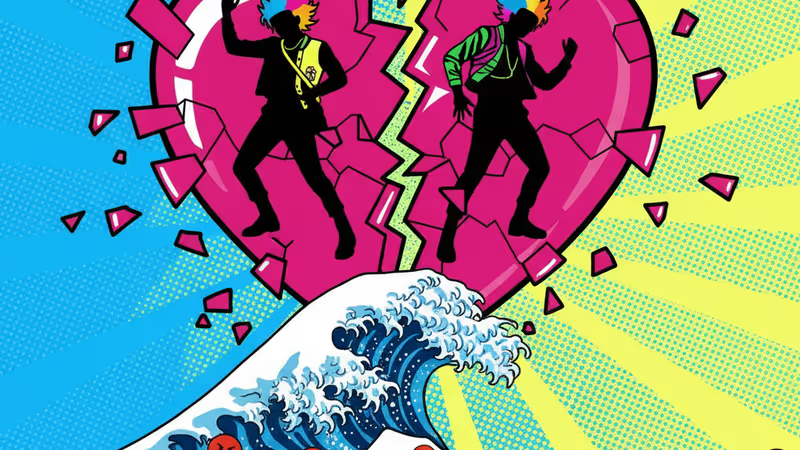
The Unwritten Rule of K-Pop is Breaking: Why Idol Dating Rumors Spark 'Betrayal' and Fan Protests
K-Pop is facing a crisis as fan backlash to idol dating rumors intensifies. Discover why this is about a broken business model, not just romance.
TL;DR: The Social Contract is Over
Recent dating rumors surrounding superstars like BTS’s Jungkook and aespa’s Winter have triggered more than just gossip; they've ignited a full-blown crisis. Fans are sending protest trucks to agencies, not just because their favorite idols might be in a relationship, but because they feel a core, unwritten contract—the illusion of an intimate, exclusive bond they've invested thousands in—has been broken. This isn't drama; it's a seismic crack in the K-Pop industry's billion-dollar business model.
The Story: From Whispers to Protest Trucks
In the world of K-Pop, a dating rumor is never just a rumor. It’s an economic event. When aespa’s Karina was confirmed to be dating actor Lee Jae Wook, the backlash was so intense she posted a handwritten apology letter. Weeks later, the couple broke up. Now, unconfirmed rumors about Jungkook and Winter are met with a similar firestorm, complete with protest trucks—a physical manifestation of online fury—parked outside corporate headquarters.
What's changed? The fan reaction has shifted from simple disappointment to accusations of outright 'betrayal'. Agencies like HYBE and SM Entertainment are caught in a strategic paralysis, remaining silent. A confirmation risks alienating their most dedicated consumers, while a denial might not be believed. They are calculating the financial and emotional fallout of every possible move, because in this ecosystem, the fandom isn't just an audience; it's the primary stakeholder.
Best Reactions: The Investor-Fan Speaks Out
To understand the firestorm, you have to listen to the fans themselves. Sourced from the popular Korean forum 'theqoo', these aren't just angry comments; they are articulate defenses of a deeply-held perspective. This is the voice of the 'investor-fan', who sees their time, money, and emotion as a direct investment in an idol's career and the 'narrative' they sell.
- On Deception vs. Dating:
"Who said they can’t date? We’re just saying they shouldn’t deceive your fans. It’s a deception if fans thought it was a song for them, but turns out it was a song recommended by your girlfriend." This highlights the core issue: it's not the act of dating, but the shattering of the carefully crafted illusion that fans are the central focus of an idol's world. - On The Transactional Reality:
"If they only want the fans who like their singing and dancing to remain, then they shouldn’t be dissatisfied if no one spends a single penny on them... All that money would go into idol’s dating." This comment lays the business model bare. Fans are knowingly paying for a specific type of emotional engagement, and when that engagement feels threatened, they feel their investment has been devalued. - On The Industry's Core Product:
"The idol scene itself is a business that relies on emotions. They use these emotions to lure fans into paying. Do you think idols are solely successful because of their talent? If so, you’re stupid." This is a brutally honest take from within the culture, acknowledging that the product being sold is not just music—it's a curated emotional connection.
Cultural Context: The Hyper-Monetization of Parasocial Relationships
This phenomenon is a masterclass in what academics call 'parasocial relationships'—the one-sided bond audiences form with media figures. While this exists for all celebrities, the K-Pop industry has uniquely productized and scaled it. Platforms like Bubble and Weverse sell monthly subscriptions for 'private' messages from idols. Fan sign events, where fans spend hundreds or thousands on albums for a minute of face-time, are designed to deepen this perceived personal connection.
A pop culture critic quoted in the source material confirms this, stating, "The ‘pseudo-romantic’ feeling is an essential element in the idol industry and fandom." Agencies have spent a decade perfecting a system that encourages fans to invest emotionally and financially in this curated intimacy.
The current backlash is the inevitable result. When an idol enters a real-world romantic relationship, it punctures the bubble of this monetized parasocial one. For a segment of the fandom, it feels like a breach of contract because, in a way, it is. They paid for a service—a specific kind of emotional availability—that is now perceived as being redirected elsewhere.
PRISM Insight: The Parasocial Bubble is About to Burst
What we're witnessing is not just 'toxic fan culture'; it's a structural crisis. The K-Pop industry built a golden goose on an ethically fragile foundation: selling the illusion of a romantic and exclusive bond to a mass audience. For years, the profits were too immense to question the model. Now, that model is showing its cracks.
The Unsolvable Dilemma
Agencies are trapped. On one hand, their artists are global superstars—adults who have a right to a private life. Forcing them to remain single is not only unethical but a ticking time bomb for mental health and artist retention. On the other hand, their most profitable customers are demanding adherence to the unwritten rules of the 'pseudo-romance' game they created.
The Inevitable Evolution
This breaking point is necessary. The current dynamic is unsustainable. We predict two major shifts:
- A New 'Social Contract': The industry will be forced to slowly pivot away from the 'boyfriend/girlfriend' model. This means re-educating fans to value artists for their music and performance above their perceived availability. It will be a painful, and likely less profitable, transition in the short term, but it's essential for long-term stability.
- Artist Empowerment: More senior, established idols will likely lead the charge in challenging these norms, leveraging their power to demand more personal freedom. The success or failure of these attempts will set the precedent for the next generation of K-Pop stars.
Ultimately, the protest trucks are a symptom of a much deeper issue. The K-Pop industry sold an impossible fantasy, and now, its most dedicated customers are presenting the bill.
Related Articles
aespa's Winter faced massive fan backlash over dating rumors. We break down the message that flipped public opinion and what it reveals about modern celebrity PR.

One obscure song. Two K-pop megastars. We break down why the Jungkook-Winter dating rumor went viral and what it reveals about modern fan culture.
A wild rumor about EXO's Baekhyun went viral. We break down why it exploded, the best online reactions, and what it says about modern fan culture.
A K-pop idol's post-surgery appearance sparked global outrage. We analyze why this viral moment is about more than a swollen face—it's about labor, fans, and the reality of the idol industry.