
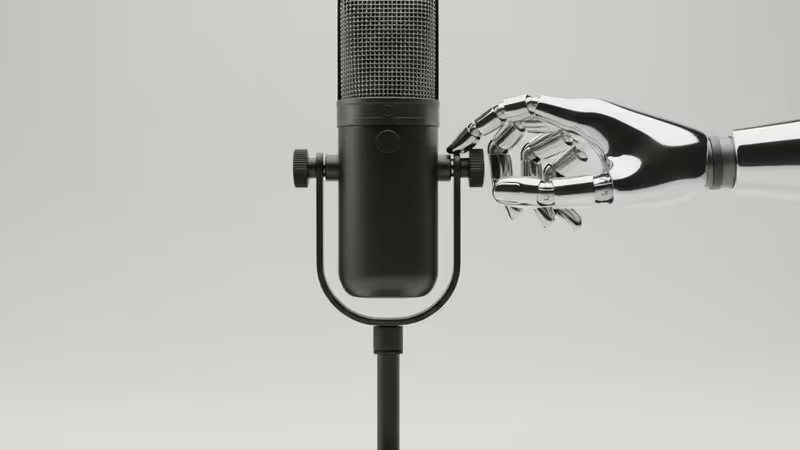
The Uncanny Valley Shake-up: Why WIRED's Podcast Pivot Signals a New Era for Silicon Valley Scrutiny
WIRED's 'Uncanny Valley' podcast is changing hosts, signaling a major shift in tech journalism from product reviews to critical power analysis. Here's why it matters.
The Lede: A Changing of the Guard
WIRED's flagship Silicon Valley podcast, 'Uncanny Valley', has announced a host change, replacing veterans Michael Calore and Lauren Goode with a new team including investigative reporter Zoë Schiffer. For the busy executive, this is more than just media insider news; it's a critical bellwether. This move signals a definitive shift in mainstream tech commentary—away from product-centric enthusiasm and toward a relentless focus on power, labor, and the political ramifications of technology. The narrative lens through which your company, your competitors, and your industry are viewed is being recalibrated, and the new focus is forensic scrutiny.
Why It Matters: The Narrative is the New Front Line
The transition at 'Uncanny Valley' is a microcosm of a larger industry evolution. The era of tech journalism as a simple arbiter of 'what's hot' is over. Technology is no longer a vertical; it is the horizontal layer upon which modern society, governance, and conflict are built. The new guard of journalists, exemplified by this new hosting team, brings a different toolkit:
- From Specs to Structures: The conversation is moving beyond processor speeds and screen resolutions to corporate power structures, internal dissent, and labor practices. Zoë Schiffer’s groundbreaking work on the culture at Twitter (now X) and Apple is the blueprint for this new era.
- Accountability as a Core Product: For media brands like WIRED, deep-dive investigations and holding power accountable are no longer side projects; they are the main event. This directly impacts public perception, employee morale, and, increasingly, regulatory attention.
- The End of the Honeymoon: The default stance towards Silicon Valley has shifted from optimistic curiosity to healthy skepticism. The name 'Uncanny Valley' itself is becoming more literal—less about quirky robots and more about the unsettling societal impacts of technology that is almost, but not quite, aligned with human interests.
The Analysis: A Necessary Evolution from Booster to Critic
Historically, much of tech media grew up alongside the industry it covered, often sharing a sense of boosterism for the promise of innovation. Hosts like Calore and Goode represent the best of that tradition—smart, deeply informed, and focused on the nexus of culture and consumer technology. However, the last decade has fundamentally altered the landscape. Events like Cambridge Analytica, the rise of platform-driven disinformation, and the chaotic Musk-era at X have made the old model insufficient.
The new team is purpose-built for this confrontational era. Schiffer is an expert in the messy human reality behind the sleek corporate facade. Co-host Brian Barrett's focus on security and privacy addresses the inherent vulnerabilities and darker consequences of our hyper-connected world. This isn't just a change in personnel; it's a change in mission. The podcast is being re-tooled from a window into Silicon Valley's latest creations to a C-suite interrogation room for its most powerful players. The very articles mentioned in the departing hosts' final episode—OpenAI's bet on Jony Ive for AI hardware and tech CEOs meeting with Donald Trump—perfectly frame this new reality, where product design and raw political power are inextricably linked.
PRISM Insight: Reputation Risk is Now a Primary Metric
For founders, investors, and operators, the key takeaway is that narrative control is no longer guaranteed. The 'move fast and break things' ethos is now judged not by the speed of its success, but by the collateral damage it leaves behind. This has tangible business implications:
- The War for Talent: Elite engineers and executives are increasingly making career choices based on a company's ethics and internal culture. Investigative journalism that exposes a toxic environment, as Schiffer has done, is no longer just a PR problem; it's a direct threat to your talent pipeline.
- Investor Scrutiny: ESG (Environmental, Social, and Governance) metrics are maturing. The 'S' and 'G' are now heavily influenced by the kinds of stories being told by this new generation of journalists. A company's internal chaos is a leading indicator of future instability and a significant risk factor for investors.
PRISM's Take: WIRED Re-Arms for the Real Tech War
WIRED's decision to hand the reins of 'Uncanny Valley' to a team of investigative journalists is a strategically sound and necessary move. It acknowledges that the most important stories in technology are no longer about the technology itself, but about the power it grants and the people it impacts. The 'valley' is no longer just a geographic location in California; it's the unsettling chasm between tech's utopian promises and its often-dystopian realities. By making this change, WIRED isn't just refreshing a podcast; it's sharpening its most important tool for covering the defining industry of the 21st century.
Related Articles
An exclusive analysis of Trump's plan to block state AI laws. This is a strategic move to centralize power and give Big Tech control over AI's future.
AI image generators are no longer a joke. They now create imperceptible fakes, challenging our concept of digital trust and reshaping creative industries. Here's why.

Logitech's recent deals are not just sales. Our analysis reveals a deep strategy to bundle AI services, build an ecosystem, and defend its premium market position.
A deep dive into why a $30 perpetual license for Microsoft Office matters. It's not just a deal; it's a signal of peak subscription fatigue and a crack in the SaaS model.