
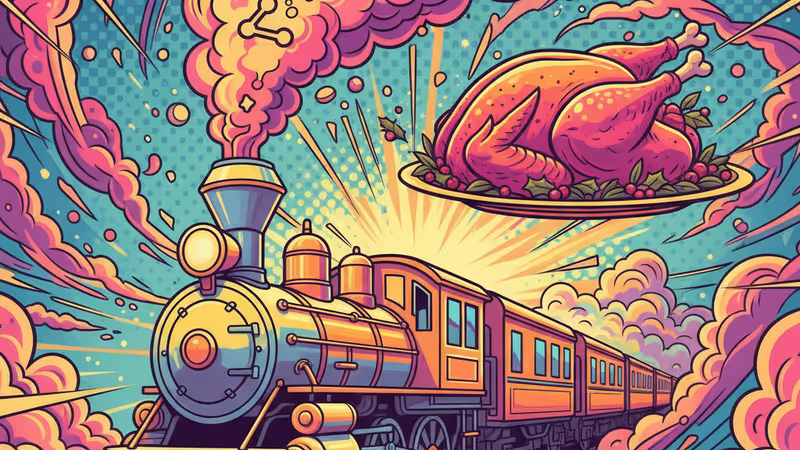
The 1869 Christmas Mystery: The Case of Charles Dickens's Missing 30-Pound Turkey
On Christmas Eve 1869, a 30-pound prize turkey meant for 'A Christmas Carol' author Charles Dickens vanished in a train fire. Discover the full story of this funny, ironic, and strangely heartwarming historical incident.
What happens when the man who practically invented the modern Christmas loses his own Christmas turkey? On Christmas Eve, 1869, author Charles Dickens found himself in that very predicament. The prized bird destined for his dinner table had vanished into thin air.
'WHERE IS THAT TURKEY?!'
The drama began on the afternoon of December 24, 1869, when Dickens's public reading manager, George Dolby, received a frantic telegram. The sender was none other than Dickens himself, and the message was short and intense: "WHEREISTHATTURKEY?ITHASNOTARRIVED! ! ! ! ! ! ! ! ! ! !"
Dolby had sent the esteemed writer what he described in his memoir, *Charles Dickens As I Knew Him*, as the finest turkey Hereford could produce. This "magnificent bird" tipped the scales at about 30 pounds. For Dickens, who cemented the turkey as a Christmas centerpiece in *A Christmas Carol* and personally adored the dish, the gift was meant to be the highlight of the feast.
A Magnificent Bird Meets a Fiery Fate
Baffled by Dickens's message, Dolby rushed to the local train station, only to cross paths with the station-master who was bearing bad news. The horse-box carrying Dolby's Christmas hampers, including the prize turkey, had caught fire somewhere between Gloucester and Reading.
While the exact cause of the blaze remains a mystery, Britain's National Railway Museum suggests sparks from the engine may have ignited the wooden car. Dolby's immediate concern wasn't the cost, but the thought of "Mr. Dickens going without his turkey on Christmas Day." He promptly telegraphed his friend, telling him to find a replacement.
A Perfectly Dickensian Ending
Dickens's indignation didn't last long. In a letter dated February 5, 1870, he wrote to the Great Western Railway company, stating he "bore the loss with unbroken good humour."
But the story's final twist is what makes it truly remarkable. The railway company sold the "charred remains of turkeys and joints of beef" cheaply to the poor residents of Reading. In a stroke of irony, Dickens's very last Christmas turkey—he died in June 1870—inadvertently helped feed the very class of people whose lives he so vividly chronicled in his novels.
This content is AI-generated based on source articles. While we strive for accuracy, errors may occur. We recommend verifying with the original source.
Related Articles

The NFL's 2025 Christmas Day schedule features three games with major playoff implications. Here's a full breakdown and how to watch on Netflix and Amazon Prime.

Jesus might not have been born on December 25th, but these famous figures were. Discover the surprising stories of Isaac Newton, Clara Barton, and other icons born on Christmas Day.

Kim Kardashian's latest family Christmas photo was meant to be festive, but it quickly became a meme. We explore why the awkward image sparked a fierce online debate about her parenting, authority, and the drama with Kanye West.

Ever wondered why we kiss under the mistletoe? Delve into the tradition's origins, from the magical beliefs of ancient Druids and the tragedy of Norse mythology to Victorian England's quirky rules.
The NFL's 2025 Christmas Day schedule features three games with major playoff implications. Here's a full breakdown and how to watch on Netflix and Amazon Prime.
Jesus might not have been born on December 25th, but these famous figures were. Discover the surprising stories of Isaac Newton, Clara Barton, and other icons born on Christmas Day.
Kim Kardashian's latest family Christmas photo was meant to be festive, but it quickly became a meme. We explore why the awkward image sparked a fierce online debate about her parenting, authority, and the drama with Kanye West.
Ever wondered why we kiss under the mistletoe? Delve into the tradition's origins, from the magical beliefs of ancient Druids and the tragedy of Norse mythology to Victorian England's quirky rules.