
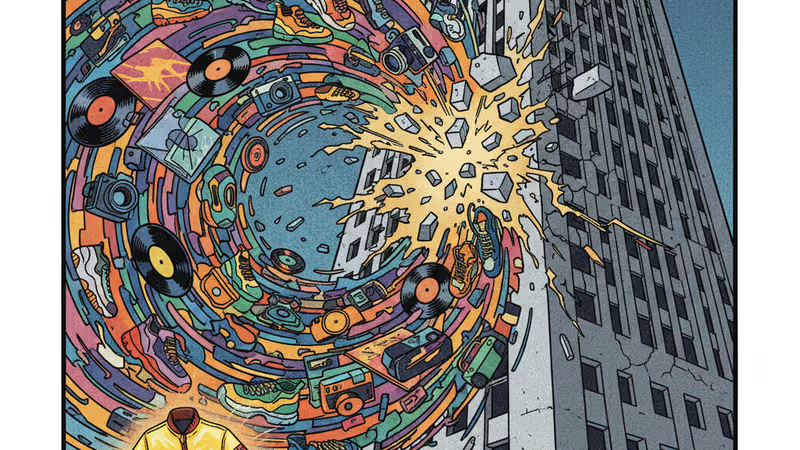
The Recommerce Revolution: Why a $10 Reddit Find Is a Threat to a $2 Trillion Industry
Viral thrift store finds are more than a trend. They signal a trillion-dollar shift in retail, powered by new tech and changing consumer values. Here's why.
The Lede: The Treasure Hunt Disrupting Global Retail
While your feed fills with images of quirky secondhand finds—a $14 Le Creuset pot, a vintage Van Gogh room divider—it’s easy to dismiss them as quaint curiosities. But these are not just bargain-bin victories. They are data points from the front lines of a quiet revolution. For executives in retail, logistics, and technology, ignoring the surge in “thrifting” is like ignoring the rise of e-commerce in 1999. Communities like Reddit’s r/Thrifting are more than just forums; they are incubators for a fundamental shift in consumer behavior that is reshaping value, status, and the very definition of ownership.
Why It Matters: The Circular Economy Goes Mainstream
The significance of this trend extends far beyond individual savings. It represents a systemic challenge to the linear “take-make-waste” model that has dominated consumerism for a century. This isn't just about eco-consciousness; it's a multi-billion dollar market in the making.
- Economic Upheaval: The global resale market is projected to reach nearly $350 billion by 2027, growing at a rate that far outpaces traditional retail. This isn't found money; it's capital being diverted from first-hand purchases, putting direct pressure on fast-fashion giants and big-box stores.
- A New Status Symbol: For Millennials and Gen Z, the “thrift-to-flex” culture is real. The social capital gained from finding a unique, pre-loved item for $10 often exceeds that of buying a mass-produced luxury good. This signals a new definition of luxury, rooted in scarcity, authenticity, and sustainability.
- Experience over Acquisition: Thrifting provides a gamified “treasure hunt” experience that sterile online shopping carts cannot replicate. This element of discovery and serendipity is a powerful driver of engagement, creating a loyal following that algorithms struggle to manufacture.
The Analysis: From Niche Hobby to Tech-Driven Industry
Secondhand shopping has shed its stigma. Once a necessity, it's now a choice—and a sophisticated one at that. This transformation was not accidental; it was enabled and accelerated by technology. While physical stores like Goodwill remain pillars, the true growth is in the digital space.
The competitive landscape has exploded. It’s no longer just local charity shops. The arena now includes:
- Peer-to-Peer Platforms: Depop, Vinted, and Poshmark have turned every user's closet into a potential storefront, powered by social commerce mechanics.
- Curated Luxury Consignment: The RealReal and Vestiaire Collective built trust in high-end resale through rigorous authentication, professional merchandising, and a seamless digital experience.
- Brand-Owned Resale: Forward-thinking brands like Patagonia (Worn Wear) and Levi's (SecondHand) are entering the market themselves, recognizing that participating in the lifecycle of their own products builds loyalty and captures secondary market value.
This creates a complex ecosystem where a viral Reddit post about a vintage dress can influence search trends on Depop and inform the inventory strategy for a major brand's resale vertical. The consumer is now a curator, a seller, and a marketer, all at once.
PRISM Insight: The Rise of the 'Recommerce Stack'
The engine powering this revolution is a burgeoning B2B technology sector we call the “Recommerce Stack.” This is where the smart investment is flowing. It’s the infrastructure layer that makes the circular economy scalable and profitable. Key components include:
- AI-Powered Authentication & Pricing: Algorithms that can verify a luxury handbag from a photo or dynamically price a pair of vintage jeans based on real-time market data are becoming critical assets.
- Reverse Logistics: The challenge of efficiently processing, cleaning, repairing, and redistributing millions of unique, single-SKU items is a massive logistics puzzle. Companies solving this “returns problem” at scale will become the unseen giants of this industry.
- Digital Wardrobe Tech: Technology that allows consumers to easily digitize their closets to identify items for resale is a key friction-reducer. This creates a seamless pipeline from a consumer's closet to the secondary market.
PRISM's Take: The End of Disposable Ownership
The images of proud thrifters are a harbinger of a post-consumption era. Consumers are transitioning from being passive recipients of goods to active managers of a personal asset portfolio. The value of an item is no longer just its initial purchase price, but its potential resale value and its story.
For any brand producing physical goods today, the strategic imperative is clear: you are no longer just selling a product; you are launching it into a circular ecosystem. The choice is whether to participate in and profit from that ecosystem or to be disrupted by it. Ignoring the secondhand life of your products is like a 20th-century automaker ignoring the used car market—a strategic blunder of the highest order. The future of retail isn't just about selling new things; it's about managing the entire, circular lifecycle of everything we own.
Related Articles
A deep analysis of the Elf on the Shelf business model. Discover how a simple toy became a viral content platform and a masterclass in modern IP strategy.

Viral 'sad food' photos are more than a meme. They're a sign of 'skimpflation,' an experience recession driven by tech and economic pressure. Here's why it matters.
An analysis of the growing trend of pet tribute tattoos as a key economic indicator for the booming $136B pet care industry and the future of personal identity.
The rise of affordable luxury honeymoons isn't about saving money. It's a strategic shift in consumer values, redefining the future of travel and hospitality.