
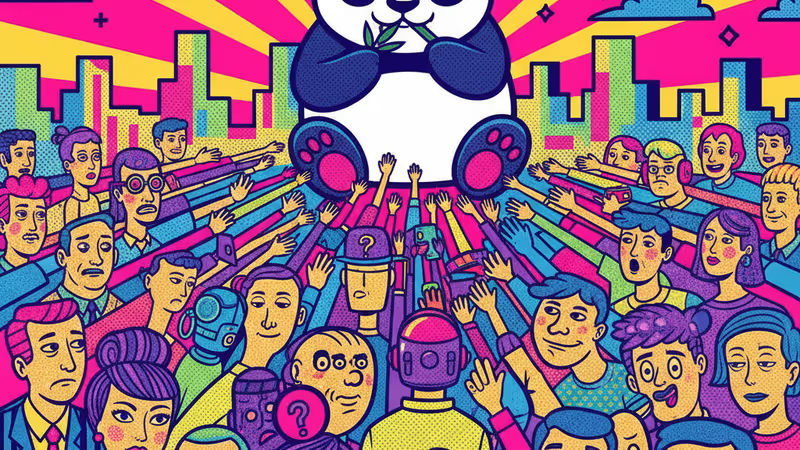
The Panda Paradox: Why a 4-Hour Wait for a 60-Second Glimpse is a Masterclass in Scarcity
Tokyo's panda farewell rush reveals powerful lessons in scarcity marketing and the experience economy. We analyze the future of brand strategy.
The 60-Second CEO Briefing
An executive's most valuable asset is time. So why would thousands of people in one of the world's busiest cities trade four hours of their time for a 60-second glimpse of a panda? The scene unfolding at Tokyo's Ueno Zoo isn't just a cute animal story; it's a real-world stress test of the most powerful force in modern commerce: the economics of scarcity. As the zoo’s last two pandas prepare to leave Japan, the resulting operational chaos offers a profound lesson for any leader trying to manage overwhelming demand for a non-scalable asset. This isn't about pandas; it's about the blueprint for creating and managing hype in an attention-starved world.
Why It Matters: The Economics of FOMO
The Ueno Zoo's situation is a physical manifestation of a digital phenomenon. The four-hour queue, the one-minute viewing slot, and the upcoming lottery system are manual algorithms for managing a demand spike. This is the same principle that drives billion-dollar industries built on engineered scarcity and the fear of missing out (FOMO).
- The Supreme Drop, Analog Edition: The line in Tokyo mirrors the queues for limited-edition sneaker releases or streetwear drops. The value is derived not just from the product (the pandas), but from the shared experience of the wait and the ephemeral nature of the opportunity.
- Experience as the New Luxury: People are not paying with money, but with a more precious currency: time. This four-hour investment for a one-minute return on experience (ROE) demonstrates a powerful shift in consumer values towards unique, fleeting moments over material possessions.
- Throughput vs. Experience: The zoo’s 60-second rule is a stark example of rate-limiting a physical experience to maximize throughput. It's a trade-off every business faces: how do you serve the maximum number of people without degrading the core experience to the point of meaninglessness?
The Analysis: Soft Power's Emotional ROI
To understand the frenzy, we must look beyond the zoo gates. The pandas, Xiao Xiao and Lei Lei, are the final symbols of a 50-year diplomatic tradition known as "Panda Diplomacy." Their departure marks the first time Japan will be without any giant pandas since 1972, severing a tangible, emotional link between the two nations for an entire generation. This isn't just two animals leaving; it's the closing of a cultural chapter.
China's loan of pandas has been one of the most successful soft-power initiatives in modern history. The emotional attachment displayed by the Tokyo public is the long-term return on that diplomatic investment. The zoo's challenge, therefore, is not merely crowd control. It is managing the deeply emotional off-boarding process for a beloved, living brand asset. The one-minute time limit, while seemingly draconian, serves to democratize this final farewell, ensuring as many people as possible can participate in a moment of collective cultural closure.
PRISM Insight: The Quest for Verifiable Scarcity
The tech world has been desperately trying to digitally replicate the raw power of the Ueno Zoo's predicament. The core challenge is creating verifiable scarcity in a world of infinite reproducibility.
NFTs were the first major attempt, creating unique digital tokens to prove ownership and rarity. However, the panda phenomenon highlights the superior power of experiential scarcity. You cannot right-click and save the experience of being there. This is why the future of digital engagement and luxury tech will focus on models that mimic this dynamic:
- Time-Gated Access: Digital events, product releases, or content access that are only available for a very short window.
- Capped Attendance: Think exclusive Clubhouse rooms or limited-slot webinars with high-profile figures, creating a "digital velvet rope."
- Proof of Presence: Future platforms may leverage location data or other metrics to create digital assets (like a POAP - Proof of Attendance Protocol) that certify a user's presence at a unique physical or digital event, creating a new class of scarce collectible.
The ultimate goal is to recreate the emotional potency of knowing that you are one of a limited number of people to experience something unique and unrepeatable.
PRISM's Take
The lesson from Tokyo's panda farewell is unequivocal: in an age of digital abundance, true value is forged in managed scarcity. The four-hour wait is not a bug; it's a feature. It filters for the most dedicated fans and amplifies the emotional payoff of the final, fleeting moment. The most powerful brands of the next decade will not be those who are always available, but those who master the art of the meaningful absence. They will learn to create their own "one-minute panda" moments—ephemeral, exclusive, and unforgettable experiences that command the ultimate price: our focused attention.
Related Articles
The rise of meaningful, personal tattoos is not just an art trend. It's a critical signal about the future of identity, authenticity, and personal branding.
One woman's viral story of parental regret is not a personal drama, but a critical economic signal of systemic burnout. Here's why leaders must pay attention.
The rise of affordable luxury honeymoons isn't about saving money. It's a strategic shift in consumer values, redefining the future of travel and hospitality.

A viral story about a keyboard reveals a deep societal shift from gratitude to transactionalism. Here's why it impacts your company's future.