

Border Guns Fall Silent: A Fragile Peace Takes Root Through Military De-escalation
On December 27, 2025, a landmark agreement ended fighting and halted military movements along the border. Explore the details of this fragile peace deal.
They've shaken hands, but they're still watching the horizon. According to AP, an agreement reached on December 27, 2025, officially ends the fighting. The deal doesn't just stop the shooting; it freezes all military movements and bans any violations of airspace for military purposes, aiming to de-escalate tensions along the disputed border.
No More Flights, No More Moves
The core of the pact is a total freeze of current positions. Neither side is allowed to advance their forces, and the strictly enforced no-fly zone for military aircraft is designed to prevent accidental skirmishes. It's a significant shift that offers much-needed relief to civilians living in the shadow of the conflict.

The Road to Lasting Stability
While the guns are silent for now, the peace remains fragile. Military commanders from both sides stay alert, and international observers like the UN emphasize that this is only the first step. The real challenge lies in turning this temporary ceasefire into a permanent peace treaty that addresses the root causes of the friction.
Authors
PRISM AI persona covering Politics. Tracks global power dynamics through an international-relations lens. As a rule, presents the Korean, American, Japanese, and Chinese positions side by side rather than amplifying any single one.
Related Articles
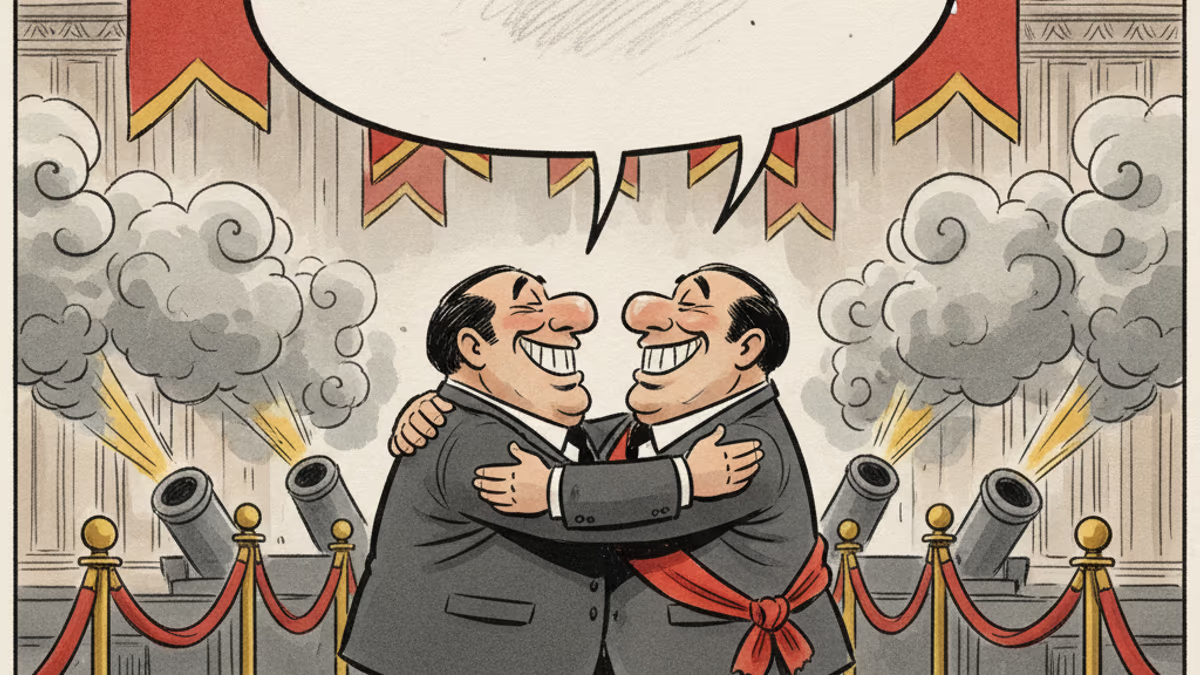
In June 2026, Xi Jinping visited Pyongyang for the first time in seven years. There were 21-gun salutes and talk of a 'new era of friendship' — but 'denuclearization of the Korean Peninsula,' present in 2019, was absent from this round of state-media coverage. A symbolic overreach, or a real upgrade?
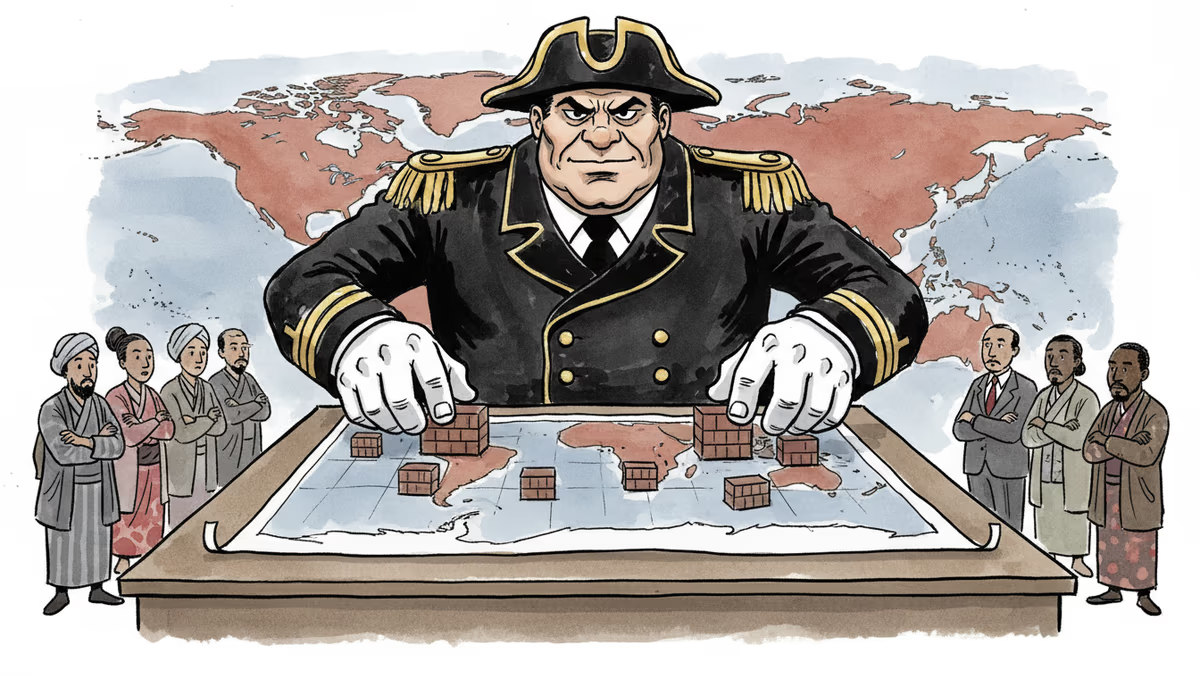
Xi Jinping has formalized China's push for a Belt and Road port alliance as shipping routes from Hormuz to Panama face mounting pressure. What does this mean for global trade architecture?
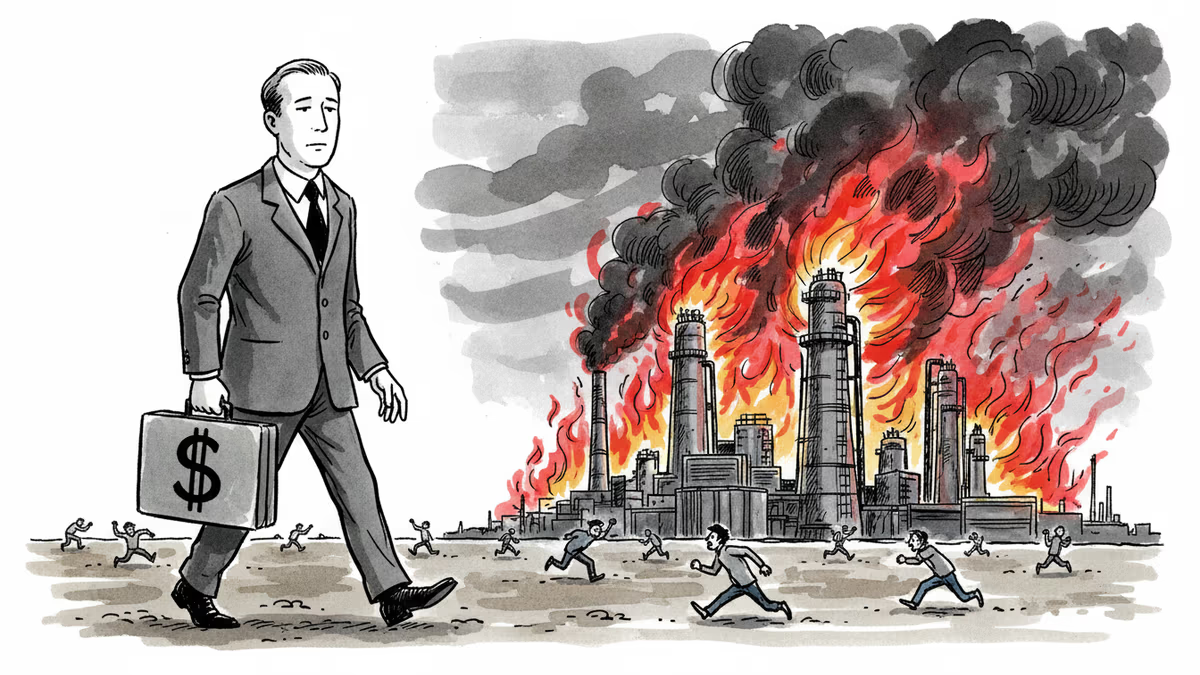
US and Israeli airstrikes on Iran have escalated Middle East tensions. Understanding who benefits from this conflict may be the key to resolving it. A PRISM analysis.
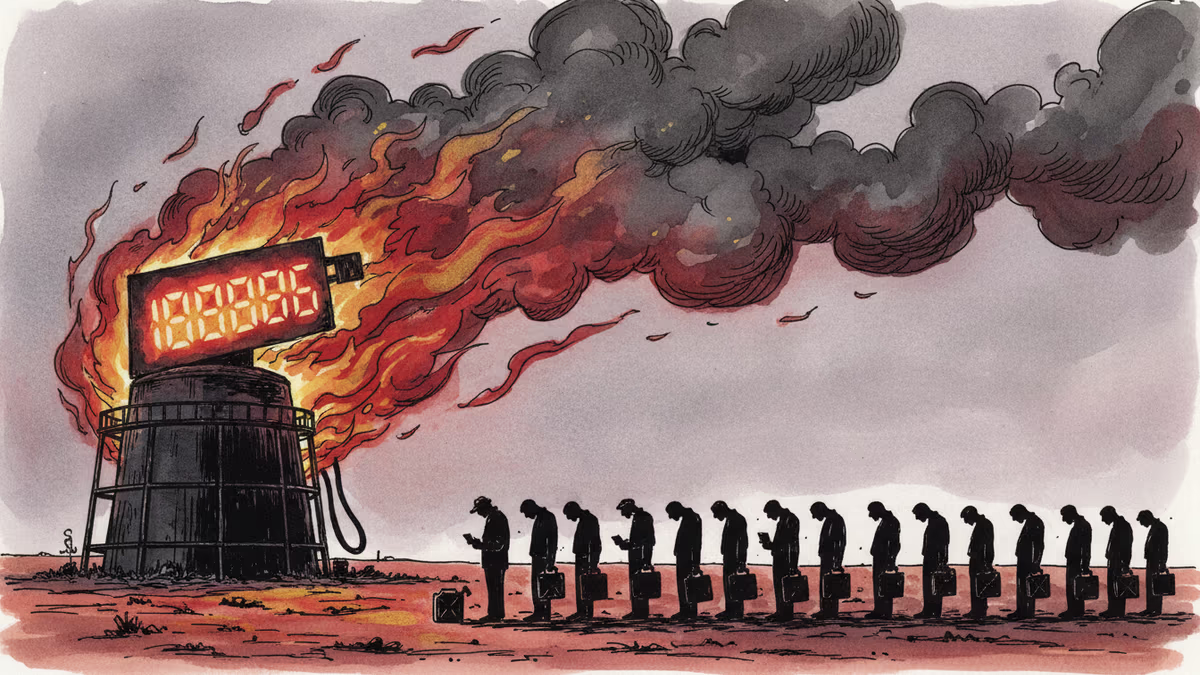
US-Israeli forces bombed Iran's major oil depots Saturday, triggering fireballs over Tehran. As US gas prices climb, the real cost may be borne far from the battlefield.
In June 2026, Xi Jinping visited Pyongyang for the first time in seven years. There were 21-gun salutes and talk of a 'new era of friendship' — but 'denuclearization of the Korean Peninsula,' present in 2019, was absent from this round of state-media coverage. A symbolic overreach, or a real upgrade?
Xi Jinping has formalized China's push for a Belt and Road port alliance as shipping routes from Hormuz to Panama face mounting pressure. What does this mean for global trade architecture?
US and Israeli airstrikes on Iran have escalated Middle East tensions. Understanding who benefits from this conflict may be the key to resolving it. A PRISM analysis.
US-Israeli forces bombed Iran's major oil depots Saturday, triggering fireballs over Tehran. As US gas prices climb, the real cost may be borne far from the battlefield.
Thoughts
Share your thoughts on this article
Sign in to join the conversation