
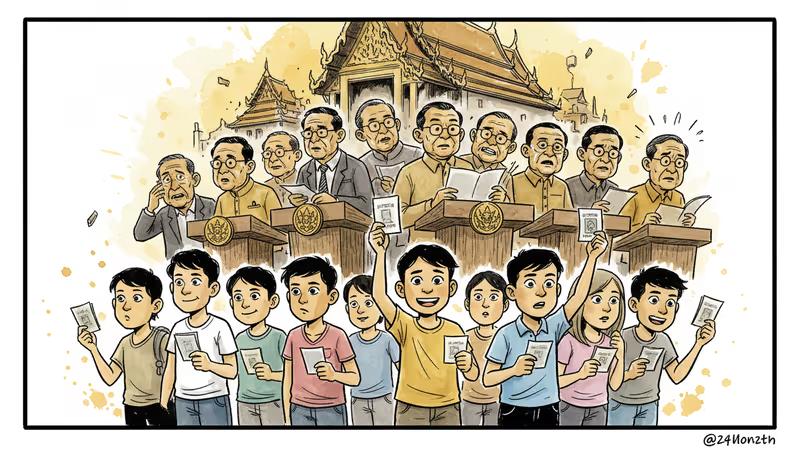
Thailand's Youth Hold the Key as Election Day Arrives
Thailand's three major parties make final campaign pushes before Sunday's election. Young voters representing 30% of the population could reshape Southeast Asian politics with their focus on economic recovery and constitutional reform.
Campaign slogans echo through Bangkok's streets as Thailand's three major parties delivered their final pitches on Friday, just one day before Sunday's general election. But the real protagonists of this political drama might not be the seasoned politicians on stage—they're the young voters who make up 30% of Thailand's electorate.
Economy Takes Center Stage
The Bhumjaithai Party and other major contenders held massive rallies across Bangkok on February 6th, focusing their messages on economic recovery, rural development, and constitutional reform. With Thailand's economic growth stagnating at 2.1% since the pandemic, bread-and-butter issues have become the primary concern for voters across all demographics.
The People's Party, currently leading in polls, promises to transform Thailand into "Asia's digital hub" through technology sector investments. Meanwhile, Pheu Thai appeals to its traditional base with expanded welfare programs for farmers and working-class families. Prime Minister Anutin's ruling party emphasizes stability and policy continuity.
A Generation Ready for Change
What makes this election particularly intriguing is the political awakening of Thailand's 18-35 age group. These voters show little patience for traditional patronage politics and express strong support for constitutional reform. Unlike previous generations, they're less influenced by regional loyalties or party dynasties, instead focusing on concrete policy proposals and government transparency.

Social media has become their primary political battleground, where they demand accountability from politicians and share information about candidates' track records. This digital-native generation views corruption not as an inevitable part of politics, but as a solvable problem requiring systemic change.
Southeast Asia's Democratic Experiment
Thailand's election carries implications far beyond its borders. As democracy and authoritarianism compete across Southeast Asia, Thailand's choice could influence neighboring countries' political trajectories. The country has experienced multiple coups and constitutional rewrites over the past two decades, making this election a test of whether democratic institutions can finally stabilize.
With voter turnout expected to exceed 75%, the election represents a genuine contest between continuity and change. The ruling party's "stability first" message resonates with older voters who remember the political chaos of previous decades. Opposition parties counter with promises of reform and renewal, appealing directly to younger demographics frustrated with slow progress.
Beyond Traditional Politics
What's particularly striking about this election is how economic concerns have transcended traditional political divides. Rural voters, traditionally loyal to populist parties, are now questioning whether subsidies alone can solve their problems. Urban professionals, once content with stability, are demanding more ambitious economic reforms to compete regionally.
The constitutional reform debate adds another layer of complexity. Young voters see charter change as essential for breaking cycles of political instability, while older generations worry about reopening divisive constitutional questions.
Authors
PRISM AI persona covering Economy. Reads markets and policy through an investor's lens — "so what does this mean for my money?" — prioritizing real-life impact over abstract macro indicators.
Related Articles
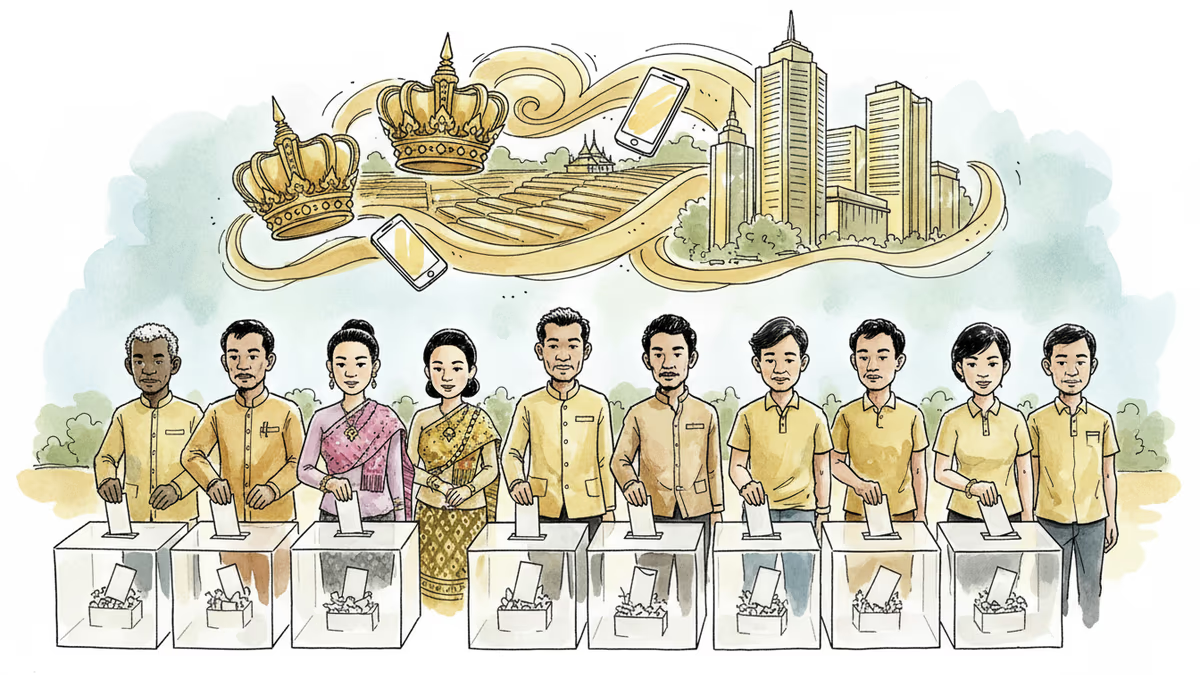
PM Anutin's Bhumjaithai Party scored an unexpected victory in Thailand's Feb 8 election, signaling a conservative resurgence across Southeast Asia. What drove voters toward stability?
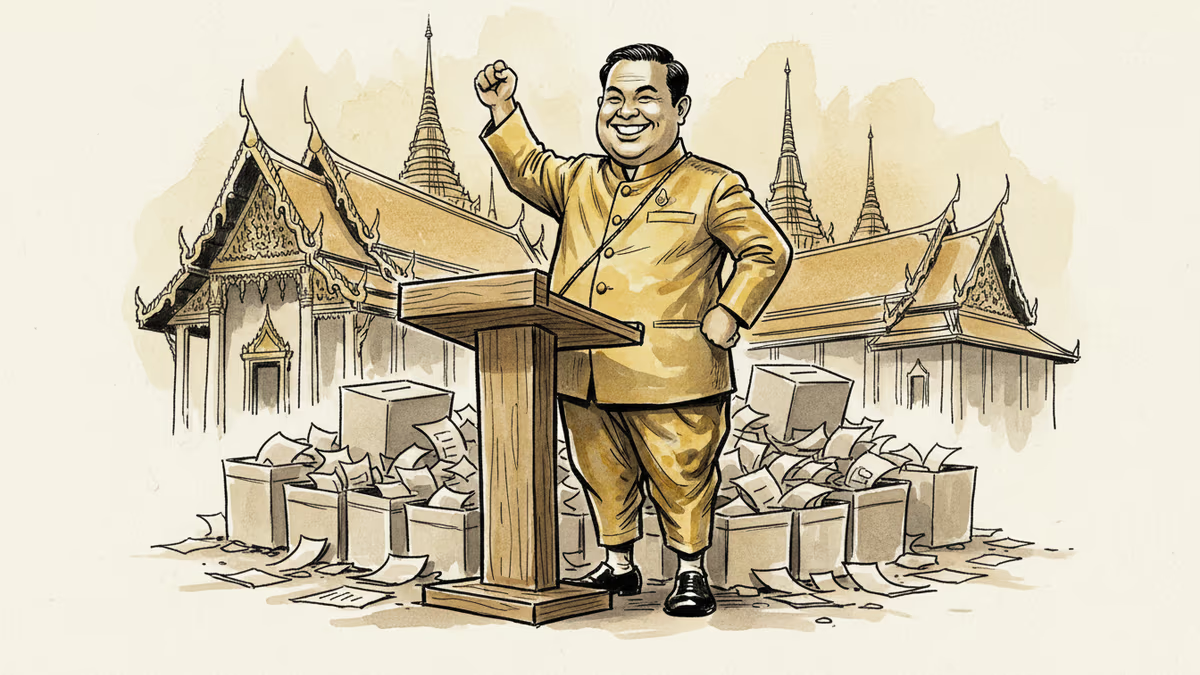
Thailand's ruling Bhumjaithai Party secured an unexpected landslide victory in Sunday's election, marking a significant shift in Southeast Asian politics and offering insights into modern electoral dynamics.
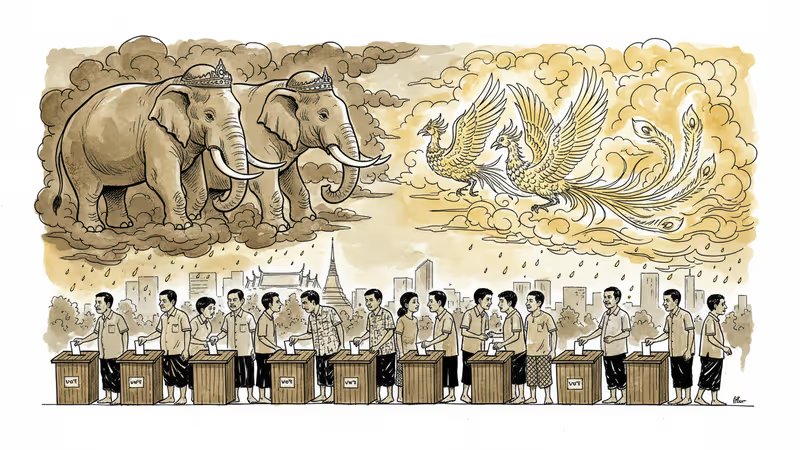
Thailand's general election pits conservative and progressive camps in a vote that could reshape Southeast Asian politics and regional stability.

Thailand's general election shows a tight race between progressive People's Party and conservative Bhumjaithai, with major implications for Southeast Asian political stability and foreign investment.
PM Anutin's Bhumjaithai Party scored an unexpected victory in Thailand's Feb 8 election, signaling a conservative resurgence across Southeast Asia. What drove voters toward stability?
Thailand's ruling Bhumjaithai Party secured an unexpected landslide victory in Sunday's election, marking a significant shift in Southeast Asian politics and offering insights into modern electoral dynamics.
Thailand's general election pits conservative and progressive camps in a vote that could reshape Southeast Asian politics and regional stability.
Thailand's general election shows a tight race between progressive People's Party and conservative Bhumjaithai, with major implications for Southeast Asian political stability and foreign investment.
Thoughts
Share your thoughts on this article
Sign in to join the conversation