

Thai-Cambodia Border Clashes Send Angkor Wat Tourism into Freefall, Incomes Plunge 80%
Deadly border clashes between Thailand and Cambodia have crippled the tourism industry at Angkor Wat. With local incomes down 80% and a tarnished national reputation from cyberscam reports, the country faces a dual crisis.
The ancient stones of Angkor Wat are silent, but the echoes of nearby gunfire are costing locals everything. A deadly border dispute between Cambodia and Thailand has turned the UNESCO heritage site into a ghost town, even during what should be its high season.
Empty Temples, Evaporated Incomes
Tour guide Bun Ratana told AFP that his income has plunged by around 80 percent to just $150 this month compared to last year, after more than 10 tour cancellations in December alone. Outside Angkor Wat, tuk-tuk driver Nov Mao reported his income has been halved since the clashes began. The conflict, rooted in a colonial-era border dispute, has flared up multiple times, leading to overland crossing closures and a sharp drop in business.
The economic damage is substantial for a country where tourism makes up around a tenth of its GDP. According to Angkor Enterprise, ticket sales to the temple complex were down at least 17 percent year-on-year from June to November. The decline spiraled after five-day clashes in July that killed dozens.
A Dual Threat: Bullets and Scams
The border clashes aren't the only threat. Experts say Cambodia's reputation has also been damaged by widespread media reports about cyberscam networks operating in the region. "Sadly, the reality on the ground is that Cambodia's top tourism hotspots are safe—but the headlines have done damage already," said Hannah Pearson, director of tourism consultancy Pear Anderson. Siem Reap's provincial tourism director also admitted the scammer reputation had hurt the industry.
Despite the news, several foreign tourists at the complex told AFP they felt safe. Yet, the disruption is concentrated in regional travel. Arnaud Darc, CEO of Thalias Group, noted that while there are fewer Thai visitors, an increase in Chinese arrivals has provided some buffer. Still, the uncertainty hangs heavy. "The sooner the war ends," a tourism official said, "the sooner they will come back."
This content is AI-generated based on source articles. While we strive for accuracy, errors may occur. We recommend verifying with the original source.
Related Articles

Thailand and Cambodia have resumed border clashes, including drone and rocket attacks, even as the first peace talks begin. The conflict has killed over 40 and displaced a million.

Thailand and Cambodia have agreed to hold ceasefire talks on December 24 after an ASEAN-led meeting, following border clashes that killed over 40 people. However, deep mistrust and conflicting claims over landmines threaten the prospects for lasting peace.
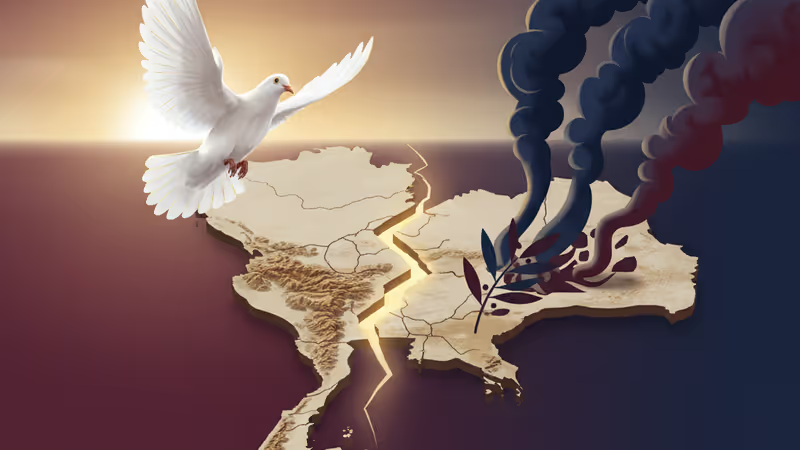
Thailand and Cambodia have agreed to military talks to halt border clashes, but new fighting erupted just hours later, putting ASEAN's mediation efforts to the test.
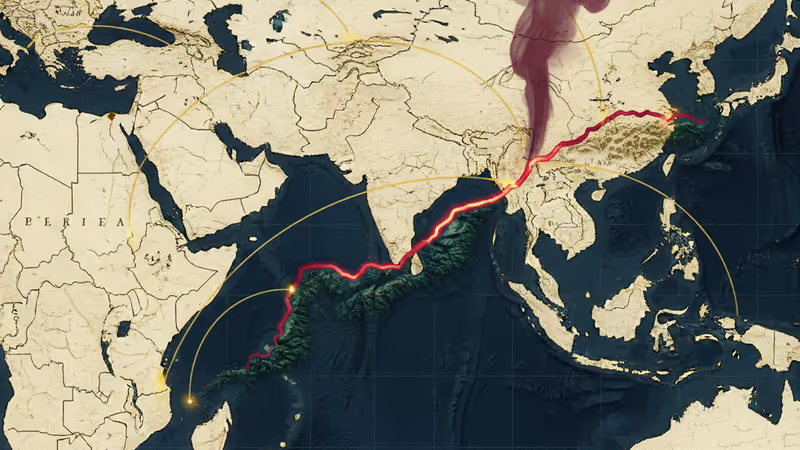
In December 2025, the Cambodia-Thailand border conflict has reignited, shattering a recent peace deal. Explore the 100-year-old dispute rooted in a French colonial map, the 1962 ICJ ruling, and why diplomacy failed.
Thailand and Cambodia have resumed border clashes, including drone and rocket attacks, even as the first peace talks begin. The conflict has killed over 40 and displaced a million.
Thailand and Cambodia have agreed to hold ceasefire talks on December 24 after an ASEAN-led meeting, following border clashes that killed over 40 people. However, deep mistrust and conflicting claims over landmines threaten the prospects for lasting peace.
Thailand and Cambodia have agreed to military talks to halt border clashes, but new fighting erupted just hours later, putting ASEAN's mediation efforts to the test.
In December 2025, the Cambodia-Thailand border conflict has reignited, shattering a recent peace deal. Explore the 100-year-old dispute rooted in a French colonial map, the 1962 ICJ ruling, and why diplomacy failed.