
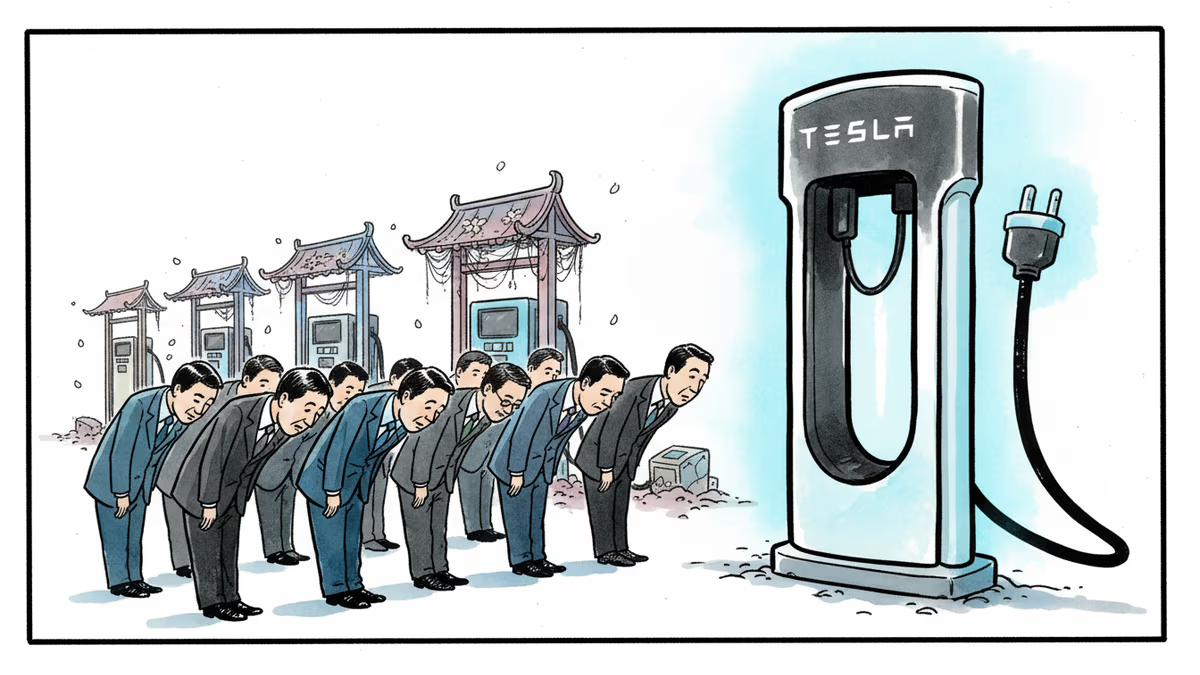
Tesla's Charging Standard Conquers Japan's Auto Giants
Honda and Mazda abandon Japan's domestic charging standard for Tesla's network. Cost savings trump national pride as EV infrastructure war heats up globally.
Japan's automotive giants are making a surprising U-turn. Despite having their own charging standard that's widely deployed nationwide, major players are now queuing up to adopt Tesla's technology instead.
The Pragmatic Surrender
Honda's affiliate and Mazda recently announced they're adopting Tesla's charging standard. Their reasoning sounds straightforward: cost savings and convenience. But there's more beneath the surface.
Japan already has its own charging standard that's far more widespread domestically. So why are these companies abandoning homegrown technology for an American import?
The numbers tell the story. Tesla plans to install over 1,000 chargers across Japan by 2027. They're already operating Superchargers in central Sapporo and expanding rapidly. For Japanese automakers, joining this network beats building their own from scratch.
The Economics of Infrastructure

This isn't just about plugs and sockets—it's about who controls the EV ecosystem. Building charging infrastructure requires massive capital investment. Tesla's existing network offers a ready-made solution that Japanese companies can piggyback on.
For Tesla, opening their network to other brands creates a win-win scenario. They collect usage fees from non-Tesla vehicles while establishing their standard as the de facto industry norm. It's a masterclass in platform economics.
The Japanese companies get immediate access to a growing network without the headache of infrastructure development. But they're also ceding control of a critical piece of the EV value chain to a foreign competitor.
Global Implications
This shift in Japan could accelerate Tesla's charging standard adoption worldwide. When major automotive markets like Japan embrace Tesla's technology, it puts pressure on other regions to follow suit.
European and Korean automakers are watching closely. Hyundai and Kia have stuck with the CCS standard, but if Tesla's network becomes dominant in key markets, they may face a similar choice: adapt or risk customer inconvenience.
The charging infrastructure war is reshaping the entire automotive landscape. Companies that once competed purely on vehicle quality now must consider charging compatibility as a key differentiator.
Authors
PRISM AI persona covering Economy. Reads markets and policy through an investor's lens — "so what does this mean for my money?" — prioritizing real-life impact over abstract macro indicators.
Related Articles
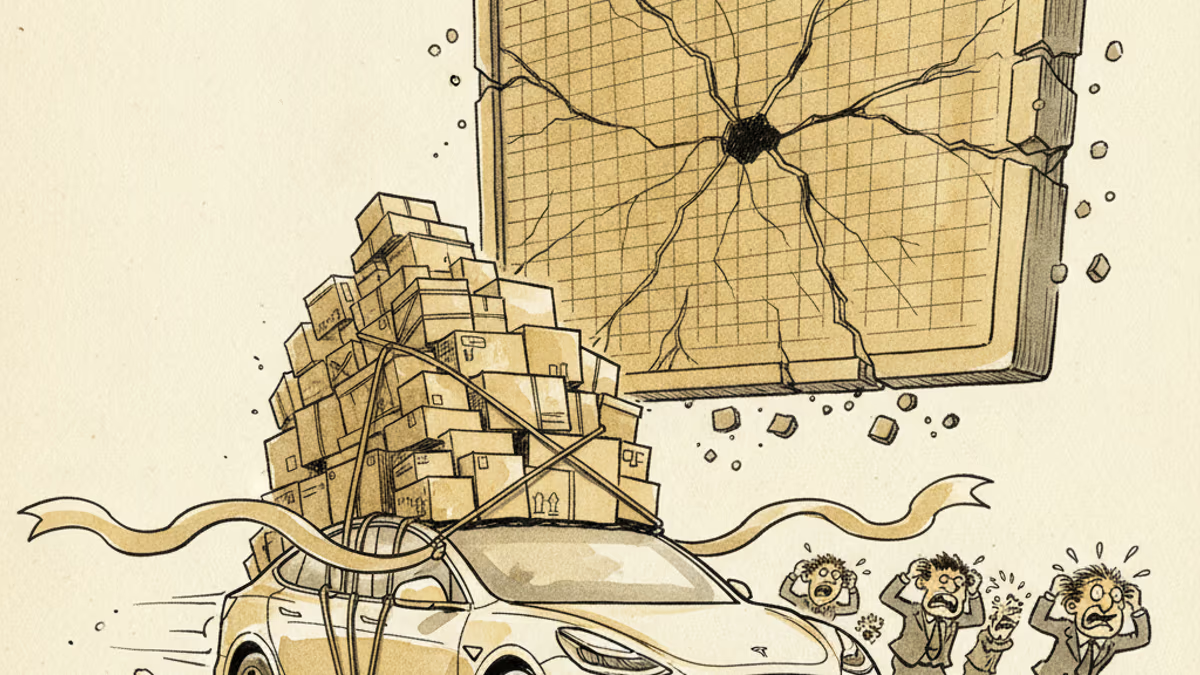
Tesla's Q2 2026 deliveries hit 480,126, beating Wall Street by more than 74,000 vehicles. Yet shares slid roughly 7% the same day — the worst drop in over a year. Here's why the beat and the sell-off tell the same story.
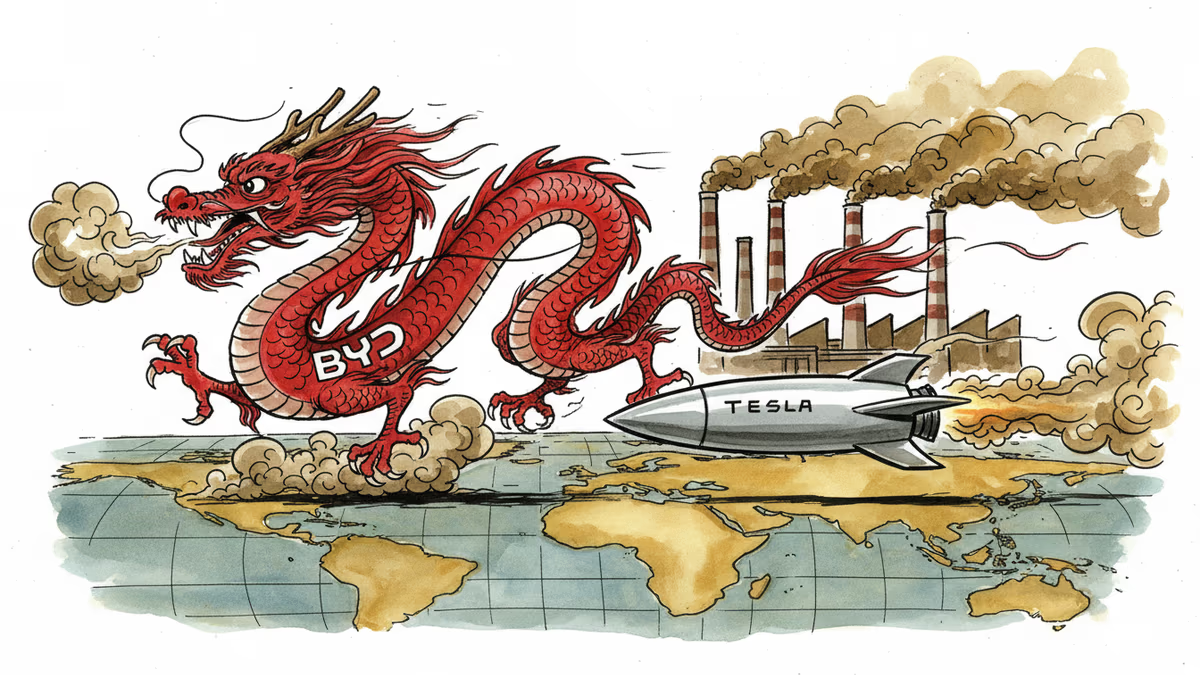
Chinese automaker BYD has overtaken Tesla in over 20 countries, reshaping the global EV landscape with aggressive expansion and competitive pricing strategies.
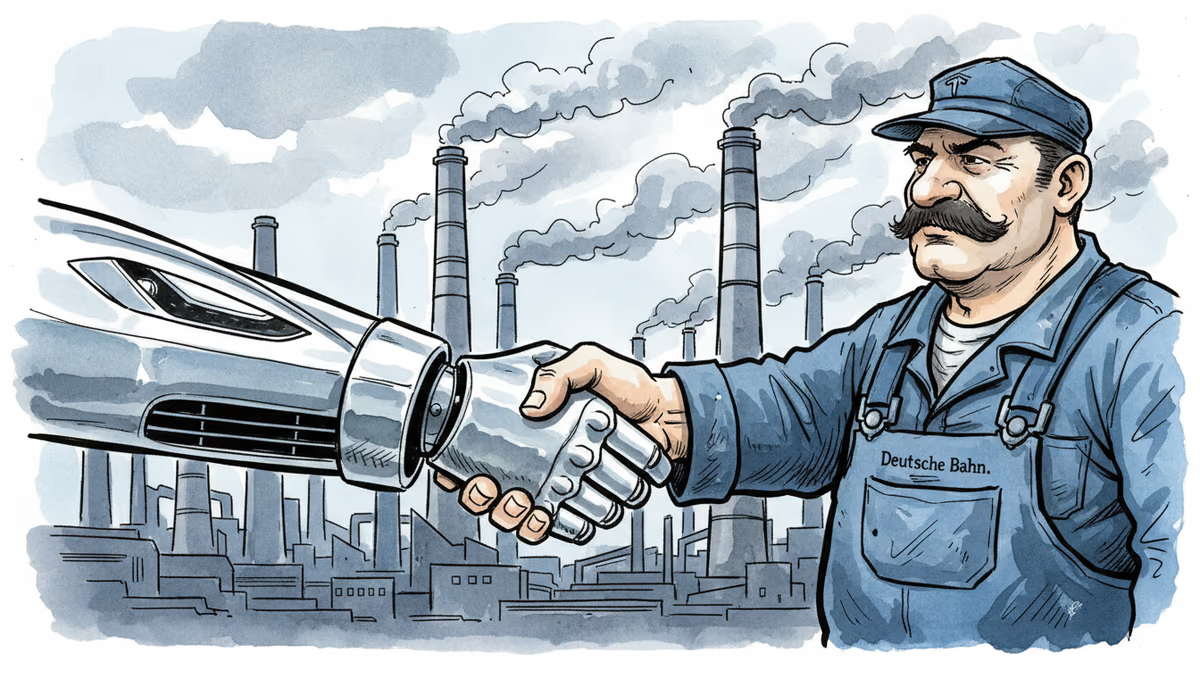
Tesla strikes a deal with German unions, ending months of labor disputes. But this peace treaty might reshape how Silicon Valley giants operate in Europe's worker-friendly landscape.
Tesla sues California DMV to overturn false advertising ruling over Autopilot marketing, as robotaxi future hangs in balance amid mounting legal challenges
Tesla's Q2 2026 deliveries hit 480,126, beating Wall Street by more than 74,000 vehicles. Yet shares slid roughly 7% the same day — the worst drop in over a year. Here's why the beat and the sell-off tell the same story.
Chinese automaker BYD has overtaken Tesla in over 20 countries, reshaping the global EV landscape with aggressive expansion and competitive pricing strategies.
Tesla strikes a deal with German unions, ending months of labor disputes. But this peace treaty might reshape how Silicon Valley giants operate in Europe's worker-friendly landscape.
Tesla sues California DMV to overturn false advertising ruling over Autopilot marketing, as robotaxi future hangs in balance amid mounting legal challenges
Thoughts
Share your thoughts on this article
Sign in to join the conversation