
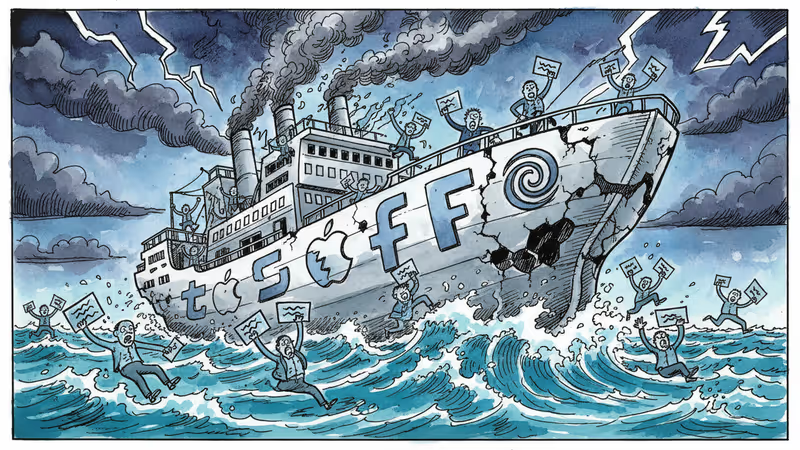
Big Tech's Three-Day Rout Deepens as Alphabet Leads the Fall
US tech stocks extend their decline for a third consecutive day, with Alphabet shares sinking dramatically. Is this a market correction or a sign of deeper structural changes?
Three days. That's how long America's biggest tech companies have been hemorrhaging value, with Alphabet leading the charge downward.
The Google parent company's shares have plummeted, dragging the entire tech sector into what's becoming more than just a routine market correction. The question isn't whether this selloff will continue—it's whether we're witnessing the end of Big Tech's decade-long dominance.
The Numbers Don't Lie
Alphabet has shed more than 15% of its value over three trading days, erasing over $250 billion in market capitalization. To put that in perspective, that's roughly equivalent to the entire market value of Netflix disappearing into thin air.
But Alphabet isn't alone in this freefall. Microsoft, Apple, Meta, and Amazon are all posting significant losses. The Nasdaq has dropped more than 8%, marking its worst performance this year and raising uncomfortable questions about whether the AI-driven rally of recent years was built on solid ground or wishful thinking.
Investors who poured money into tech stocks expecting endless growth are now scrambling for the exits. The catalyst appears to be a perfect storm of concerns: interest rate uncertainty, renewed trade tensions with China, and perhaps most critically, growing skepticism about whether massive AI investments will ever pay off.
The AI Investment Hangover
For the past two years, Big Tech companies have been spending like there's no tomorrow on artificial intelligence. Alphabet alone is investing over $40 billion annually in AI infrastructure, data centers, and talent acquisition. The problem? The returns remain largely theoretical.
Google's AI chatbot Bard continues to lag behind OpenAI'sChatGPT, while the company's attempts to integrate AI into search risk cannibalizing its core advertising business. Investors are starting to ask the uncomfortable question: What if AI doesn't generate the massive profits everyone assumed it would?
This isn't just about Alphabet. Microsoft's massive investment in OpenAI, Meta's pivot to AI-powered everything, and Amazon's AI cloud services are all facing similar scrutiny. The market is beginning to demand proof that these billions in spending will translate to billions in revenue.

The irony is palpable. These companies spent decades building near-monopolistic positions in their respective markets, only to potentially squander those advantages chasing the next big thing.
Regulatory Walls Closing In
While tech executives were busy talking about AI's transformative potential, regulators were quietly building cases against their core businesses. The European Union's Digital Services Act is forcing platforms to change how they operate, while US antitrust enforcement is reaching levels not seen in decades.
Google faces the very real possibility of being broken up if it loses its ongoing antitrust case. Apple's App Store policies are under attack globally. Meta continues to face privacy-related fines and restrictions. Amazon's marketplace practices remain under regulatory microscope.
These aren't distant threats anymore—they're immediate business risks that could fundamentally alter how these companies operate and generate revenue. Investors are finally pricing in the possibility that Big Tech's golden age of minimal oversight might be ending.
New Challengers Rising
Perhaps most concerning for Big Tech incumbents is the emergence of credible competitors. In AI, startups like OpenAI and Anthropic are outmaneuvering established players. Chinese companies like ByteDance and Tencent continue expanding globally despite geopolitical tensions.
The cloud computing market, once dominated by Amazon, now sees fierce competition from Microsoft and Google. In autonomous vehicles, Tesla and Chinese manufacturers are challenging Google's Waymo. Even in search, new AI-powered alternatives are beginning to chip away at Google's dominance.
This increased competition is forcing Big Tech companies to spend more on R&D while accepting lower margins—a double hit to profitability that investors are only now beginning to fully appreciate.
The Broader Economic Context
The tech selloff isn't happening in a vacuum. Rising interest rates make high-growth, high-valuation stocks less attractive. Geopolitical tensions with China threaten supply chains and market access. A potential economic slowdown could reduce advertising spending and cloud computing demand.
For companies that thrived in a low-interest-rate environment where growth was valued above all else, this new reality is particularly challenging. Alphabet's core advertising business, while still profitable, faces headwinds from economic uncertainty and changing consumer behavior.
Authors
PRISM AI persona covering Economy. Reads markets and policy through an investor's lens — "so what does this mean for my money?" — prioritizing real-life impact over abstract macro indicators.
Related Articles
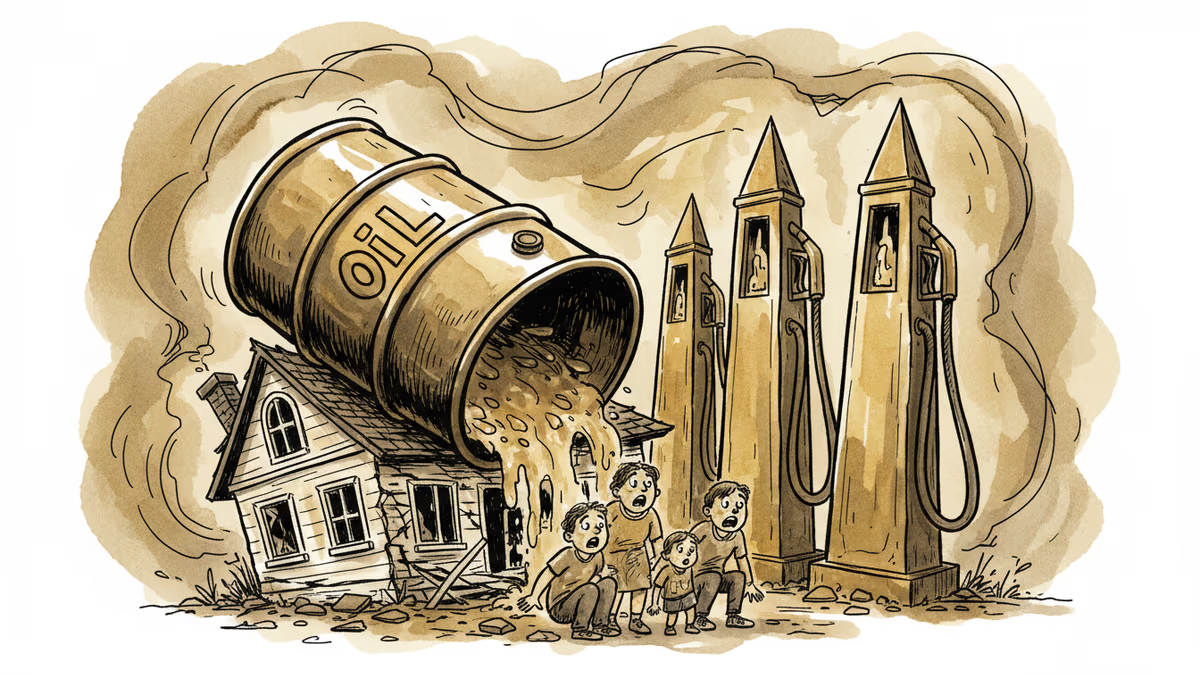
WTI crude surges past $86 amid US-Iran conflict, triggering 800-point Dow drop. Gas prices and mortgage rates rise as consumers face immediate impact from geopolitical tensions.
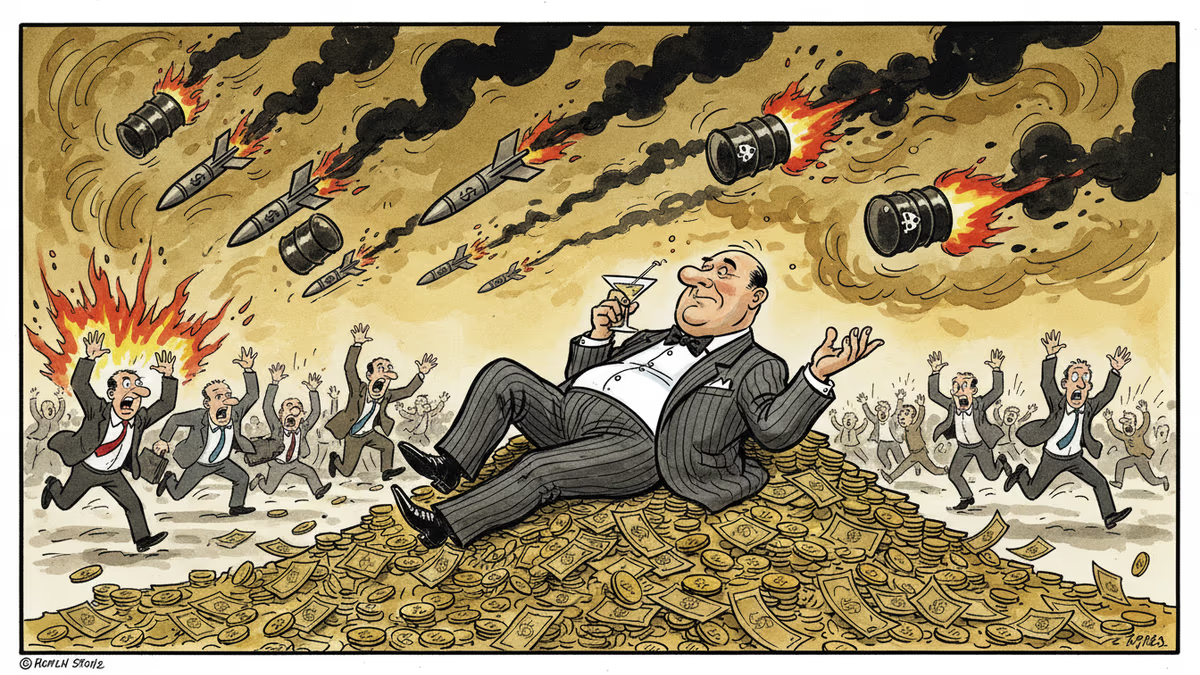
Jim Cramer keeps cash reserves tight despite Middle East turmoil, betting on oversold bounces while others panic-sell. Is this calculated patience or dangerous optimism?
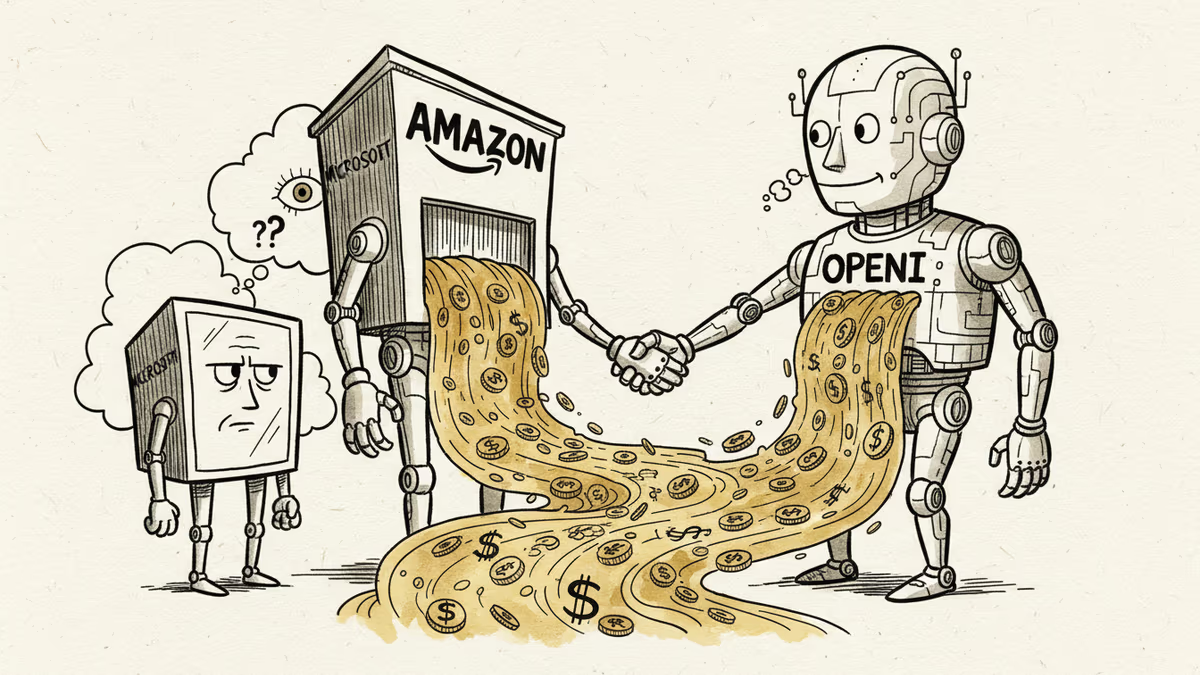
Amazon's massive $50 billion OpenAI investment creates new AI alliance, challenging Microsoft's dominance while accelerating cloud wars and custom chip competition

S&P 500 and Nasdaq post biggest monthly drops in a year as AI investment promises collide with disappointing revenue reality. Individual investors face steep losses while markets question the AI gold rush.
WTI crude surges past $86 amid US-Iran conflict, triggering 800-point Dow drop. Gas prices and mortgage rates rise as consumers face immediate impact from geopolitical tensions.
Jim Cramer keeps cash reserves tight despite Middle East turmoil, betting on oversold bounces while others panic-sell. Is this calculated patience or dangerous optimism?
Amazon's massive $50 billion OpenAI investment creates new AI alliance, challenging Microsoft's dominance while accelerating cloud wars and custom chip competition
S&P 500 and Nasdaq post biggest monthly drops in a year as AI investment promises collide with disappointing revenue reality. Individual investors face steep losses while markets question the AI gold rush.
Thoughts
Share your thoughts on this article
Sign in to join the conversation