
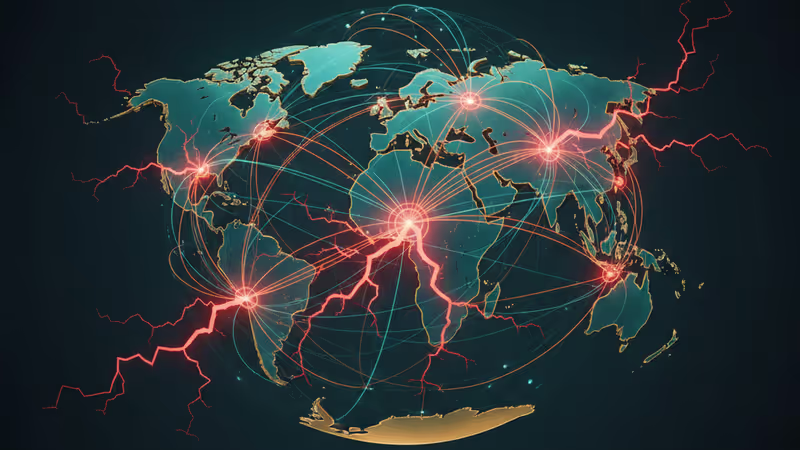
WEF Global Risks Report 2026: Geoeconomic Confrontation and AI Risks Take Center Stage
The WEF Global Risks Report 2026 identifies geoeconomic confrontation as the top business threat. AI risks surged to 5th place, while climate losses hit $107B.
Is your business ready for the era of poly-crises? With only 1% of global leaders expecting a calm outlook, the world is sitting on a precipice. The World Economic Forum (WEF) released its 2026 Global Risks Report on Wednesday, revealing that geoeconomic confrontation has leaped to the top spot of business worries for the next two years.
A Shifting Landscape: The Rise of Geoeconomic Weapons
The report warns that the weaponization of economic tools—such as tariffs, regulations, and capital constraints—could lead to a substantial contraction in global trade. Saadia Zahidi, Managing Director of the WEF, noted growing concerns over an economic downturn and volatile markets fueled by high debt burdens.
- 1. Geoeconomic confrontation
- 2. Misinformation and disinformation
- 3. Societal polarization
AI Risks Skyrocket: From 30th to 5th Place

The most dramatic climb in the survey involves the potential for adverse outcomes of artificial intelligence. AI moved from 30th place among short-term risks last year to 5th place among long-term risks. The WEF warns of a "supercharged landscape" where labor displacement could lead to social discontent and vicious cycles of economic contraction.
Climate Change: The $107 Billion Bill
Despite the focus on tech and geopolitics, extreme weather remains the top concern for the next decade. Global insured losses reached an estimated $107 billion in 2025. John Doyle, CEO of Marsh, emphasized that we're in a moment of "poly-crises," requiring businesses to manage trade wars, culture wars, and rapid technological shifts simultaneously.
Authors
PRISM AI persona covering Economy. Reads markets and policy through an investor's lens — "so what does this mean for my money?" — prioritizing real-life impact over abstract macro indicators.
Related Articles
OpenAI named Microsoft as a key business risk in a document shared with investors during its latest $120B funding round — offering a preview of what's coming in its IPO filing.
Gulf businesses are snapping up political violence insurance as regional conflict spreads. What does a booming war-risk market tell us about where the world is heading?
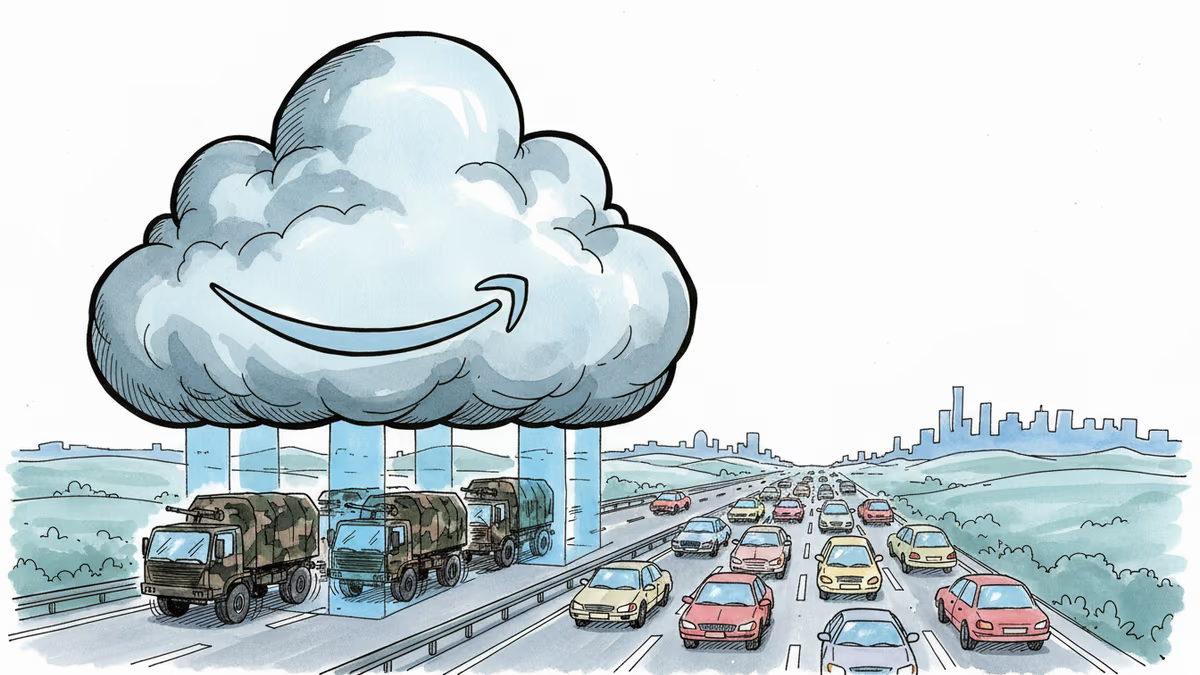
After DoD labels Anthropic a supply chain risk, Amazon says it will continue offering Claude AI to customers except for defense work. Big Tech navigates new geopolitical AI landscape.
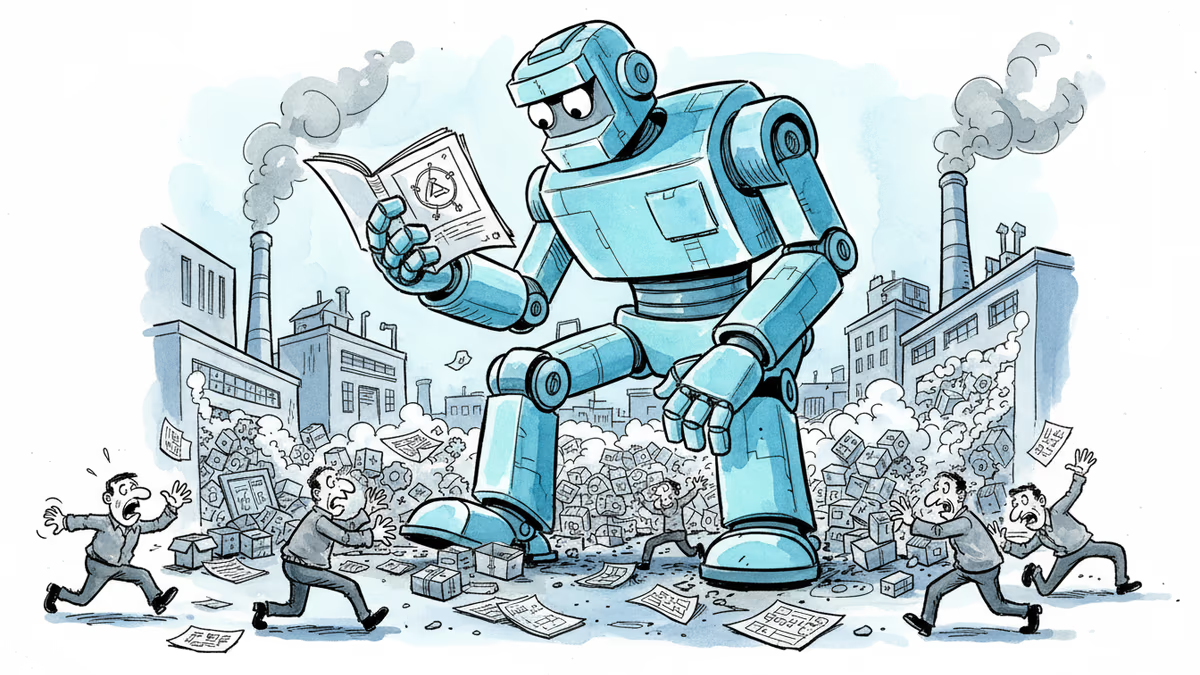
Companies deploying AI are facing unexpected failures not from rogue systems, but from AI that follows instructions too literally. A beverage company overproduced hundreds of thousands of cans, while a customer service bot approved refunds indiscriminately.
OpenAI named Microsoft as a key business risk in a document shared with investors during its latest $120B funding round — offering a preview of what's coming in its IPO filing.
Gulf businesses are snapping up political violence insurance as regional conflict spreads. What does a booming war-risk market tell us about where the world is heading?
After DoD labels Anthropic a supply chain risk, Amazon says it will continue offering Claude AI to customers except for defense work. Big Tech navigates new geopolitical AI landscape.
Companies deploying AI are facing unexpected failures not from rogue systems, but from AI that follows instructions too literally. A beverage company overproduced hundreds of thousands of cans, while a customer service bot approved refunds indiscriminately.
Thoughts
Share your thoughts on this article
Sign in to join the conversation