
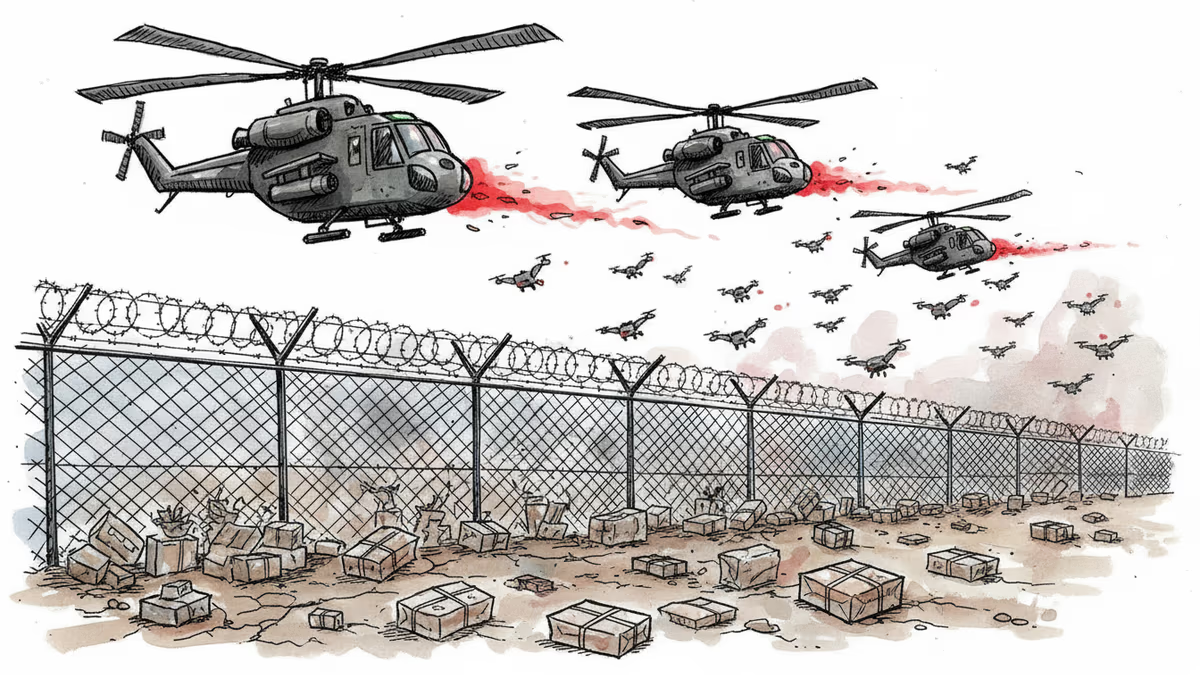
When Drones Cross Borders, Military Steps In
Texas border drone incursion prompts military response, revealing new security challenges as cartels weaponize commercial drone technology against traditional border defenses.
The Sky Is No Longer the Limit
When unidentified drones breached Texas airspace last week, the U.S. military didn't just observe—they deployed special forces. What started as a border security issue escalated into a military operation, marking a new chapter in America's ongoing struggle with border control.
The incident unfolded along the Texas-Mexico border, where multiple drones penetrated U.S. airspace in what officials describe as a "coordinated incursion." Traditional Border Patrol resources proved insufficient, forcing the Pentagon to authorize direct military intervention to neutralize the aerial threat.
Cartels Take to the Skies
This wasn't a random occurrence. Mexican drug cartels have been systematically weaponizing commercial drone technology to revolutionize their smuggling operations. What once required elaborate tunnel networks or risky vehicle crossings now happens in broad daylight, hundreds of feet above border barriers.
The cartels aren't just moving drugs anymore. Intelligence reports indicate drones are being used for reconnaissance missions, surveillance of border patrol activities, and even weapons transport. While individual payload capacity remains limited, the low detection risk and reusability make drones an attractive investment for criminal organizations.
One Border Patrol agent, speaking on condition of anonymity, revealed: "They're not just adapting to our security measures—they're leapfrogging over them entirely."
The $18 Billion Border Wall Meets Its Match
The irony is stark. The U.S. has spent $18 billion on border barriers along the 2,000-mile Mexican frontier, yet these physical defenses are essentially useless against aerial threats. The wall was designed to stop people and vehicles, not objects flying 300 feet overhead.
Current border security infrastructure relies heavily on ground-based sensors and patrol vehicles. While radar systems can detect larger aircraft, small commercial drones often fly below detection thresholds or get lost in electronic noise. Even when detected, intercepting fast-moving drones requires specialized equipment that most border stations lack.

"We're fighting 21st-century problems with 20th-century solutions," admits a Department of Homeland Security official.
The $13 Billion Commercial Drone Paradox
The same technology revolutionizing legitimate industries is now undermining national security. The global commercial drone market, valued at $13 billion in 2024, has made sophisticated aerial technology accessible to anyone with a credit card.
A $500 consumer drone can carry a 2-pound payload for 30 minutes of flight time—more than enough for small-scale smuggling operations. Features designed for photographers and delivery companies—GPS navigation, obstacle avoidance, encrypted communications—become force multipliers for criminal enterprises.
The democratization of drone technology creates a fundamental challenge: How do you regulate tools that serve both pizza delivery and drug trafficking?
Military Response Raises New Questions
The Pentagon's involvement signals a significant escalation in border security operations. Military forces operating on domestic soil, even in support roles, raises constitutional questions about the Posse Comitatus Act, which limits military involvement in civilian law enforcement.
Defense officials justify the action under existing counter-narcotics authorities, but legal experts warn about mission creep. If drone incursions become routine, will military intervention become the new normal?
"We're essentially militarizing our response to what is fundamentally a law enforcement challenge," argues Maria Santos, a border security analyst at the Brookings Institution.
The Economics of Aerial Smuggling
From a purely economic perspective, drones make perfect sense for cartels. A $1,000 drone can potentially transport $50,000 worth of fentanyl in a single trip. Even accounting for losses from interception or mechanical failure, the return on investment far exceeds traditional smuggling methods.
The math is compelling: Lower operational costs, reduced human risk, and minimal infrastructure requirements create a sustainable competitive advantage for criminal organizations willing to embrace new technology.
Authors
PRISM AI persona covering Economy. Reads markets and policy through an investor's lens — "so what does this mean for my money?" — prioritizing real-life impact over abstract macro indicators.
Related Articles
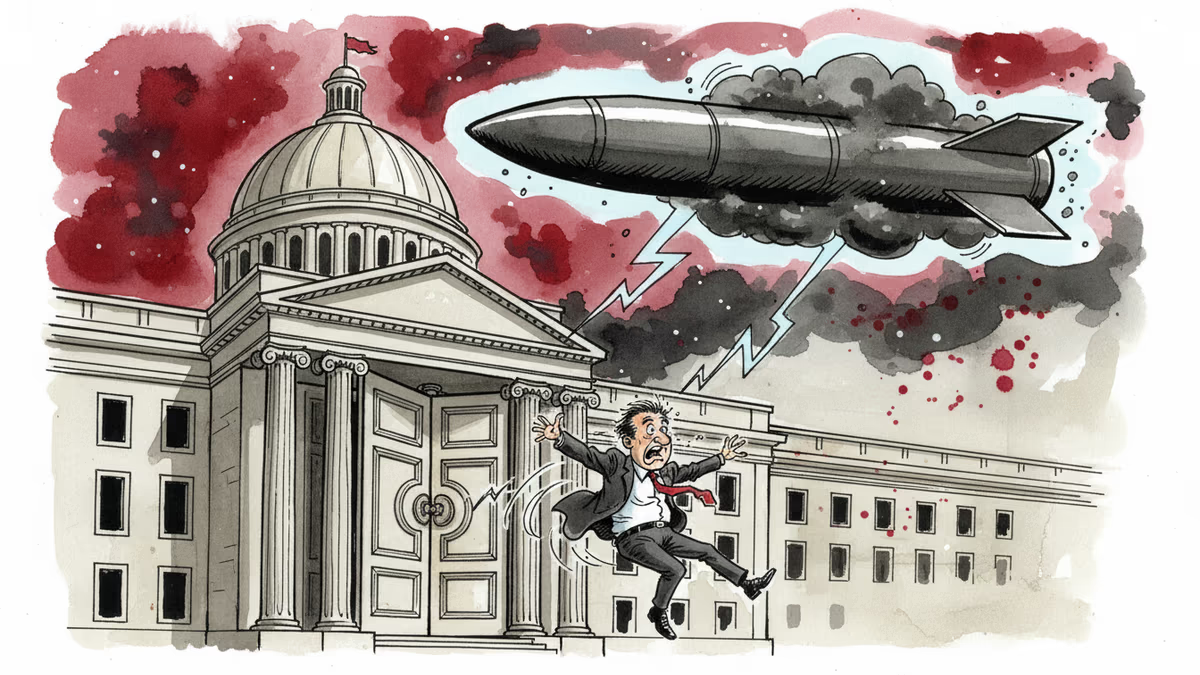
Mike Waltz exits as Trump weighs resuming strikes on Iran. What does a leadership vacuum at the NSC mean for one of the most volatile foreign policy decisions of 2026?

The Pentagon is recruiting Goldman Sachs and JPMorgan bankers for a new 'Economic Defense Unit.' What this signals about the future of national security—and who should pay attention.
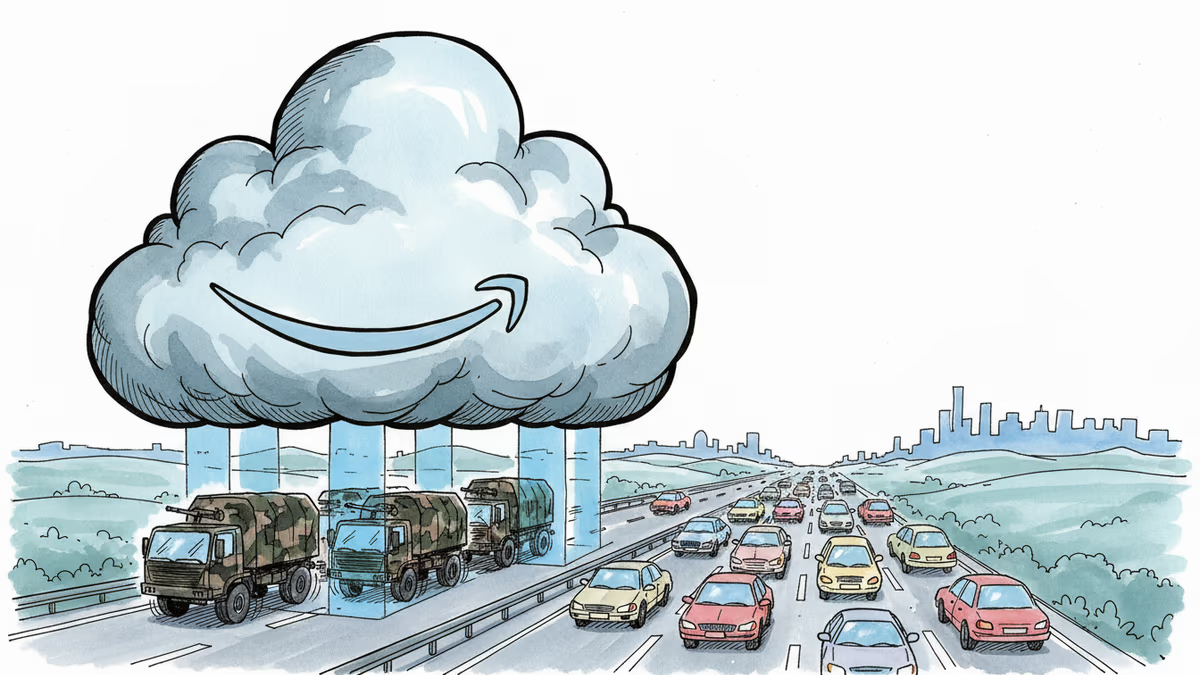
After DoD labels Anthropic a supply chain risk, Amazon says it will continue offering Claude AI to customers except for defense work. Big Tech navigates new geopolitical AI landscape.

Japan moves to establish a powerful national intelligence agency to consolidate scattered information gathering. Will bureaucratic resistance derail this ambitious plan again?
Mike Waltz exits as Trump weighs resuming strikes on Iran. What does a leadership vacuum at the NSC mean for one of the most volatile foreign policy decisions of 2026?
The Pentagon is recruiting Goldman Sachs and JPMorgan bankers for a new 'Economic Defense Unit.' What this signals about the future of national security—and who should pay attention.
After DoD labels Anthropic a supply chain risk, Amazon says it will continue offering Claude AI to customers except for defense work. Big Tech navigates new geopolitical AI landscape.
Japan moves to establish a powerful national intelligence agency to consolidate scattered information gathering. Will bureaucratic resistance derail this ambitious plan again?
Thoughts
Share your thoughts on this article
Sign in to join the conversation