

回顧2025:從AI到基因療法,年度最差技術榜單即將揭曉
2025年即將結束,回顧人工智慧、減重藥物、基因療法等重大科技發展。《MIT科技評論》正籌備2026年突破性技術榜單,以及備受關注的「年度最差技術」盤點。
再過幾週,我們即將告別2025年。這是風雲變幻的一年:人工智慧(AI)加速融入生活各個層面,減重藥物擴大了應用範疇,而基因療法、試管嬰兒(IVF)及神經科技等生物技術領域,也湧現了許多驚人的突破。
一如往常,《MIT科技評論》的團隊已著手彙編「2026年突破性技術」榜單,預計將於新年度正式發布,敬請關注。
與此同時,我的同事安東尼奧·雷加拉多(Antonio Regalado)也整理了他每年傳統的「年度最差技術」清單。在眾多創新之中,哪些技術帶來了意想不到的負面影響?
我們誠摯邀請您挑戰自己的記憶力。這一年來,您對我們寄送到信箱的《The Checkup》週報內容,究竟記住了多少?
本文首次刊登於《MIT科技評論》每週四發送的生物科技電子報《The Checkup》。
Related Articles

Waymo suspended its robotaxi service in San Francisco during a city-wide blackout after vehicles were seen blocking traffic. The incident highlights the vulnerability of autonomous tech to infrastructure failures.
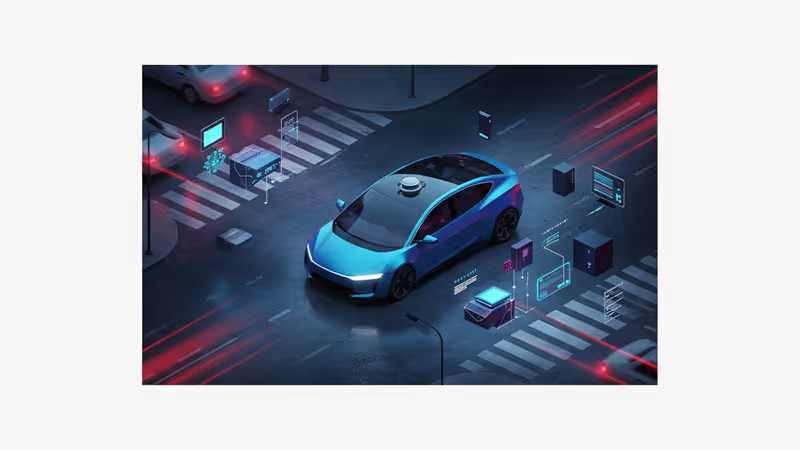
Alphabet's Waymo suspended its driverless robotaxi service in San Francisco after a massive power outage caused its vehicles to stall, raising questions about AV readiness for real-world urban failures.

A massive San Francisco power outage stranded Waymo's driverless cars, causing major traffic jams. The incident highlights a critical vulnerability in infrastructure-dependent AVs, drawing stark comparisons to Tesla's FSD performance.

For nearly 80 years, the simplex method algorithm had a theoretical flaw suggesting it could be exponentially slow. Two researchers have now proven why it's always fast in practice.