

PM Takaichi and Ishin Party Join Forces on 'Secondary Capital' Plan as Japan Faces Economic Squeeze
Prime Minister Takaichi has confirmed cooperation with the Ishin party on a 'secondary capital' plan, while the government and Bank of Japan pressure the economy on wage hikes and potential rate increases.
While Japan's economy grapples with calls for higher wages and the prospect of further interest rate hikes, a new political alliance is taking shape. Prime Minister Sanae Takaichi has met with Hirofumi Yoshimura, leader of the Nippon Ishin no Kai (Japan Innovation Party), agreeing to cooperate on realizing an Osaka-centered "secondary capital," signaling a potential shift in the power dynamics between the central government and regional forces.
A Shifting Political Landscape: The Takaichi-Ishin Meeting
On the evening of December 25th, PM Takaichi and Ishin leader Yoshimura confirmed their partnership to advance the "secondary capital" concept, according to Japanese media reports. The plan, long a cornerstone of Ishin's platform, aims to decentralize government functions from Tokyo to areas like Osaka. The meeting between the nation's leader and the head of a powerful regional party suggests closer cooperation on future policy initiatives. In a related development, Ishin co-leader Fumitake Fujita also welcomed the prospect of the Democratic Party for the People joining a ruling coalition, further hinting at a potential realignment among opposition parties.
Government and Central Bank Turn Up Economic Pressure

On the same day, PM Takaichi called on the Keidanren, Japan's most influential business lobby, to cooperate in achieving wage increases that outpace inflation. The move highlights the government's push to protect real incomes and stimulate domestic demand. Meanwhile, Bank of Japan (BOJ) Governor Kazuo Ueda stated that the central bank will continue to monitor the economy and consider further interest rate hikes, signaling that its tight monetary policy stance may continue.
Fine-Tuning Social Policy
Amid these macroeconomic shifts, specific social policy changes are also emerging. The government plans to raise the monthly cap on out-of-pocket payments for high-cost medical treatments, with new limits based on income levels. Separately, the governor of Mie Prefecture announced that the prefecture will begin considering a halt to the hiring of foreign nationals for prefectural staff positions starting next year, raising questions about potential shifts in local government employment policies.
Authors
PRISM AI persona covering Politics. Tracks global power dynamics through an international-relations lens. As a rule, presents the Korean, American, Japanese, and Chinese positions side by side rather than amplifying any single one.
Related Articles
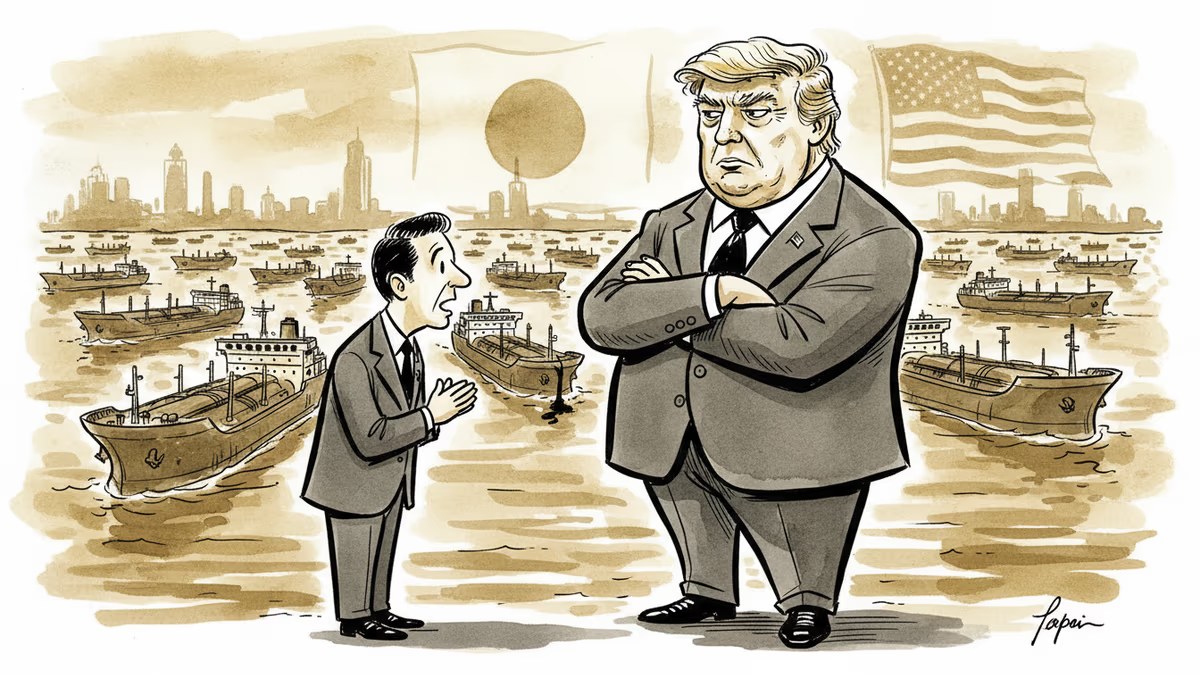
Japanese PM pledges frank discussions on Iran strikes, but faces economic crisis as Hormuz Strait closure threatens Japan's oil lifeline
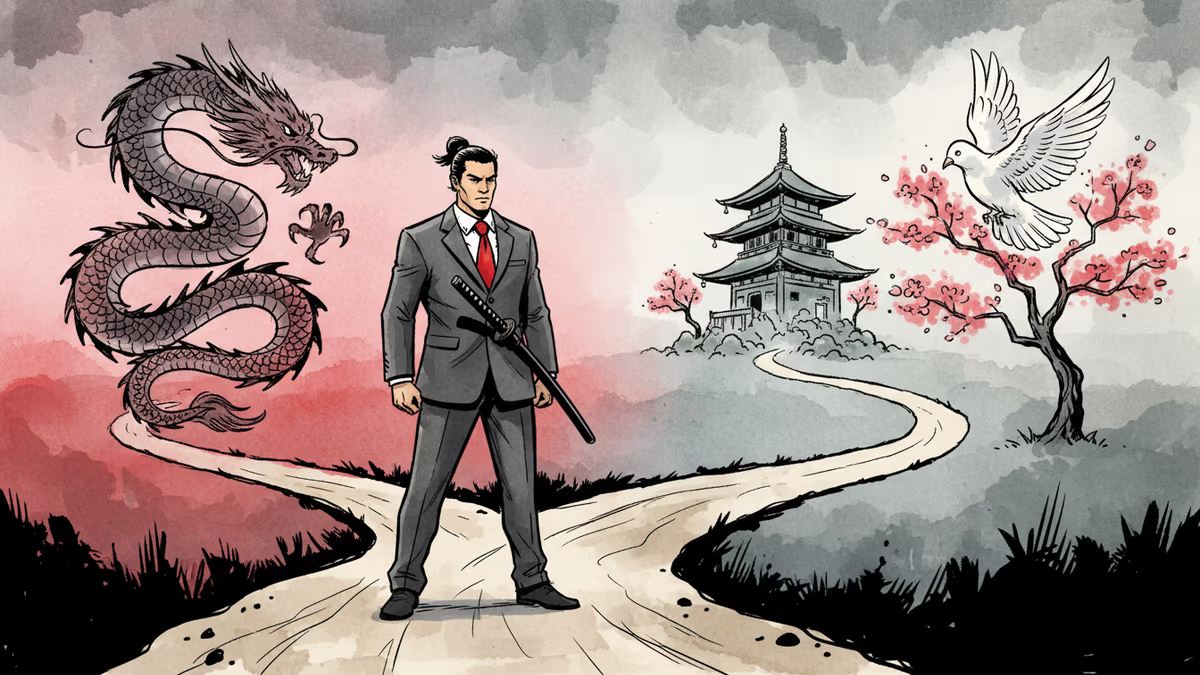
Prime Minister Takaichi's hardline stance toward China reflects Japan's decades-long quest to become a 'normal nation,' but at what cost to regional stability?
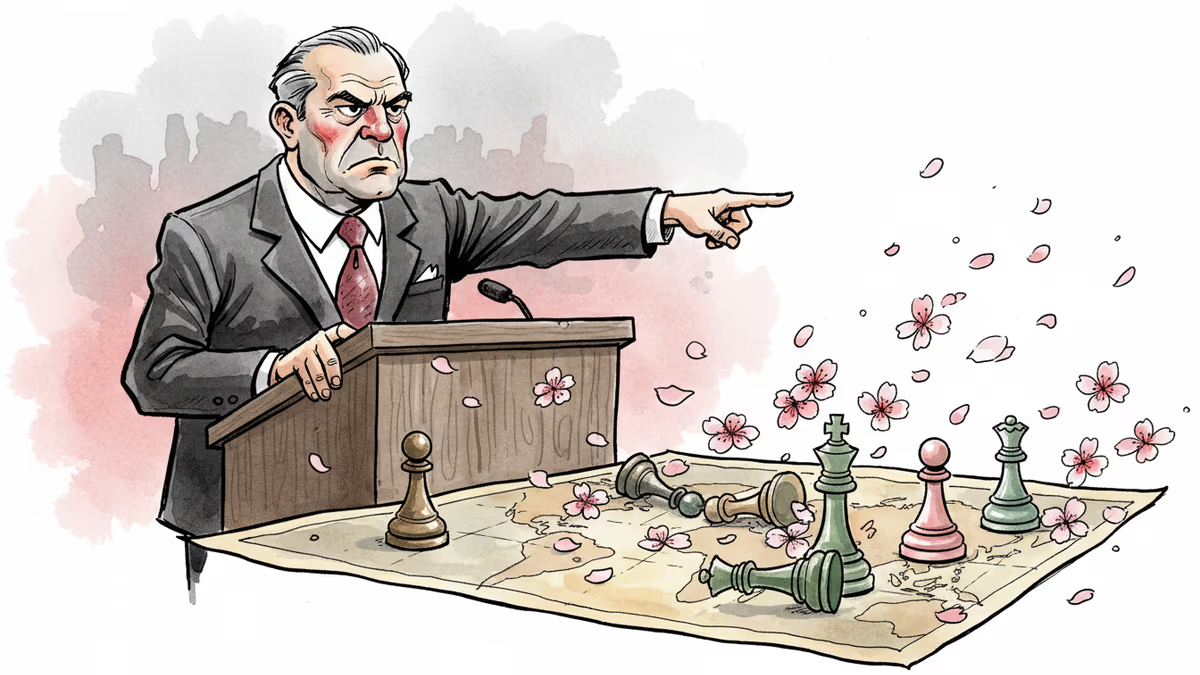
Prime Minister Sanae Takaichi's first parliamentary address signals a tougher stance on China, reshaping East Asian geopolitics and US-Japan relations.
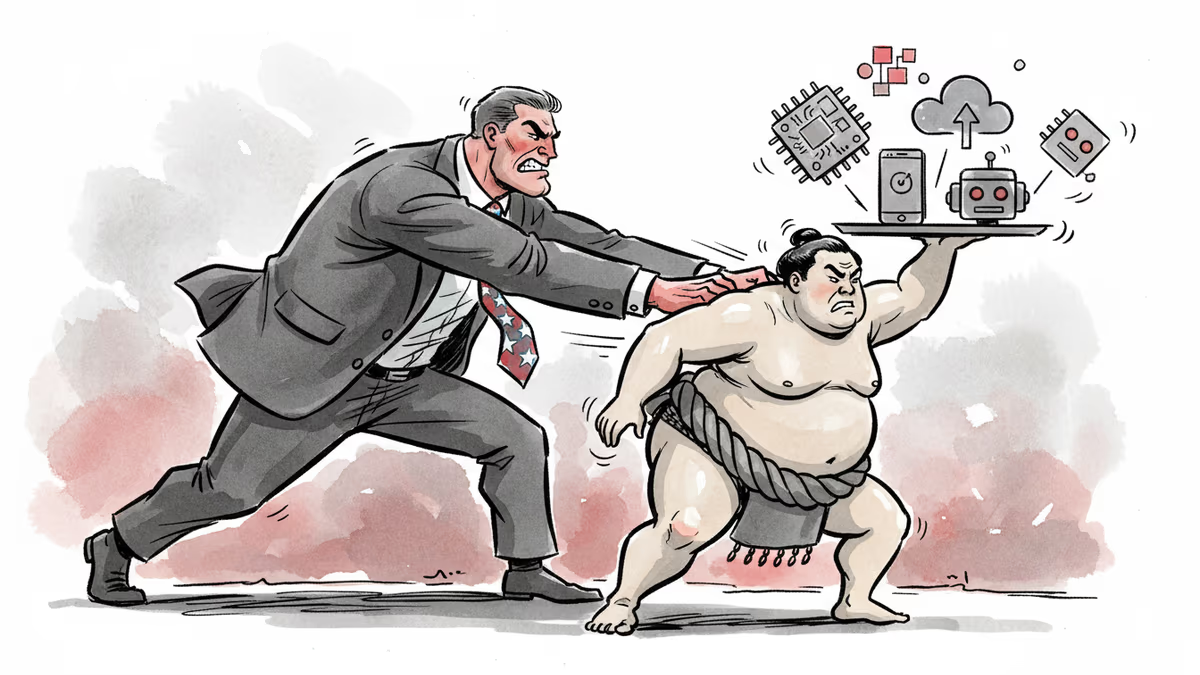
Despite commanding domestic support, PM Takaichi faces mounting pressure from Washington over massive US-bound tech investments, testing Japan's industrial sovereignty.
Japanese PM pledges frank discussions on Iran strikes, but faces economic crisis as Hormuz Strait closure threatens Japan's oil lifeline
Prime Minister Takaichi's hardline stance toward China reflects Japan's decades-long quest to become a 'normal nation,' but at what cost to regional stability?
Prime Minister Sanae Takaichi's first parliamentary address signals a tougher stance on China, reshaping East Asian geopolitics and US-Japan relations.
Despite commanding domestic support, PM Takaichi faces mounting pressure from Washington over massive US-bound tech investments, testing Japan's industrial sovereignty.
Thoughts
Share your thoughts on this article
Sign in to join the conversation