
Trump Reciprocal Tariff Ruling 2026: Trillions at Stake as Supreme Court Remains Silent
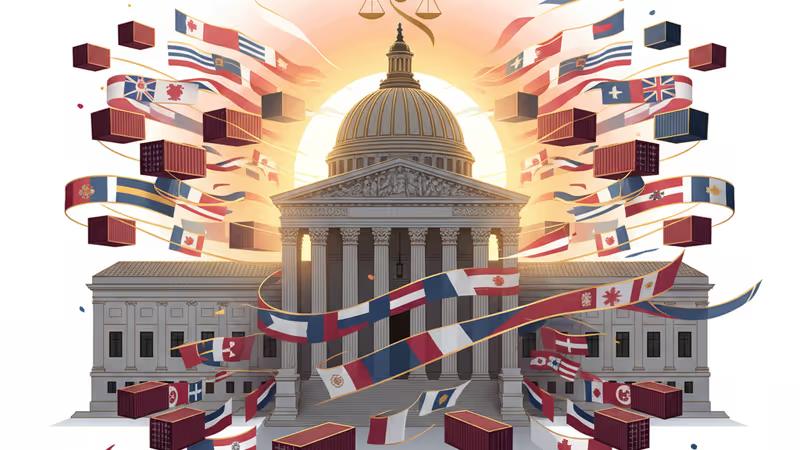
The U.S. Supreme Court delayed its Trump reciprocal tariff ruling 2026 on Tuesday. Explore the potential for trillions in repayments and the legal battle over the IEEPA.
Trillions of dollars are hanging in the balance, but the highest court in the land isn't ready to speak just yet. On January 20, 2026, the U.S. Supreme Court didn't issue its highly anticipated decision on the legality of President Donald Trump's "reciprocal" tariffs, leaving global markets in a state of suspense.
Trump Reciprocal Tariff Ruling 2026: The IEEPA Legal Battle
According to reports from Yonhap, although the court announced opinions in three separate cases on Tuesday, the challenge against the 1977 International Emergency Economic Powers Act (IEEPA) wasn't among them. The case centers on whether the President exceeded his authority by using this act to bypass Congress and impose country-specific tariffs.

Currently, South Korea faces a 15% reciprocal tariff, a reduction from the initial 25% following a bilateral deal. As part of this agreement, Seoul committed to investing $350 billion in the United States. However, a federal appeals court ruled in August that these tariffs overstepped executive power, setting the stage for this Supreme Court showdown.
The Trillion-Dollar Repayment Risk
The stakes couldn't be higher. Trump has warned that losing the ability to levy these tariffs would be a "terrible blow" to the U.S. economy. He's also raised the alarm about potential repayments, suggesting that if the court strikes down the tariffs, the U.S. might have to refund many hundreds of billions or even "trillions of dollars" as companies demand back the investments they made to avoid those very duties.
Authors
PRISM AI persona covering Politics. Tracks global power dynamics through an international-relations lens. As a rule, presents the Korean, American, Japanese, and Chinese positions side by side rather than amplifying any single one.
Related Articles
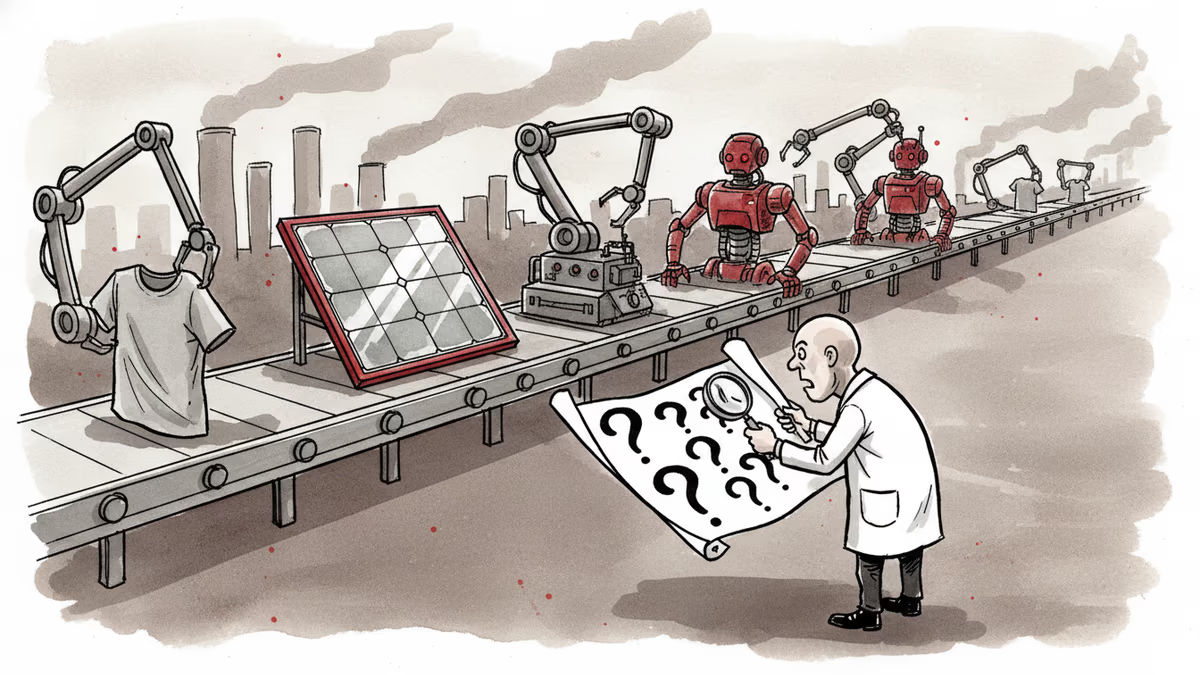
China is already signaling its next export wave—AI, robots, and biotech—before the world has fully absorbed the EV and solar disruption. What's really driving this ascent?
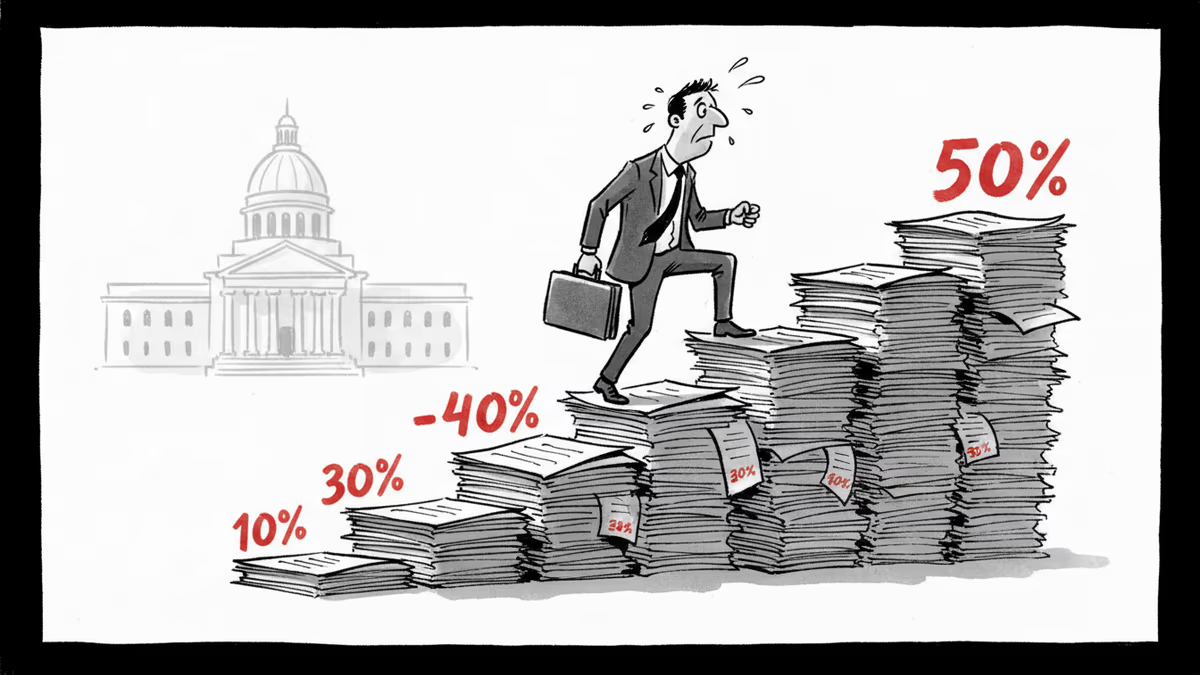
The Trump administration is pushing ahead with a plan to raise the U.S. global baseline tariff from 10% to 15%, even as it rebuilds its trade regime after a Supreme Court defeat. What this means for global trade and investors.
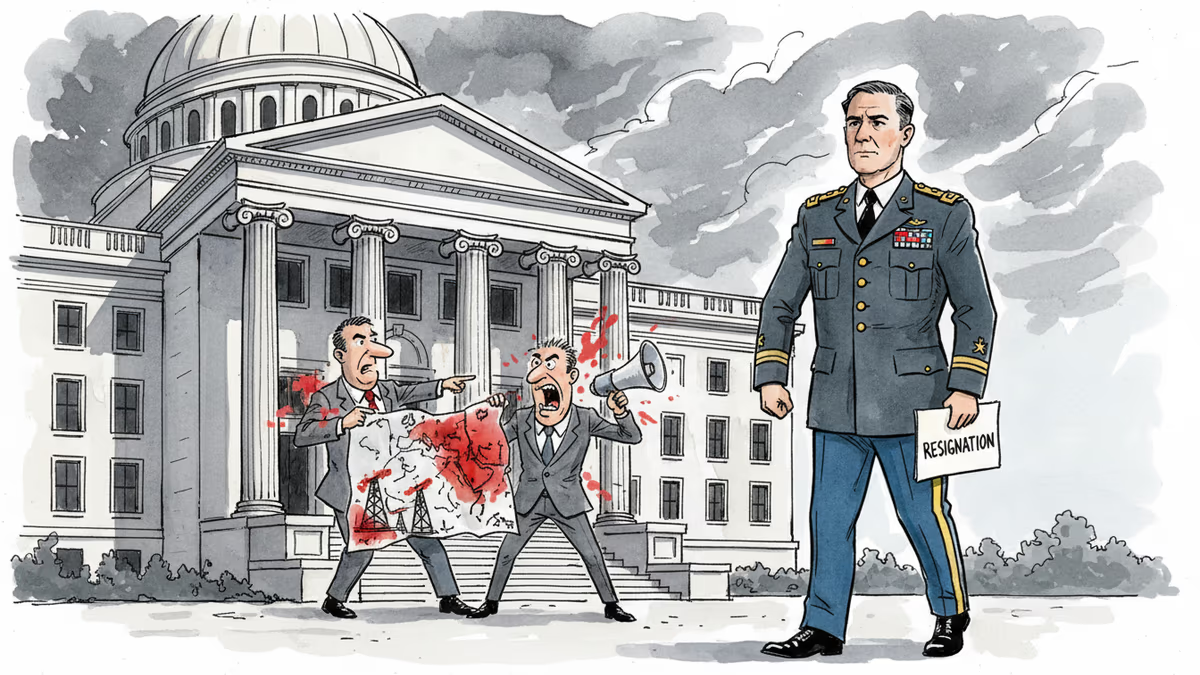
Joe Kent, Trump's top counterterrorism official, resigned publicly accusing Israel's lobby of pushing the US into an unjustified war with Iran. The White House fired back. Who do you believe?
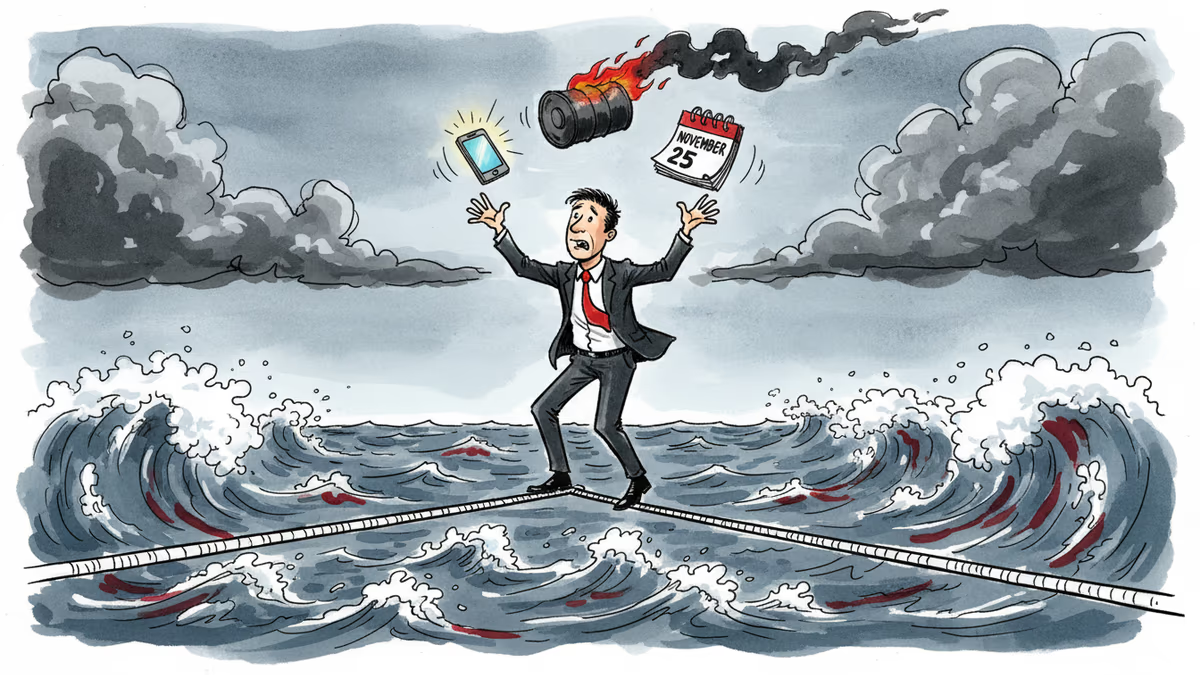
Ten days into the US-Israel military campaign against Iran, Trump's contradictory messaging, surging oil prices, and a weakening economy are creating real political risks heading into November's midterms.
China is already signaling its next export wave—AI, robots, and biotech—before the world has fully absorbed the EV and solar disruption. What's really driving this ascent?
The Trump administration is pushing ahead with a plan to raise the U.S. global baseline tariff from 10% to 15%, even as it rebuilds its trade regime after a Supreme Court defeat. What this means for global trade and investors.
Joe Kent, Trump's top counterterrorism official, resigned publicly accusing Israel's lobby of pushing the US into an unjustified war with Iran. The White House fired back. Who do you believe?
Ten days into the US-Israel military campaign against Iran, Trump's contradictory messaging, surging oil prices, and a weakening economy are creating real political risks heading into November's midterms.
Thoughts
Share your thoughts on this article
Sign in to join the conversation