
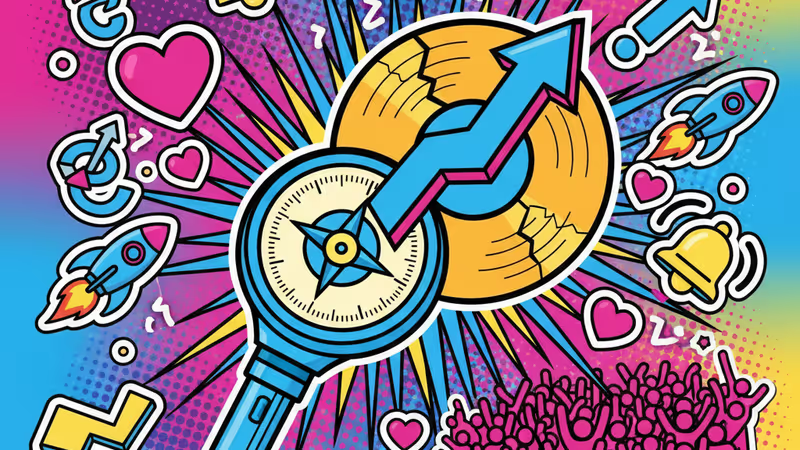
Stray Kids' Billboard Record Isn't Just a Number—It's a Viral Playbook for Modern Fandom
Stray Kids just hit a major Billboard milestone. We break down why the real story isn't the chart position, but the fan-driven viral engine behind it.
Why This Is Dominating Fan Timelines
Stray Kids recently secured another major milestone, with their album tying a record for their longest run on the Billboard 200 chart. But the real story isn't just the statistic; it's the explosive, coordinated fan celebration that erupted online. This isn't just music news—it's a perfect case study in how modern fandoms operate as powerful, decentralized marketing engines that can keep a project culturally relevant for months on end.
The Story: How Longevity Becomes a Viral Event
While a debut at #1 on the Billboard 200 is a massive achievement, sustained presence on the chart weeks and even months later is arguably more impressive. It signals a shift from initial hype to genuine, lasting demand. For a group like Stray Kids, whose music is often described as bold and unconventional, this longevity is proof that their 'noise music' has found a deeply committed audience in the competitive US market.
When news broke that their album (like the acclaimed “★★★★★ (5-STAR)”) had spent 16 consecutive weeks on the chart, tying a personal record, it didn't just get a nod of approval from fans. Instead, it triggered a full-blown digital festival. Hashtags trended globally, and fan-made charts and celebratory graphics flooded social media, turning a dry data point into a massive victory lap for the entire community.
The Internet Reacts: A Masterclass in Fan Celebration
Scroll through any fan-centric corner of the internet after news like this drops, and you'll see a fascinating ecosystem at work. Here’s a taste of the reactions that define these moments:
- The Data Analyst: You'll always find fans who are basically unpaid chart statisticians. Their posts look something like this: "SKZ BILLBOARD DOMINATION! 🔥 ‘★★★★★’ now ties ‘ODDINARY’ for their longest-charting album at 16 weeks. This proves consistent growth and a stable US fanbase. We are BUILDING an empire." These posts provide context and fuel the sense of a quantifiable, shared achievement.
- The Proud Parent: This reaction is pure, unadulterated emotion. It's about the artists' journey: "I'm crying. Thinking back to their trainee days and now seeing them spend FOUR MONTHS on the Billboard chart... they deserve every bit of this success. So proud of my boys." This humanizes the data and strengthens the emotional bond within the fandom.
- The Meme Lord: Humor is the internet's love language, and K-pop fans are fluent. Expect to see a popular GIF or a clip of the members used out of context: "Stray Kids’ album refusing to leave the Billboard 200 chart like:" followed by a video of a member stubbornly refusing to be moved. These posts are highly shareable and carry the news to a broader audience.
- The Evangelist: Every milestone is a recruitment opportunity. These fans use the success as a hook for newcomers: "Stray Kids just tied their own record for longest-charting album in the US. If you're STILL sleeping on them, this is your official wake-up call. Go listen to ‘KARMA’ and thank me later."
Cultural Context: The Rise of the 'Stan-Strategist'
What we're witnessing is the evolution of the music fan from a passive consumer to an active strategist and marketer. K-pop fandoms, known as 'STAY' in the case of Stray Kids, understand the complex mechanics of the music industry—from Nielsen's chart metrics to the importance of radio play and streaming equivalents. They organize mass streaming parties, coordinate album purchases, and create viral social media campaigns with the precision of a seasoned PR firm.
This phenomenon resonates globally because it's a form of digital-age empowerment. In a world where individuals can feel powerless, contributing to a collective goal that yields tangible, record-breaking results is incredibly compelling. It transforms listening to music from a solitary act into a collaborative, goal-oriented mission.
PRISM Insight: The New Rules of Music Virality
The key takeaway here is the fundamental shift in what drives sustained musical success. The old model was top-down: a label pushes an artist through radio, TV, and press. The new model, exemplified by Stray Kids, is a hybrid where the initial push is amplified and sustained by a bottom-up, fan-driven engine.
This is 'Community-as-Marketing': The most valuable asset for an artist in 2025 isn't just a hit song; it's an engaged, organized community that will work tirelessly to support them. This community doesn't just consume content; they create it, remix it, and use it to evangelize. The endless stream of memes, analytical threads, and emotional testimonials celebrating this Billboard achievement is far more authentic and persuasive than any traditional ad campaign.
The lesson for the broader industry is clear: Fandom is not a passive audience to be marketed *to*. It's an active partner to be cultivated. The artists and labels who understand this—who provide their communities with the lore, content, and recognition they crave—are the ones who won't just top the charts for a week, but will own a piece of the cultural conversation for months, or even years, to come.
Related Articles

Stray Kids & NCT DREAM's chart dominance isn't just a win. It's a masterclass in fandom economics that reveals a new blueprint for the global music industry.
A new K-drama teaser for 'To My Beloved Thief' is going viral. We break down why the classic 'mistaken identity' trope has fans obsessed worldwide.
A BLACKPINK Rosé impersonator went viral for signing autographs in China, sparking a global fan debate. Is it harmless fun or a new form of identity theft?
EXO Baekhyun's wild dating rumor was met not with anger, but with hilarious memes. Here's why the fan reaction is a masterclass in modern damage control.