

Why Great Products Fail: Startup Distribution Strategy GTMfund 2026 Insights
Explore the Startup Distribution Strategy GTMfund 2026. Paul Irving explains why distribution, not product, is the final moat for startups in the AI era.
Building software has never been easier, yet why do so many well-funded startups fail to take off? Paul Irving, Partner and COO at GTMfund, argues it's because founders focus too much on product development and not enough on distribution excellence.
Distribution: The Final Moat in the Startup Distribution Strategy GTMfund 2026
The traditional go-to-market playbook, once effective for enterprise SaaS, is becoming obsolete in 2026. Innovation cycles that used to span years now move in months. Irving advises portfolio companies to differentiate through their distribution rather than just their product features. In the AI era, how you reach your customer is your ultimate defense.

The aperture for how you build your go-to-market or revenue engine has never had more unique and specific pathways depending on your company.
Creative Pathways to Customer Acquisition
Early-stage investors aren't impressed by startups that burn half their budget on paid ads. Instead, they look for founders who get creative. Irving cites an example of a startup that targeted specific Facebook groups: out of 1,000 people, 700 were their actual Ideal Customer Profile (ICP). This niche focus helped them acquire 40-60 new customers in a single year.
Authors
Related Articles
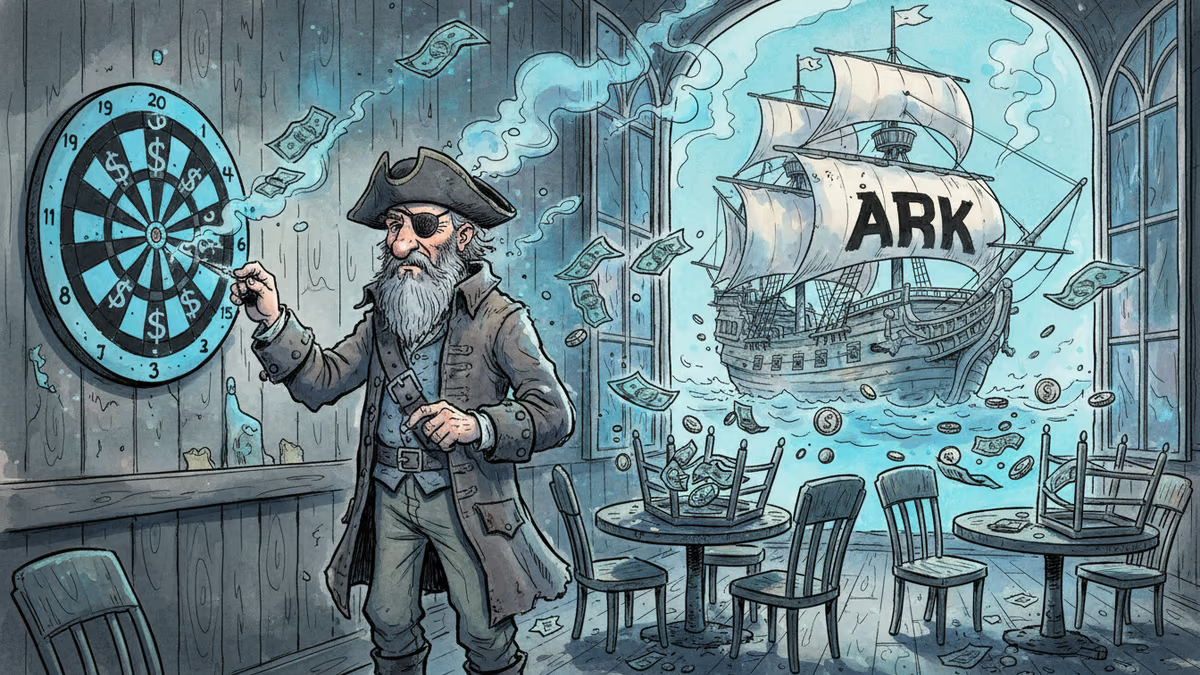
Lucra Sports CEO Dylan Robbins landed Cathie Wood's ARK Invest as a Series B lead without building AI. The story behind his unconventional fundraising playbook.
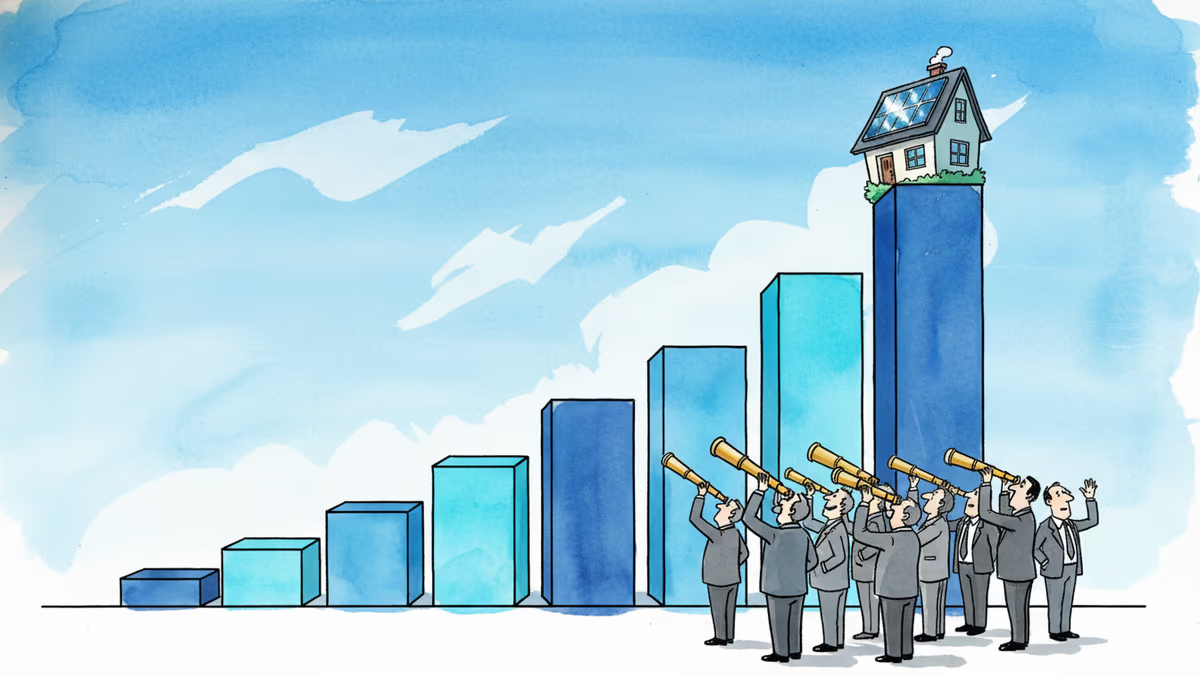
SolarSquare is raising $55-60M at a $450-500M valuation, more than doubling its worth in 18 months. Here's what's driving investor conviction in India's residential solar market.
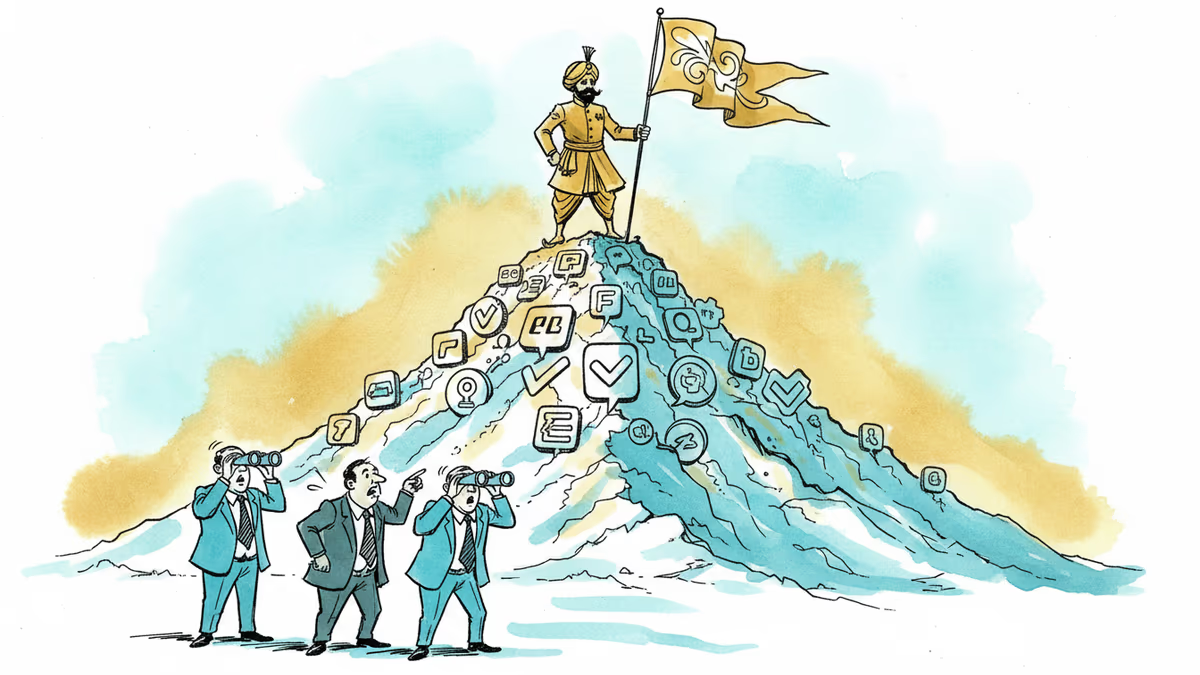
Indian venture capital has quietly displaced Silicon Valley in its own backyard. Only one American VC made India's top 10 investor list last year. Here's why that matters beyond India.
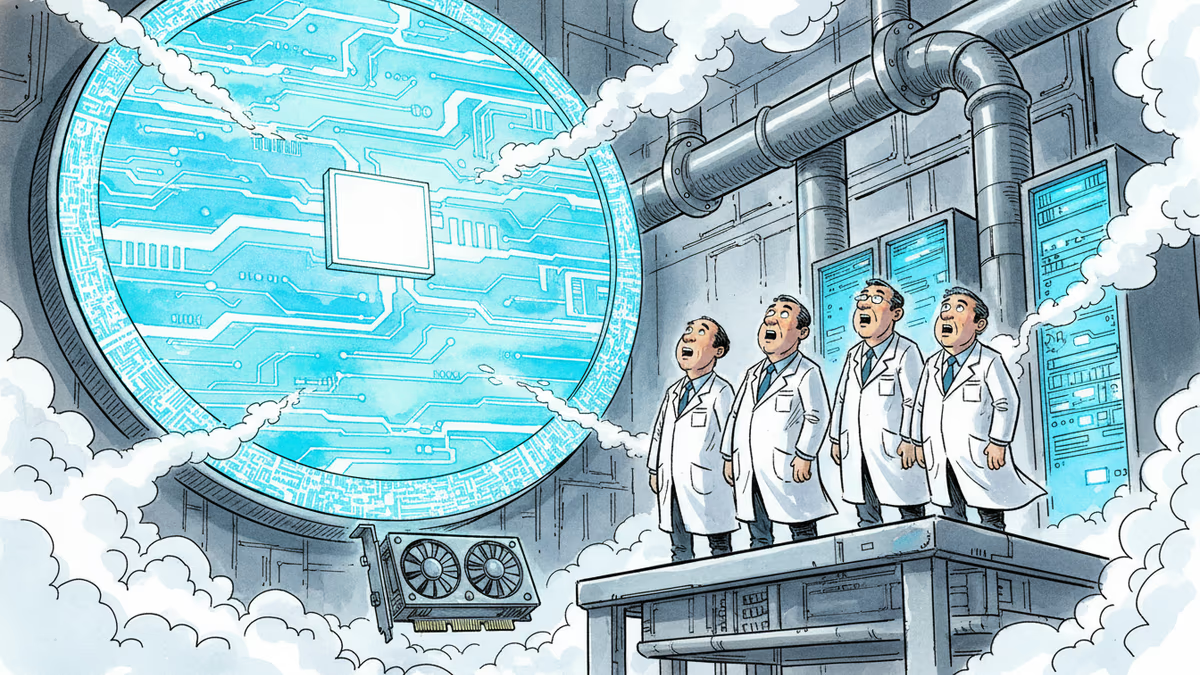
Cerebras Systems IPO yields a $5.3 billion return for Benchmark. Explore the 8.5-year journey from a reluctant first meeting to challenging Nvidia's AI dominance.
Lucra Sports CEO Dylan Robbins landed Cathie Wood's ARK Invest as a Series B lead without building AI. The story behind his unconventional fundraising playbook.
SolarSquare is raising $55-60M at a $450-500M valuation, more than doubling its worth in 18 months. Here's what's driving investor conviction in India's residential solar market.
Indian venture capital has quietly displaced Silicon Valley in its own backyard. Only one American VC made India's top 10 investor list last year. Here's why that matters beyond India.
Cerebras Systems IPO yields a $5.3 billion return for Benchmark. Explore the 8.5-year journey from a reluctant first meeting to challenging Nvidia's AI dominance.
Thoughts
Share your thoughts on this article
Sign in to join the conversation