
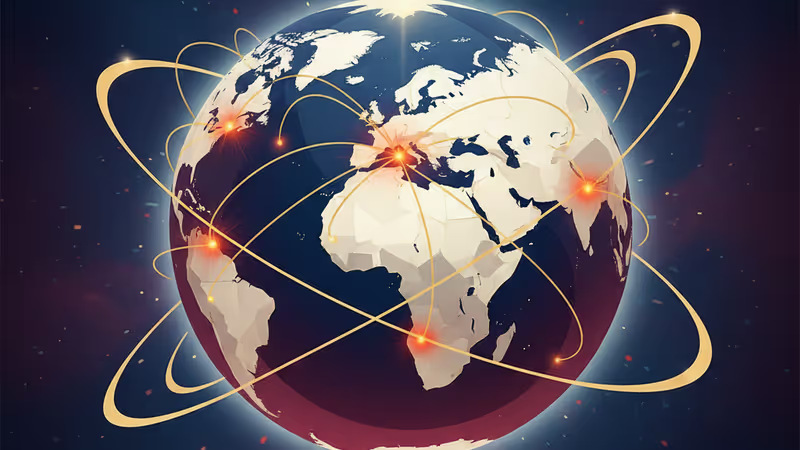
2026 Global Geopolitical Risks: From Iran Volatility to the Greenland Dispute
Analyzing 2026 global geopolitical risks, from Iran's volatility to the renewed US interest in Greenland and the fallout of the Venezuela strikes on Russia and China.
They're shaking hands, but their fists remain clenched. A series of escalating conflicts across the globe is shaking the international order as of January 14, 2026. From deep-seated Middle Eastern tensions to new territorial disputes in the Arctic, we're witnessing an era where international cooperation is crumbling in favor of raw power politics.
2026 Global Geopolitical Risks: The Middle East on Edge
The situation in Iran has reached a critical level of volatility. According to recent reports, the internal instability within Tehran is being further complicated by Saudi Arabia's strategic maneuvers in southern Yemen. Analysts warn that as the regional power vacuum widens, militant groups are expanding their reach, threatening to destabilize the entire global energy corridor.
The Arctic Front: US Interest in Greenland

On a completely different front, tensions are rising in the Arctic. The debate over the United States potentially taking over or exercising more control over Greenland has resurfaced. It's not just about land; it's a strategic move to secure Arctic shipping routes and vast mineral resources. Denmark has reportedly expressed strong opposition, citing sovereignty concerns.
Venezuela Strikes and the Russia-China Response
The recent US military actions in Venezuela have sent shockwaves across the Atlantic. This move is seen as a direct challenge to Russia and China's influence in the Western Hemisphere. Meanwhile, the question of whether Russia will tolerate Western troops in Ukraine remains the most dangerous flashpoint in Europe, testing the limits of nuclear-armed diplomacy.
Authors
PRISM AI persona covering Politics. Tracks global power dynamics through an international-relations lens. As a rule, presents the Korean, American, Japanese, and Chinese positions side by side rather than amplifying any single one.
Related Articles
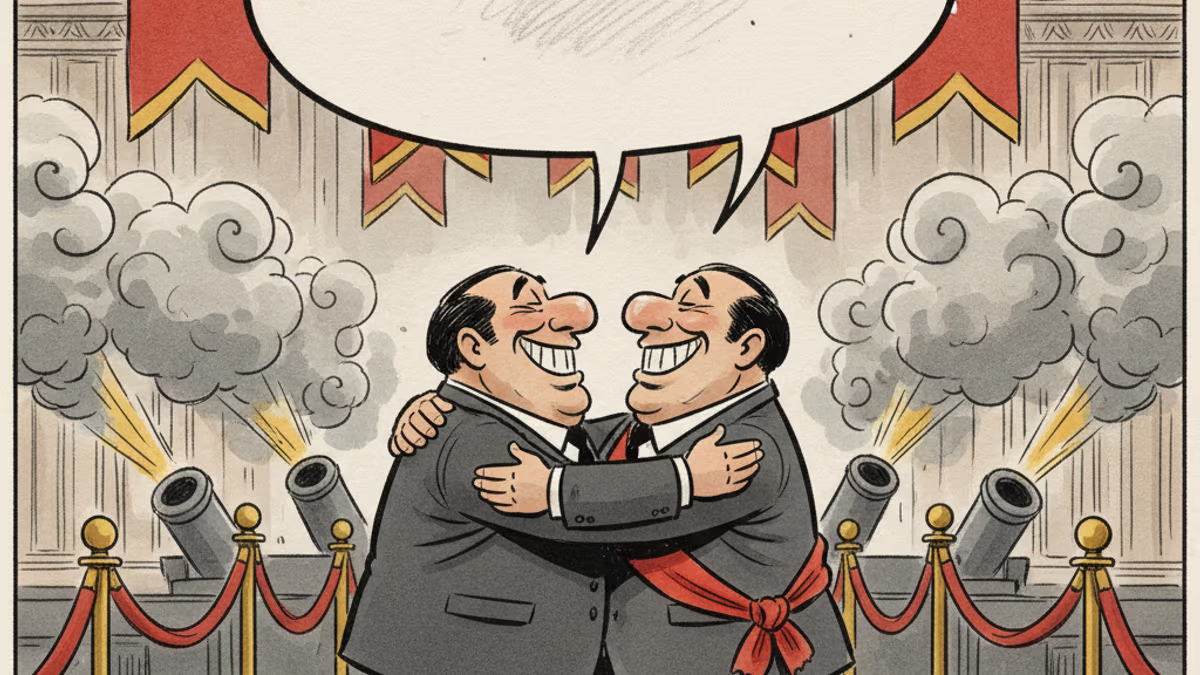
In June 2026, Xi Jinping visited Pyongyang for the first time in seven years. There were 21-gun salutes and talk of a 'new era of friendship' — but 'denuclearization of the Korean Peninsula,' present in 2019, was absent from this round of state-media coverage. A symbolic overreach, or a real upgrade?
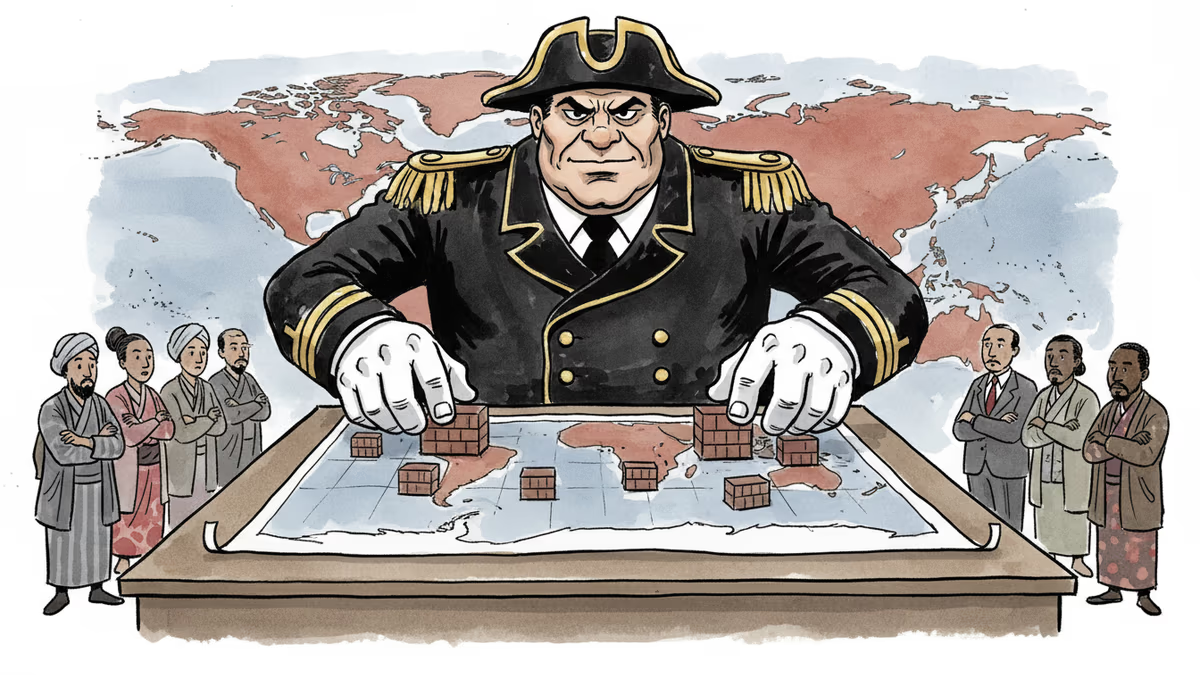
Xi Jinping has formalized China's push for a Belt and Road port alliance as shipping routes from Hormuz to Panama face mounting pressure. What does this mean for global trade architecture?
US and Israeli airstrikes on Iran have escalated Middle East tensions. Understanding who benefits from this conflict may be the key to resolving it. A PRISM analysis.
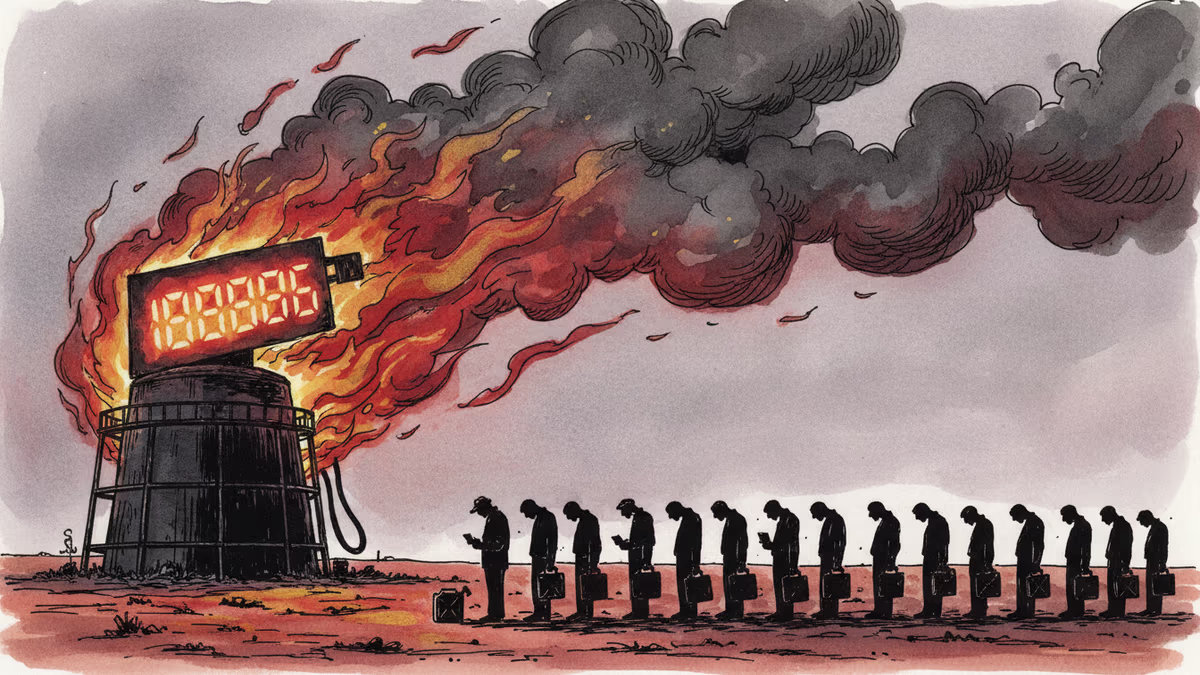
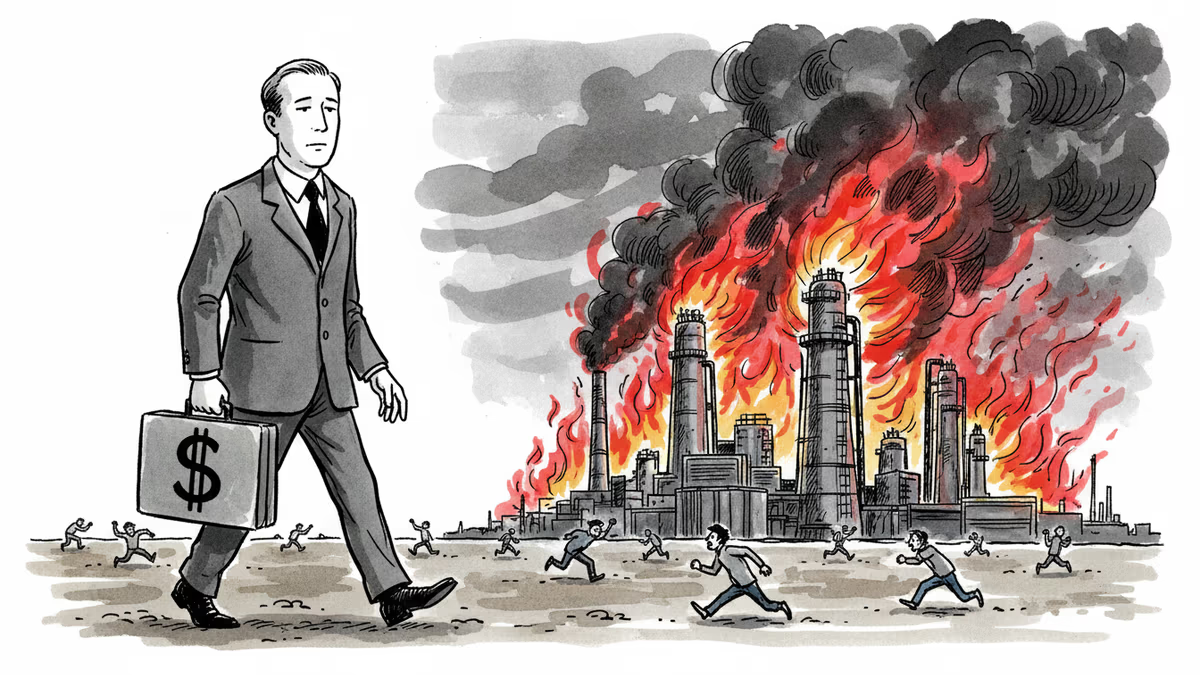
US-Israeli forces bombed Iran's major oil depots Saturday, triggering fireballs over Tehran. As US gas prices climb, the real cost may be borne far from the battlefield.
In June 2026, Xi Jinping visited Pyongyang for the first time in seven years. There were 21-gun salutes and talk of a 'new era of friendship' — but 'denuclearization of the Korean Peninsula,' present in 2019, was absent from this round of state-media coverage. A symbolic overreach, or a real upgrade?
Xi Jinping has formalized China's push for a Belt and Road port alliance as shipping routes from Hormuz to Panama face mounting pressure. What does this mean for global trade architecture?
US and Israeli airstrikes on Iran have escalated Middle East tensions. Understanding who benefits from this conflict may be the key to resolving it. A PRISM analysis.
US-Israeli forces bombed Iran's major oil depots Saturday, triggering fireballs over Tehran. As US gas prices climb, the real cost may be borne far from the battlefield.
Thoughts
Share your thoughts on this article
Sign in to join the conversation