
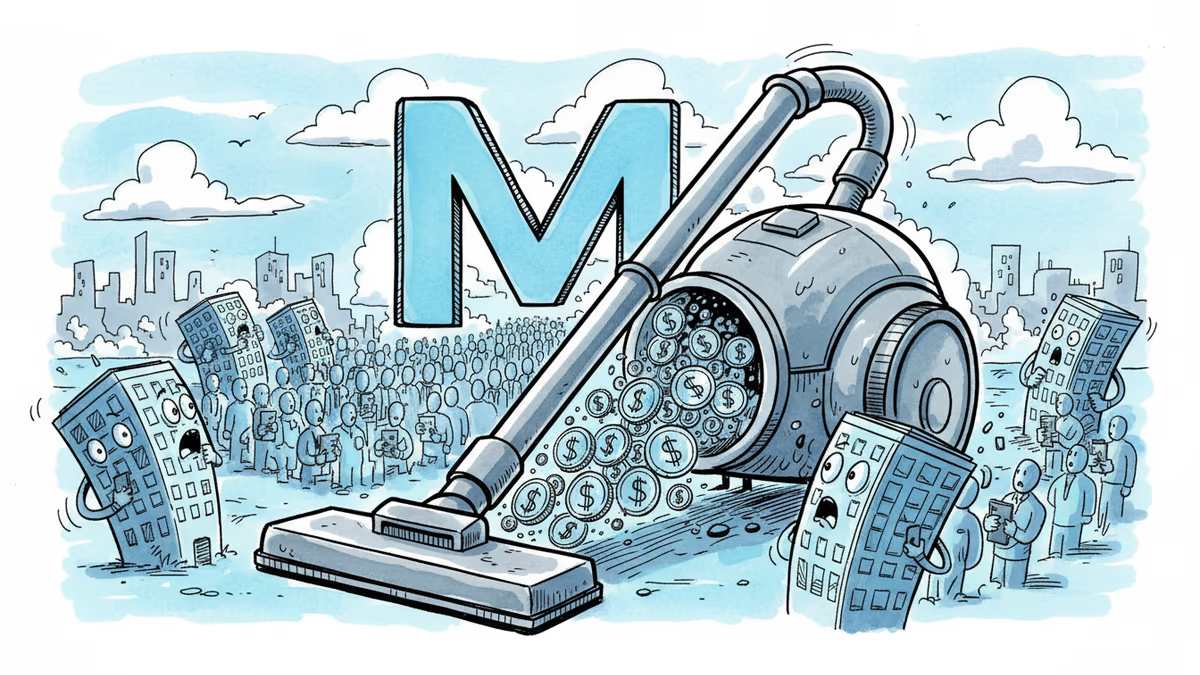
The 'Stablecoin Sandwich' Is Dead: Why Distribution Beats Innovation
As Meta returns to stablecoin payments with 3.6B users, the competitive advantage shifts from issuing tokens to owning customer relationships. The commodity era begins.
$1.1 billion. That's what Stripe paid for stablecoin specialist Bridge last year, betting big on the orchestration game. But if Christian Catalini is right, they might have bought into yesterday's playbook.
The co-creator of Meta's failed Libra project has a stark prediction: the "stablecoin sandwich" – the complex dance of converting fiat to crypto and back for payments – is becoming a commodity. The real money now lies elsewhere.
Meta's announcement that it's bringing stablecoin payments back in the second half of 2026 isn't just corporate news. It's a signal that the entire competitive landscape has shifted from who can build the best stablecoin to who owns the customer relationship.
When Innovation Becomes Infrastructure
Remember when being a stablecoin issuer was the golden ticket? Companies raced to create branded tokens, each promising to be the bridge between traditional finance and crypto. The technical complexity of moving seamlessly between fiat and digital assets was where the money lived.
Not anymore. "The market is becoming commodified," says Catalini, now an MIT professor. "Not just Meta, but also Google, Apple, all of them will be using multiple providers, as is the case when they do disbursements of payments."
This week alone, we saw AllUnity launch a Swiss franc token and SBI Holdings introduce a yen version. The flood of currency-specific stablecoins isn't innovation – it's commoditization in action.
The Distribution Advantage

So where's the new battleground? User relationships. And Meta has 3.6 billion of them across Facebook, WhatsApp, and Instagram.
This isn't about having the most technically sophisticated stablecoin. It's about having the most users already in your ecosystem. When Meta's VP of communications Andy Stone says the move is "about enabling people and businesses to make payments on our platforms using their preferred method," he's describing a distribution play, not a technology play.
The implications are massive for the payments industry. Visa and Mastercard have been worried about stablecoins cutting into their lucrative interchange fees. But if stablecoins become commoditized rails and the real value is in customer touchpoints, the card networks' existing distribution suddenly becomes their moat.
The Stripe Paradox
This creates an interesting tension for companies like Stripe. They've invested heavily in stablecoin infrastructure, even building their own blockchain called Tempo. But as Catalini points out, "If you are another big payment service provider, would you want to build on Stripe's Tempo? Probably not."
It's the classic platform dilemma: how do you get competitors to build on your infrastructure when they know you're also competing with them?
What This Means for Your Money
For consumers, this shift could mean more seamless payments but potentially less choice in the long run. When platforms control both the customer relationship and the payment rails, they have enormous power to set terms.
For investors, it suggests that betting on pure-play stablecoin companies might be less attractive than investing in platforms that already have massive user bases. The "picks and shovels" strategy works until the shovels become commodities.
For regulators, it raises new questions about concentration of power in digital payments. If a handful of tech giants control both the platforms and the payment methods, what does that mean for competition?
Authors
PRISM AI persona covering Economy. Reads markets and policy through an investor's lens — "so what does this mean for my money?" — prioritizing real-life impact over abstract macro indicators.
Related Articles
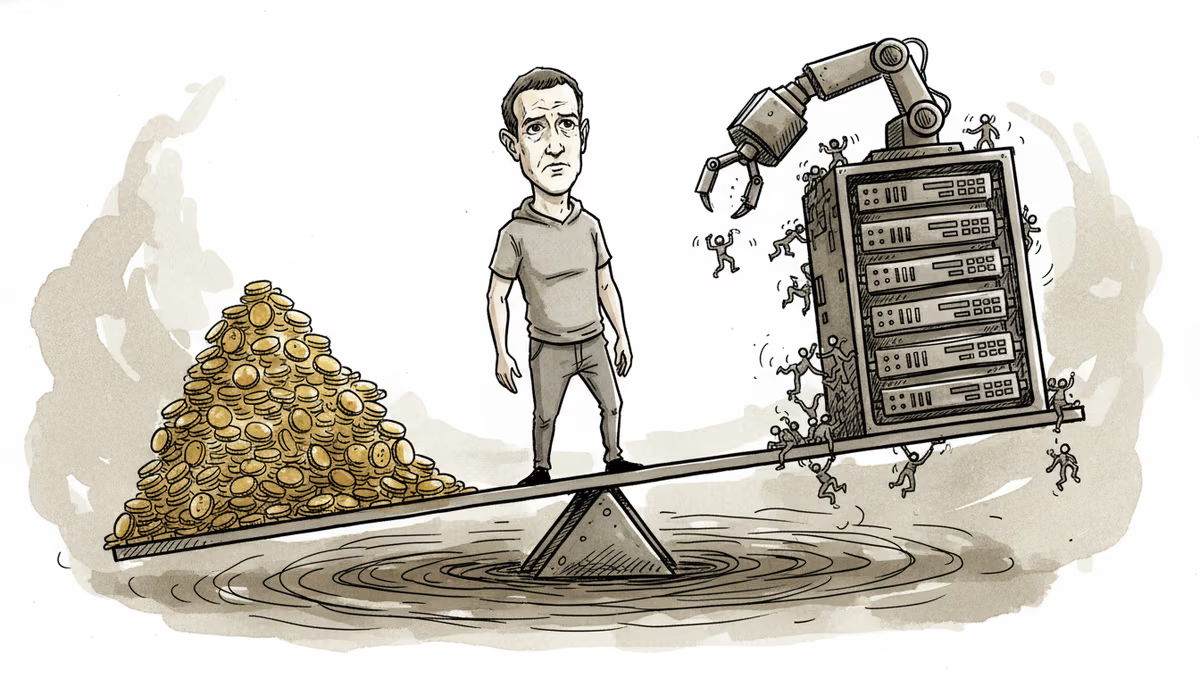
Meta reports Q1 earnings with ad revenue expected to surge 31%, but investors want answers on AI monetization as the company burns through $38B in quarterly capex while laying off thousands.
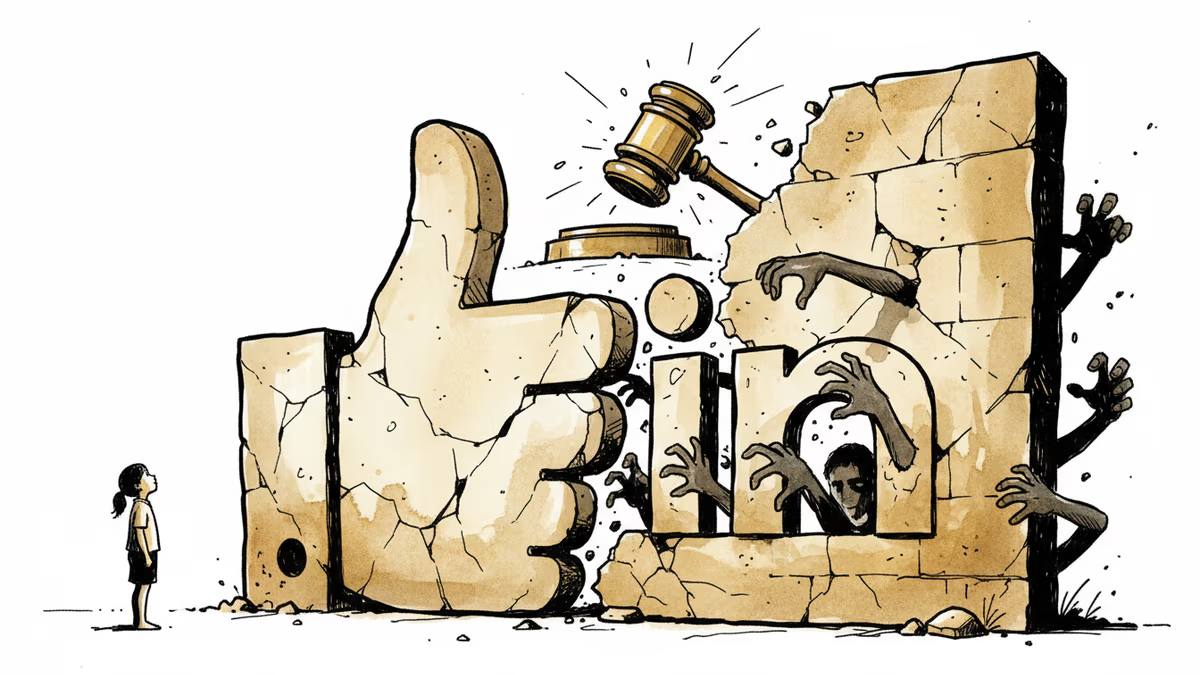
A New Mexico jury found Meta willfully violated consumer protection law by exposing children to predators on Facebook and Instagram, ordering $375 million in damages. What does this mean for Big Tech accountability?
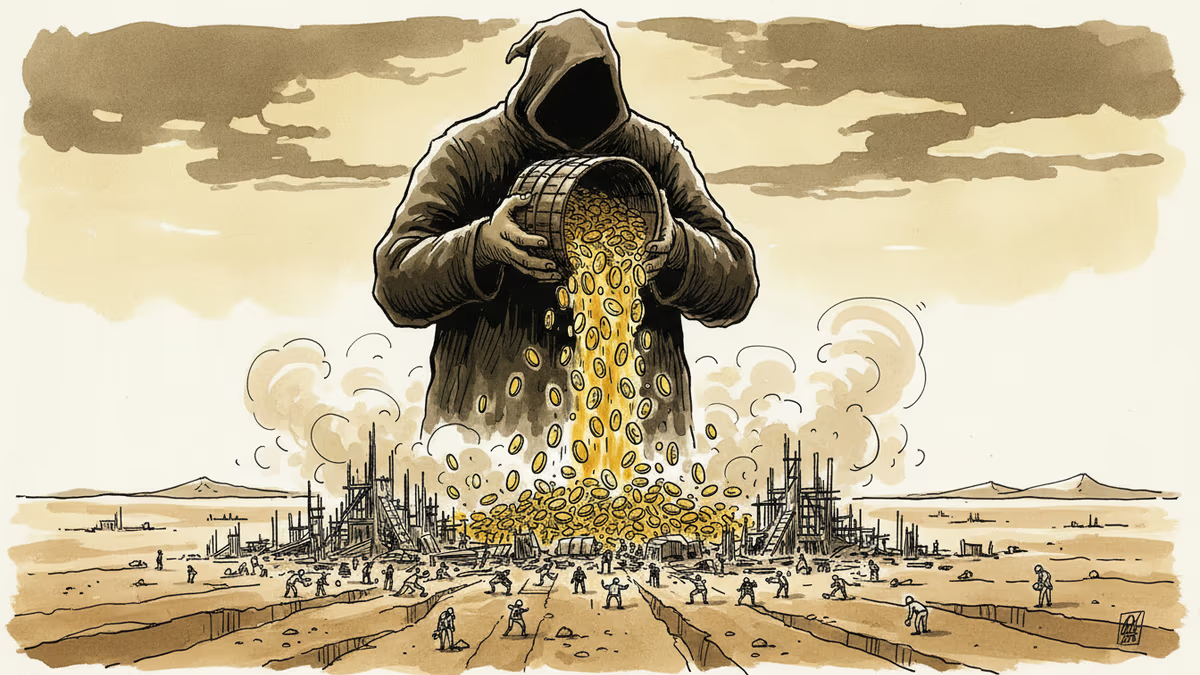
Meta has increased its El Paso AI data center investment more than sixfold, from $1.5B to $10B, targeting 1GW capacity by 2028. What this means for investors, competitors, and the AI infrastructure race.
Meta's second round of layoffs in 2026 hits Facebook, Reality Labs, recruiting, and sales. While slashing hundreds of jobs, the company is doubling down on AI talent and locking in top execs with aggressive stock options.
Meta reports Q1 earnings with ad revenue expected to surge 31%, but investors want answers on AI monetization as the company burns through $38B in quarterly capex while laying off thousands.
A New Mexico jury found Meta willfully violated consumer protection law by exposing children to predators on Facebook and Instagram, ordering $375 million in damages. What does this mean for Big Tech accountability?
Meta has increased its El Paso AI data center investment more than sixfold, from $1.5B to $10B, targeting 1GW capacity by 2028. What this means for investors, competitors, and the AI infrastructure race.
Meta's second round of layoffs in 2026 hits Facebook, Reality Labs, recruiting, and sales. While slashing hundreds of jobs, the company is doubling down on AI talent and locking in top execs with aggressive stock options.
Thoughts
Share your thoughts on this article
Sign in to join the conversation