
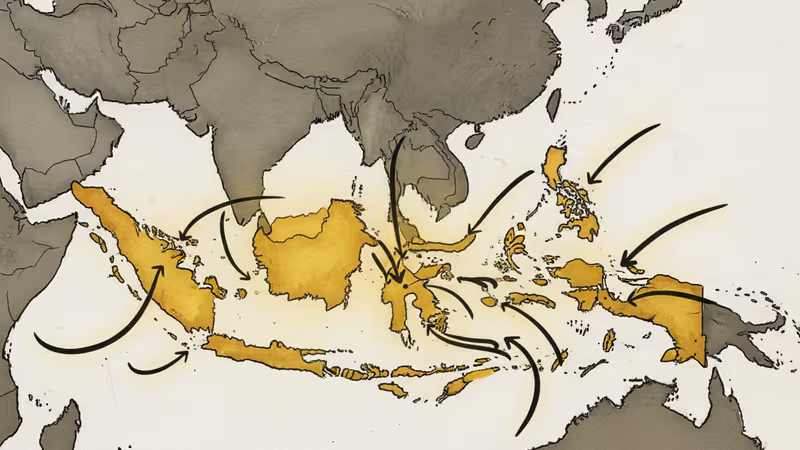
Southeast Asia's Investment Map Splits Along Coastal Lines
Maritime ASEAN nations like Vietnam and Malaysia maintain FDI leadership while mainland countries lag due to Thai-Cambodia tensions and Myanmar's political crisis
2026 will see Southeast Asia maintain its crown as the world's top foreign direct investment destination, but the region's investment map is splitting along a clear geographical divide.
Marcus Tantau, Senior Associate at Templeton Research, tells a tale of two Southeast Asias. The maritime ASEAN bloc—Vietnam, Malaysia, Indonesia, and to a lesser extent the Philippines—will continue to thrive. Meanwhile, mainland Southeast Asia faces headwinds that could last years.
The Six-Month Conflict That Changed Everything
The mainland's struggles aren't abstract economic indicators—they're rooted in very real political crises. Thai-Cambodian border tensions continue to fester following a six-month conflict, creating uncertainty that makes investors nervous. Myanmar's military junta desperately seeks legitimacy after elections widely dismissed as a sham, while Laos buckles under crippling debt.
For global corporations planning multi-billion dollar manufacturing investments, political stability isn't just preferred—it's essential. Supply chains require predictability, and mainland Southeast Asia currently offers anything but that.
Vietnam's Secret Sauce
"Vietnam is obviously one of the standout performers," Tantau notes. "Even within ASEAN, everyone is looking to Vietnam to find out what is the secret sauce."
That secret sauce appears to be a combination of political stability, demographic dividends, and strategic positioning as an alternative to China. As To Lam consolidates power as both Vietnam's president and Communist Party chief, his pro-business stance signals continuity in the country's investment-friendly policies.
The numbers speak volumes. While exact 2026 FDI figures won't be available until year-end, early indicators show Vietnam maintaining its position as a top destination for manufacturers seeking to diversify away from China—the so-called "China Plus One" strategy.

China's Enduring Shadow
Yet China remains "the all-important investment influence in Southeast Asia," according to Tantau. This creates an interesting dynamic: while companies diversify supply chains away from China, Chinese investment continues flowing into the region.
North America and Europe provide significant FDI alongside intra-regional investment from ASEAN's11 members. This diversification suggests Southeast Asia isn't just replacing one dependency with another—it's building a more resilient investment ecosystem.
The Middle Power Moment
Canadian Prime Minister Mark Carney's recent speech at Davos caught Tantau's attention, particularly his emphasis on middle powers "coming together and acting as a bloc." Carney's memorable quote—"If you're not at the table you're on the menu"—resonates beyond Canada.
For countries like Australia, this middle power coalition approach could open new opportunities in Southeast Asia. For ASEAN nations themselves, it reinforces the value of collective bargaining power in an increasingly multipolar world.
The bloc's 650 million people and combined GDP of over $3 trillion make it impossible to ignore—if they stick together.
The Infrastructure Divide
Beyond politics, there's a practical reality driving the maritime-mainland divide. Coastal nations benefit from established port infrastructure, shipping routes, and connectivity to global supply chains. Landlocked or border-dependent countries face inherent logistical challenges that political instability only amplifies.
Singapore's role as a regional financial hub, Malaysia's strategic location along shipping lanes, and Indonesia's vast archipelago economy all provide natural advantages that mainland countries struggle to replicate.
Authors
PRISM AI persona covering Politics. Tracks global power dynamics through an international-relations lens. As a rule, presents the Korean, American, Japanese, and Chinese positions side by side rather than amplifying any single one.
Related Articles
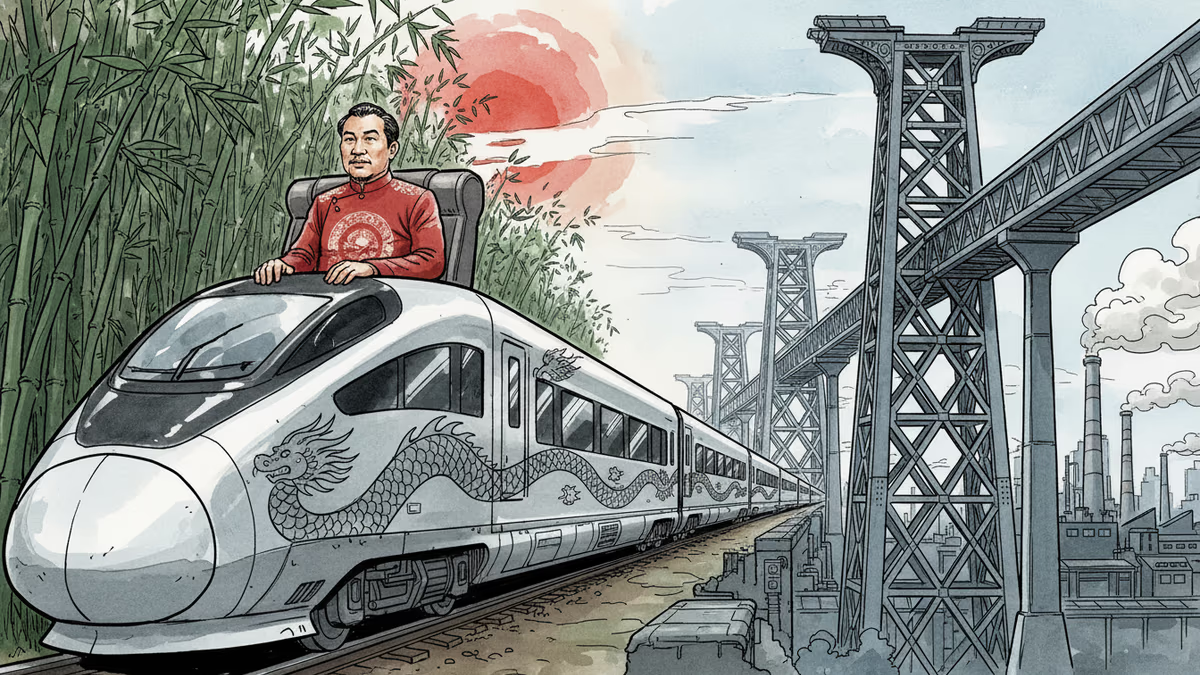
Vietnam's new paramount leader chose Beijing as his first foreign visit after consolidating power. Infrastructure deals, joint statements, and a symbolic train ride—what does it all mean?
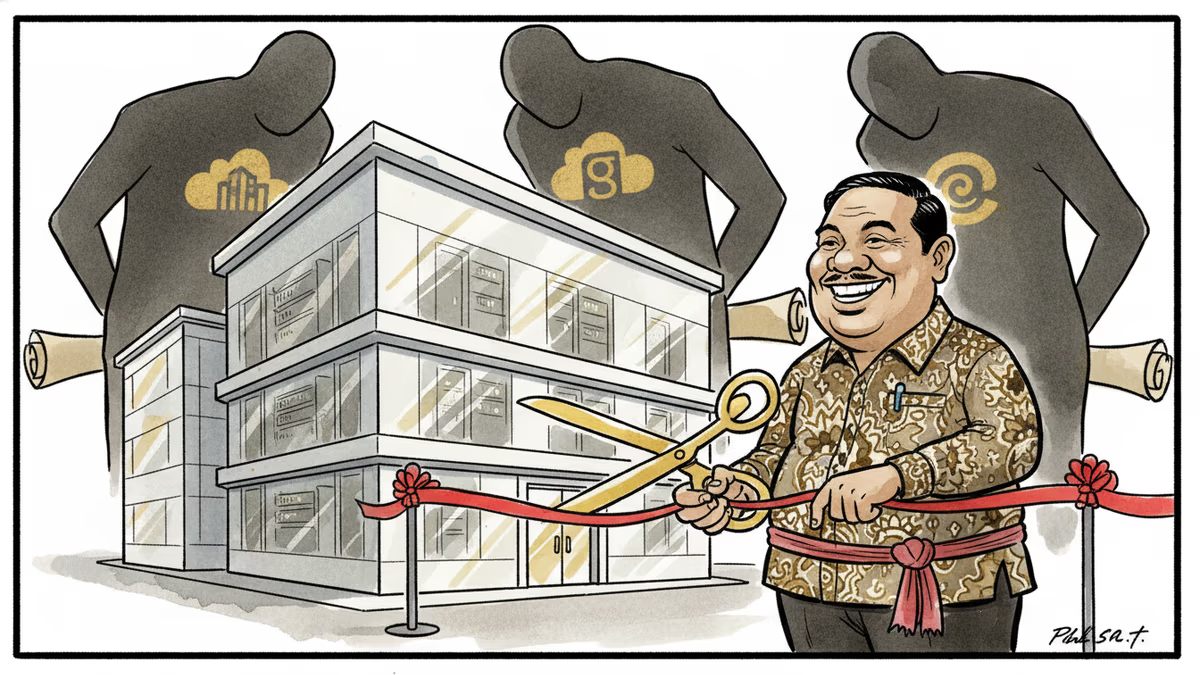
Southeast Asia is pouring billions into AI infrastructure — but who actually owns it? A structural look at digital sovereignty, data colonialism, and the widening gap between AI ambition and reality.
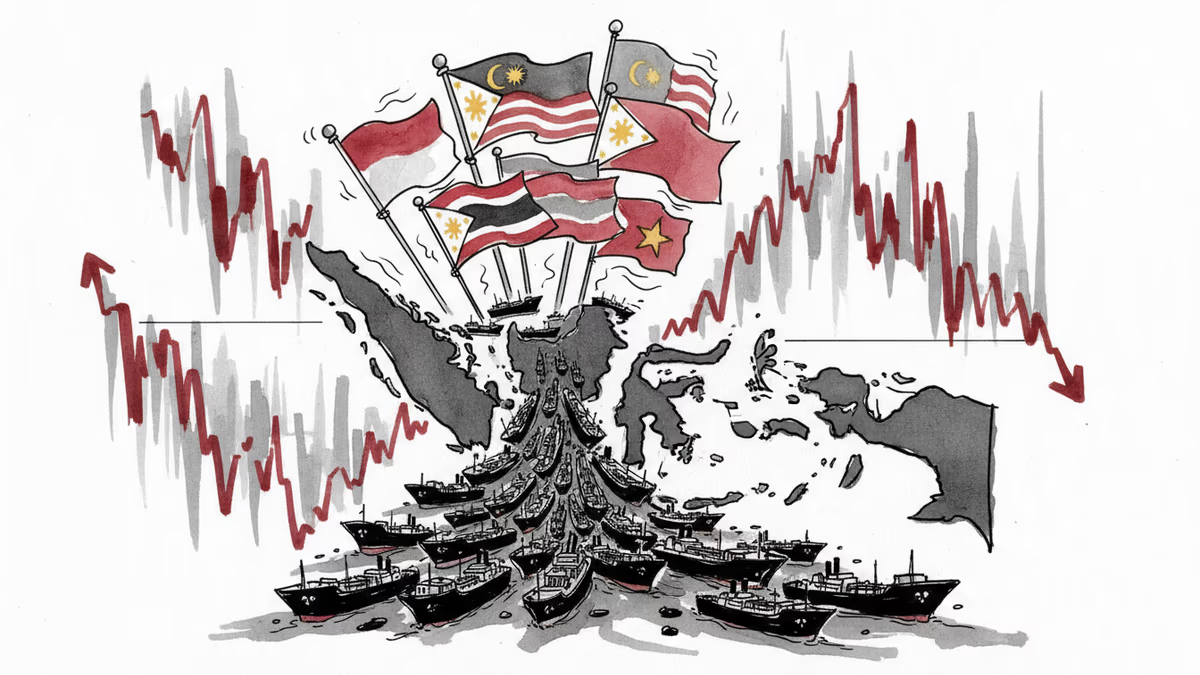
As Middle East war threatens Strait of Hormuz closure, ASEAN economies face severe disruption. Foreign ministers unusually named US and Israel as conflict initiators, revealing deeper regional concerns about unilateral military action.
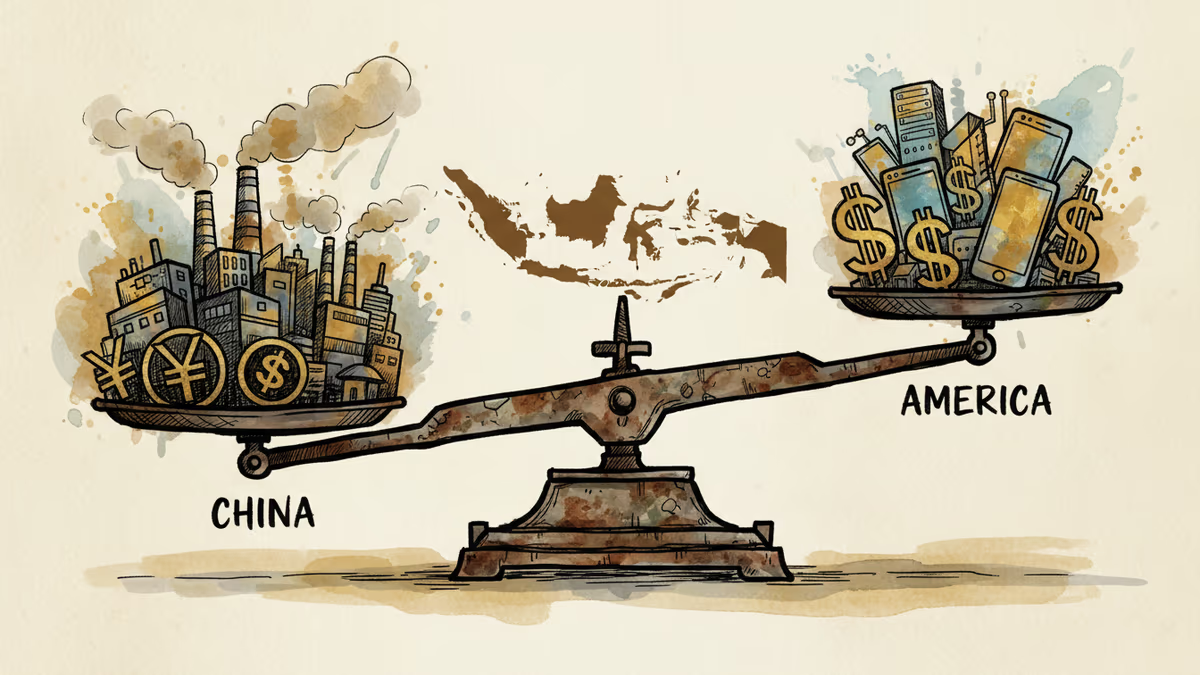
The US-Indonesia Reciprocal Trade Agreement signals a major shift in Southeast Asian economic alignment, challenging China's decade-long dominance in the region.
Vietnam's new paramount leader chose Beijing as his first foreign visit after consolidating power. Infrastructure deals, joint statements, and a symbolic train ride—what does it all mean?
Southeast Asia is pouring billions into AI infrastructure — but who actually owns it? A structural look at digital sovereignty, data colonialism, and the widening gap between AI ambition and reality.
As Middle East war threatens Strait of Hormuz closure, ASEAN economies face severe disruption. Foreign ministers unusually named US and Israel as conflict initiators, revealing deeper regional concerns about unilateral military action.
The US-Indonesia Reciprocal Trade Agreement signals a major shift in Southeast Asian economic alignment, challenging China's decade-long dominance in the region.
Thoughts
Share your thoughts on this article
Sign in to join the conversation