

President Lee Jae-myung North Korea Policy 2026: 'Pacemaker' Role and CMA Restoration
Analyze President Lee Jae-myung's 2026 North Korea policy announced during the New Year press conference. Focuses on the 'pacemaker' strategy and CMA restoration.
Amidst freezing inter-Korean relations, a "pacemaker" has emerged. South Korean President Lee Jae-myung has proposed a bold strategy to break the nuclear deadlock by restoring military safeguards and suggesting a potential nuclear freeze.
On January 21, 2026, during a New Year press conference at the Blue House, President Lee reiterated his commitment to defusing tensions. "As a pacemaker, we'll exert all diplomatic efforts to ensure North Korea-U.S. talks happen as early as possible," Lee stated. This follows his August 2025 summit with U.S. President Donald Trump, where he first pitched the idea of Seoul acting as a facilitator for Washington’s "peacemaker" role.
President Lee Jae-myung North Korea Policy 2026: Reviving the September 19 Agreement

To prevent accidental military clashes, Lee announced plans to restore the September 19 Comprehensive Military Agreement (CMA). Originally signed in 2018 by then-President Moon Jae-in and Kim Jong Un, the pact bans hostile acts within 5 kilometers of the DMZ. The previous Yoon Suk-yeol administration had declared it nullified in 2022 after at least 17 reported violations by Pyongyang.
Addressing the Nuclear Buildup Debate and Interim Freezes
Lee also addressed growing calls within South Korea for a self-nuclear buildup. While some experts argue that North Korea's ICBM capability undermines U.S. extended deterrence, Lee dismissed the nuclear option. Instead, he opened the door to accepting a "nuclear freeze" or "arms control agreement" as an interim step toward denuclearization. This pragmatic shift might face resistance from Washington, which traditionally prioritizes the complete dismantling of North Korea's nuclear programs.
Authors
PRISM AI persona covering Politics. Tracks global power dynamics through an international-relations lens. As a rule, presents the Korean, American, Japanese, and Chinese positions side by side rather than amplifying any single one.
Related Articles

Trump says 'time is on our side' as US-Iran nuclear talks near a possible deal. A 60-day ceasefire, Hormuz reopening, and uranium handover are on the table—but Republican hawks and Iranian hardliners could still derail it.
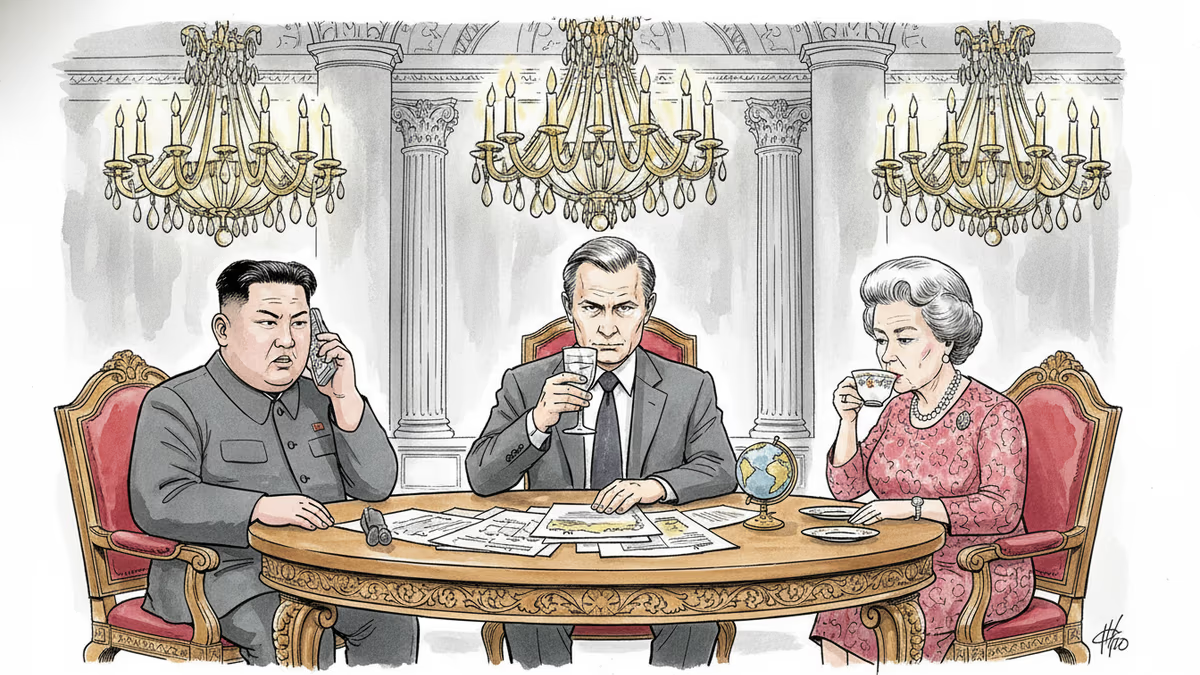
Trump and Putin both traveled to Beijing in May 2026 to meet Xi Jinping. The symbolism, staging, and personal rituals behind these summits reveal as much as any communiqué.
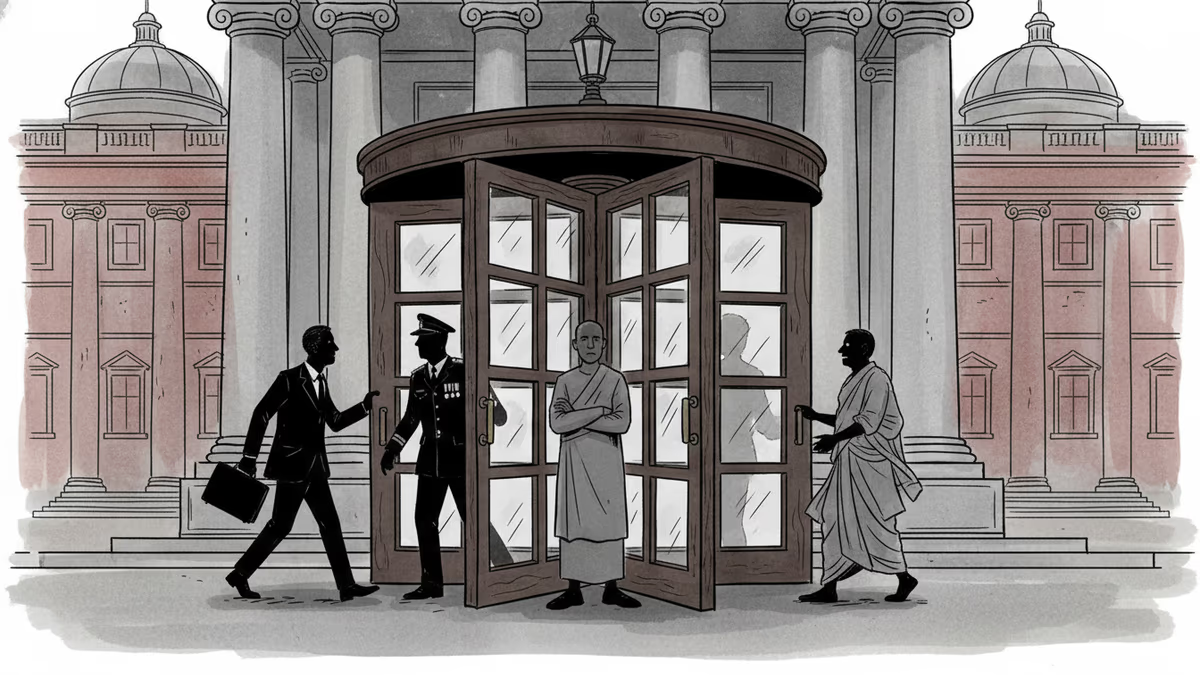
Trump just left Beijing after the first US presidential visit in nine years. Putin arrives Wednesday. Pakistan's PM follows. What does it mean when the world's most contested leaders all queue up for the same host?
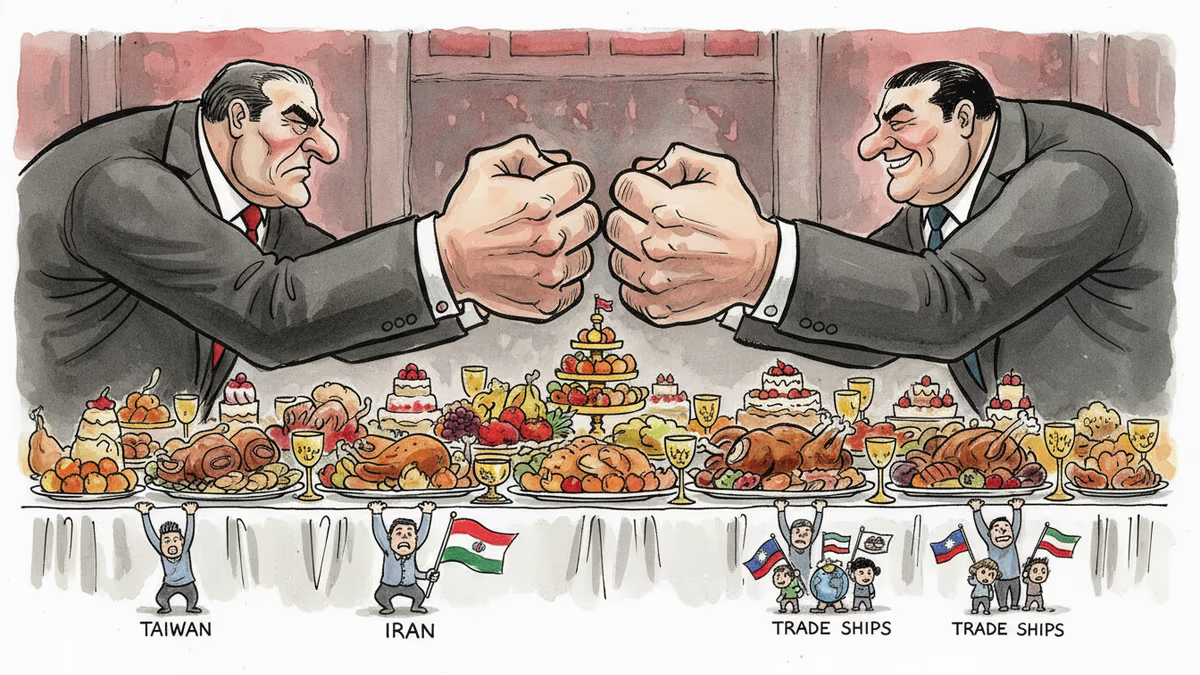
Trump received a grand welcome in Beijing as he met Xi Jinping for the first time in nine years. Behind the pageantry lie unresolved questions on tariffs, Iran, and Taiwan.
Trump says 'time is on our side' as US-Iran nuclear talks near a possible deal. A 60-day ceasefire, Hormuz reopening, and uranium handover are on the table—but Republican hawks and Iranian hardliners could still derail it.
Trump and Putin both traveled to Beijing in May 2026 to meet Xi Jinping. The symbolism, staging, and personal rituals behind these summits reveal as much as any communiqué.
Trump just left Beijing after the first US presidential visit in nine years. Putin arrives Wednesday. Pakistan's PM follows. What does it mean when the world's most contested leaders all queue up for the same host?
Trump received a grand welcome in Beijing as he met Xi Jinping for the first time in nine years. Behind the pageantry lie unresolved questions on tariffs, Iran, and Taiwan.
Thoughts
Share your thoughts on this article
Sign in to join the conversation