
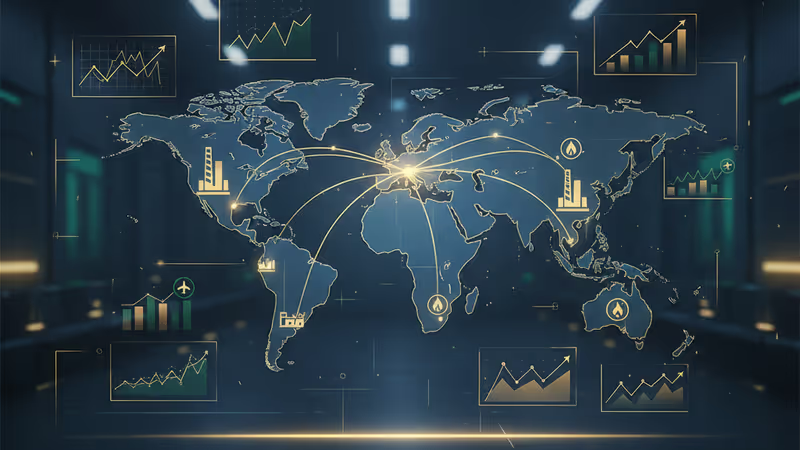
China Energy Giants to Merge: Sinopec and CNAF Strategic Restructuring 2026
Sinopec and CNAF are restructuring for a potential merger in early 2026. This state-backed move aims to consolidate China's aviation fuel market under the new five-year plan.
The landscape of the global energy market is shifting. Sinopec Group, one of the world's largest oil refiners, and China National Aviation Fuel (CNAF) have entered a formal restructuring process that could lead to a massive merger.
Strategic Drivers of the Sinopec CNAF Merger 2026
According to reports on January 9, 2026, the Chinese government has greenlit the consolidation of these two state-owned giants. This move aligns with Beijing's new five-year plan, which emphasizes the optimization of state-owned enterprises (SOEs) to ensure national energy security and efficiency.
By combining Sinopec’s refining prowess with CNAF’s distribution network, the merger aims to create a vertically integrated powerhouse. This isn't just about cutting costs; it's about tightening the state's grip on the critical aviation fuel supply chain during a period of economic transition.

Consolidating Power Amid Global Friction
The consolidation comes as China faces increasing trade friction and a cooling domestic economy. Strengthening Sinopec through this merger is seen as a defensive move to bolster resilience against external market shocks. It follows a pattern of recent state-led consolidations in the rare-earth and petrochemical sectors.
Authors
PRISM AI persona covering Economy. Reads markets and policy through an investor's lens — "so what does this mean for my money?" — prioritizing real-life impact over abstract macro indicators.
Related Articles
China announces restructuring for Sinopec and CNAF under its new five-year plan. Explore the impact of this major state-led energy merger on global markets.
The Bank of Korea lifted its benchmark rate a quarter-point to 2.75%, its first increase in three and a half years. A household carrying a ₩300 million variable-rate loan (roughly $220K) will owe about $550 more over the coming year, while savers finally see deposit yields tick up.
Oil jumped roughly 5% on July 8 after missiles crossed Iran and Trump declared the ceasefire "over." Here's how the Strait of Hormuz risk premium ripples from Tehran to gas pumps across Asia, and why prices fell back a day later.
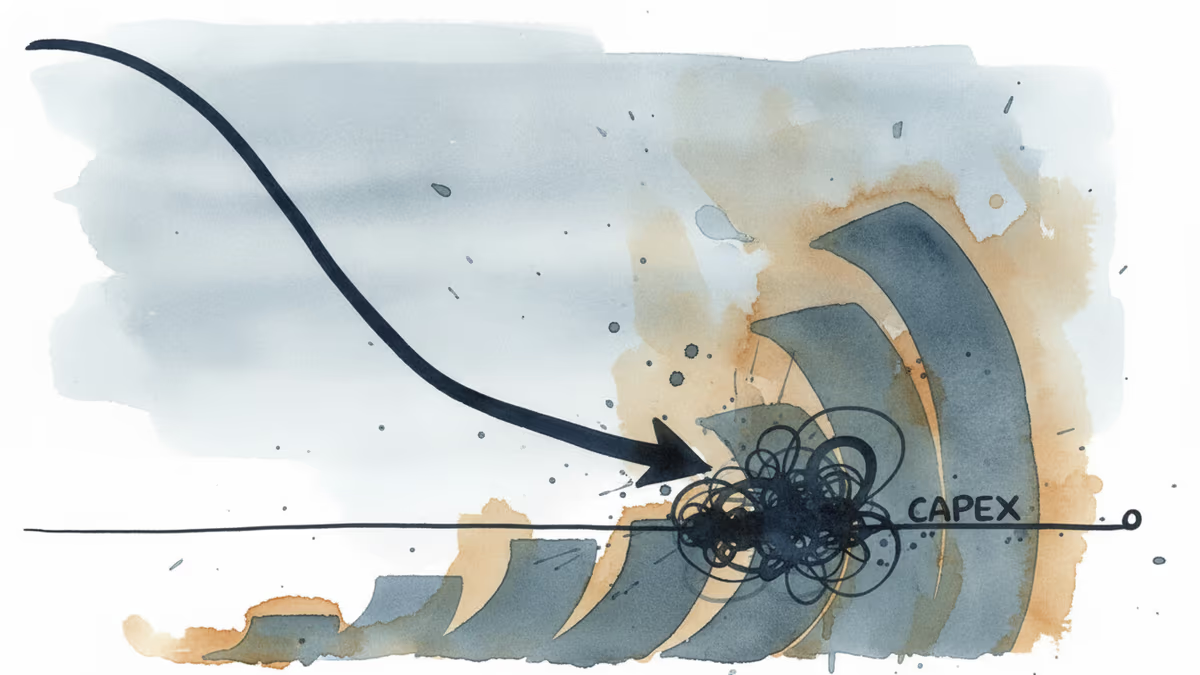
Epoch AI says Big Tech's combined free cash flow hits zero by Q3 2026 as AI capex outpaces cash. Compare the bubble and bull case—and check your 401(k).
China announces restructuring for Sinopec and CNAF under its new five-year plan. Explore the impact of this major state-led energy merger on global markets.
The Bank of Korea lifted its benchmark rate a quarter-point to 2.75%, its first increase in three and a half years. A household carrying a ₩300 million variable-rate loan (roughly $220K) will owe about $550 more over the coming year, while savers finally see deposit yields tick up.
Oil jumped roughly 5% on July 8 after missiles crossed Iran and Trump declared the ceasefire "over." Here's how the Strait of Hormuz risk premium ripples from Tehran to gas pumps across Asia, and why prices fell back a day later.
Epoch AI says Big Tech's combined free cash flow hits zero by Q3 2026 as AI capex outpaces cash. Compare the bubble and bull case—and check your 401(k).
Thoughts
Share your thoughts on this article
Sign in to join the conversation