
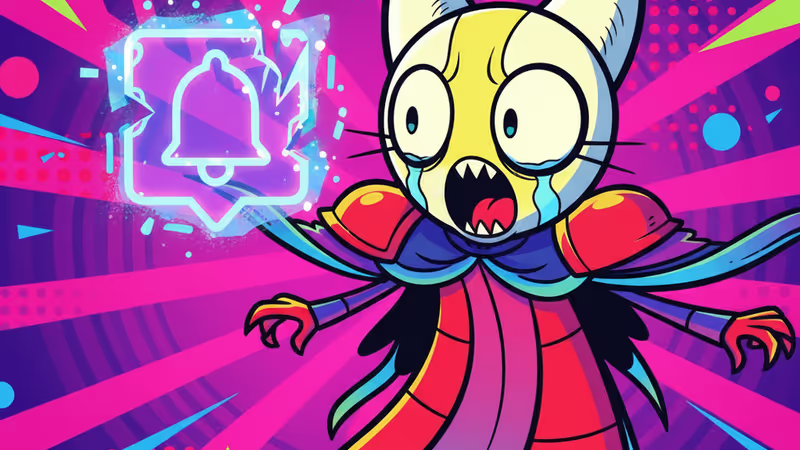
Silksong's Phantom Expansion: How a Fake Announcement Exposed the Soul of Gaming's Longest Wait
A fake Silksong expansion announcement is trending. We break down why it's gone viral and what it says about the years-long wait for the elusive game.
The Announcement That Broke the Internet... Except It Never Happened
For a fleeting, beautiful moment, a rumor rippled through the gaming world: Hollow Knight: Silksong was not only out, but was getting its first free expansion in 2026. The internet did what it does best—it exploded. The only problem? None of it is real. Silksong isn't out. There is no 'Sea of Sorrow' expansion. This collective hallucination is the perfect encapsulation of gaming's most enduring, painful, and hilarious waiting game.
The Story: A Community Fueled by Hope and Memes
Here’s the reality check: Hollow Knight: Silksong, the sequel to the 2017 indie masterpiece, was announced in 2019. For over half a decade, its developer, Team Cherry, has maintained a near-monastic silence, broken only by rare gameplay trailers. This information vacuum has created a unique cultural phenomenon. The community, starved for news, has transformed its anticipation into a powerful, self-sustaining engine of memes, elaborate theories, and, yes, even believable-sounding fake news.
The 'Sea of Sorrow' expansion rumor is a masterclass in this dynamic. It's so specific, so plausible, that it preys on the community's deepest desire: not just for the game, but for the confirmation that the wait was worth it. It’s a testament to the fact that the hunger for Silksong is so intense that millions are willing to believe, even for a second.
The Best Reactions: A Symphony of Hope and Despair
To understand the Silksong wait, you don't look at news releases; you look at the comments, the memes, and the fan art. The reaction to this phantom expansion taps into years of built-up emotion. Here's a curated look at the sentiment that defines the wait:
- The Skeptical Veteran: This fan has been hurt before. They're the first to debunk, the first to post the iconic meme: "Bait used to be believable." It’s a cynical yet loving nod to the endless cycle of hope and disappointment.
- The Eternal Optimist: You'll find them deploying clown emojis (🤡) unironically, representing how they feel getting dressed for yet another Nintendo Direct with no Silksong news. One user on X perfectly captured this feeling: "Me, preparing to be disappointed again. But what if... THIS is the time?"
- The Conspiracy Theorist: For this group, the silence isn't a lack of news; it's a clue. They craft elaborate theories connecting lore crumbs to potential release dates. A Reddit comment might read: "'Sea of Sorrow' is clearly a reference to the Abyss from the first game. This confirms a late Q4 release, trust me. Team Cherry is playing 4D chess."
- The Exhausted Newcomer: People who only recently joined the hype train are often baffled by the sheer intensity. A common sentiment is: "I just finished Hollow Knight and came to see what the sequel is about... what is GOING ON here? It's like a cult, and I think I just joined."
Cultural Context: Why We Wait
The Silksong phenomenon resonates globally because it's about more than just a video game. It's a case study in modern internet culture and the power of shared anticipation.
In an era of non-stop marketing, oversaturated hype cycles, and games released in unfinished states, Team Cherry's silence feels like a quiet promise of quality. The wait has become a ritual, a bonding experience for millions of players across the US, Europe, and Japan. The longer the silence, the more mythic the game becomes. It has transcended from a product to a legend—the digital equivalent of a fabled lost city that everyone believes in but no one has seen.
PRISM Insight: The Unintentional Genius of Silence
From an industry perspective, the Silksong wait is a fascinating paradox. In any normal marketing plan, five years of near-total silence would be considered brand suicide. Here, it has been the opposite. Team Cherry's refusal to engage in the typical hype cycle has become its greatest marketing asset.
This is the "Anti-Hype" Hype Cycle: By saying nothing, they allow the community to tell the story. The fans have become the marketers, creating a level of organic, grassroots passion that a billion-dollar campaign could never replicate. Every meme, every piece of fake news, every clown emoji deepens the game's legend and ensures that when it finally does release, it will be a global cultural event.
The 'Sea of Sorrow' fabrication isn't just a prank; it's a symptom of a community so deeply invested that it has begun to dream the game into existence. And in today's attention economy, that's a level of engagement money simply can't buy.
Related Articles
A new K-drama teaser for 'To My Beloved Thief' is going viral. We analyze why the Moon Sang-min & Nam Ji-hyun pairing is a masterclass in global content strategy.
SHINee's Key is linked to a celebrity scandal via a photo of his dogs. We break down the fan theories, the best reactions, and what it says about K-Pop fan culture.
New stills of Park Ji Hoon as a tragic king in “The King’s Warden” have sent the internet into a frenzy. Here's a breakdown of why it's going viral.
Discover why WikiFlix, a free public domain movie site, went viral. It's not just about old films—it's a cultural backlash against subscription fatigue.