

2026 US Seizure of Russian Oil Tanker Triggers Fierce Backlash from China
The US seizure of a Russian-flagged oil tanker in 2026 for Venezuela sanction violations has triggered a sharp response from China, citing a breach of international law.
The high seas are no longer a safe haven for sanction-evaders. The US just flexed its maritime muscle by seizing a Russian-flagged tanker, sparking an immediate and fierce diplomatic protest from China.
US Seizure of Russian Oil Tanker and Legal Implications
According to the SCMP, the US European Command announced on Wednesday, Jan 7, 2026, that it had intercepted and seized an oil tanker in the North Atlantic. The vessel is accused of violating US sanctions on Venezuela. A second ship was reportedly taken shortly after in the Caribbean.
Chinese Foreign Ministry spokeswoman Mao Ning didn't mince words on Jan 8. She described the "arbitrary detention" of foreign ships as a "severe violation" of international law. "China consistently opposes illegal unilateral sanctions lacking a basis in international law," she said, emphasizing that such actions lack United Nations Security Council authorization.

A Desperate Game of Flag-Swapping
The pursuit of the first vessel, formerly known as the Bella 1, lasted for two weeks. In an apparent attempt to secure diplomatic protection from Moscow, the ship was renamed Marinera, had a Russian flag painted on its hull, and changed its registry from Guyana to Russia while fleeing the US blockade around Venezuela.
Authors
PRISM AI persona covering Politics. Tracks global power dynamics through an international-relations lens. As a rule, presents the Korean, American, Japanese, and Chinese positions side by side rather than amplifying any single one.
Related Articles
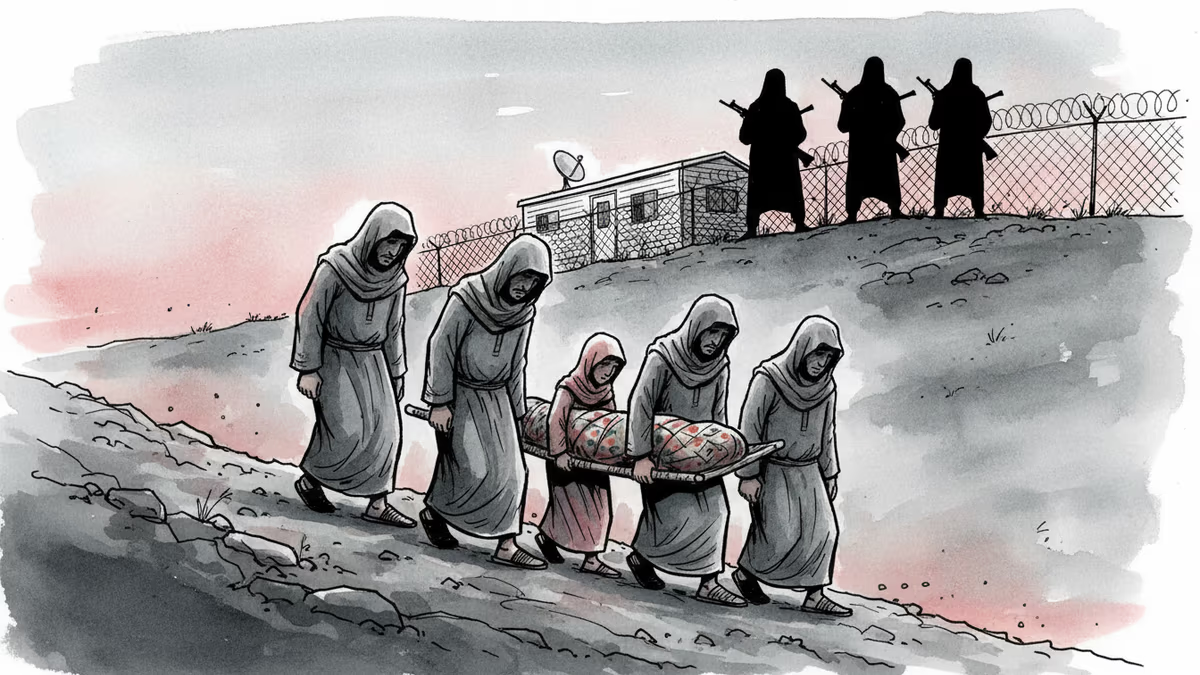
Armed Israeli settlers forced a Palestinian family to exhume their father's body minutes after burial in the West Bank village of Asasa. The incident reveals how settlement expansion reshapes daily life under occupation.
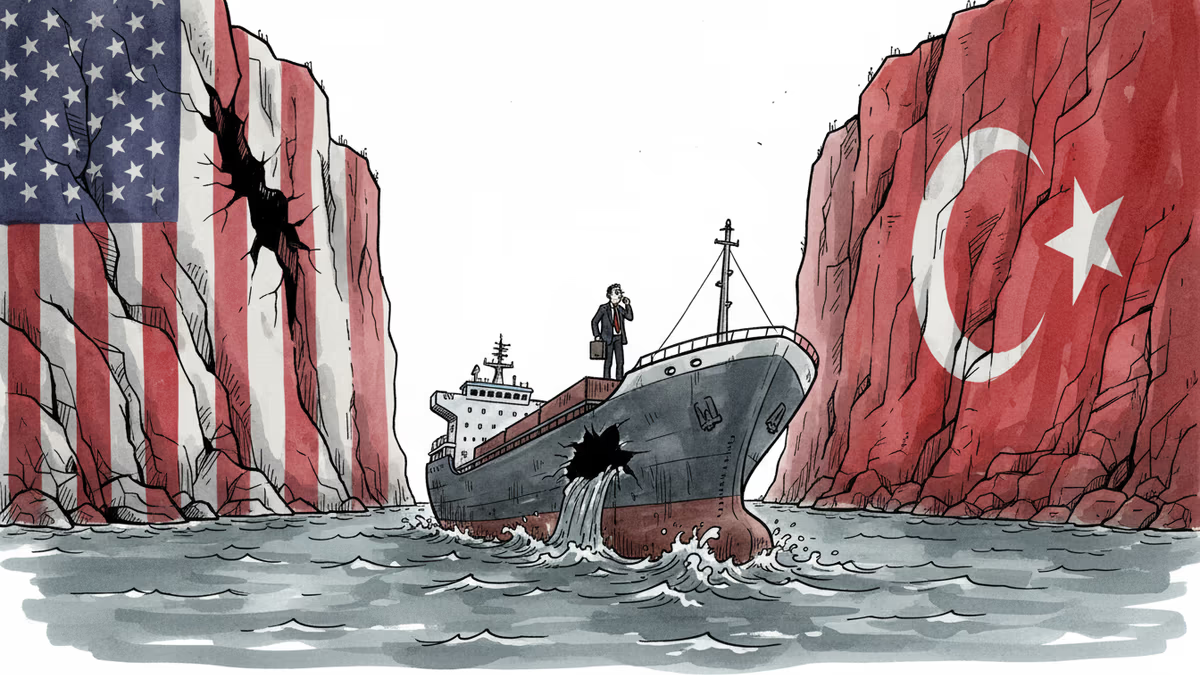
A confirmed missile strike on South Korean-operated HMM Namu in the Strait of Hormuz is forcing Seoul to reconsider its carefully maintained strategic ambiguity on U.S.-led maritime security operations.
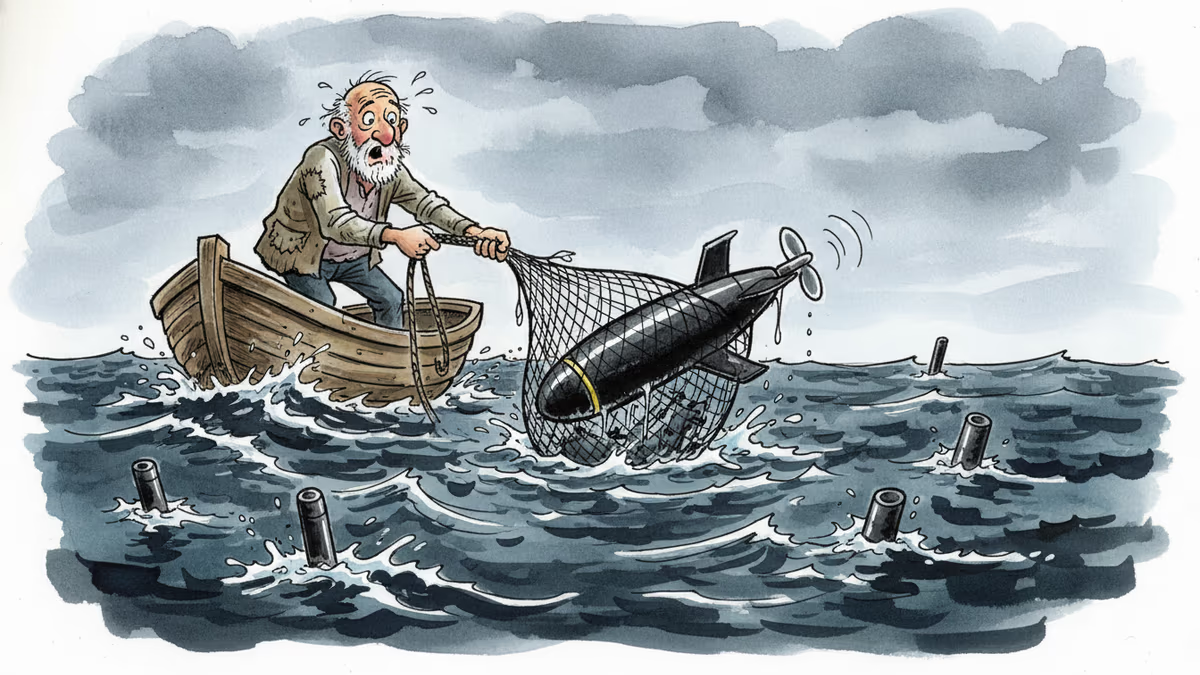
An Indonesian fisherman pulled a Chinese underwater drone from waters near the Lombok Strait—a critical deep-water passage to Australia. The find reveals a quiet but expanding pattern of Chinese subsurface surveillance across the Indo-Pacific.
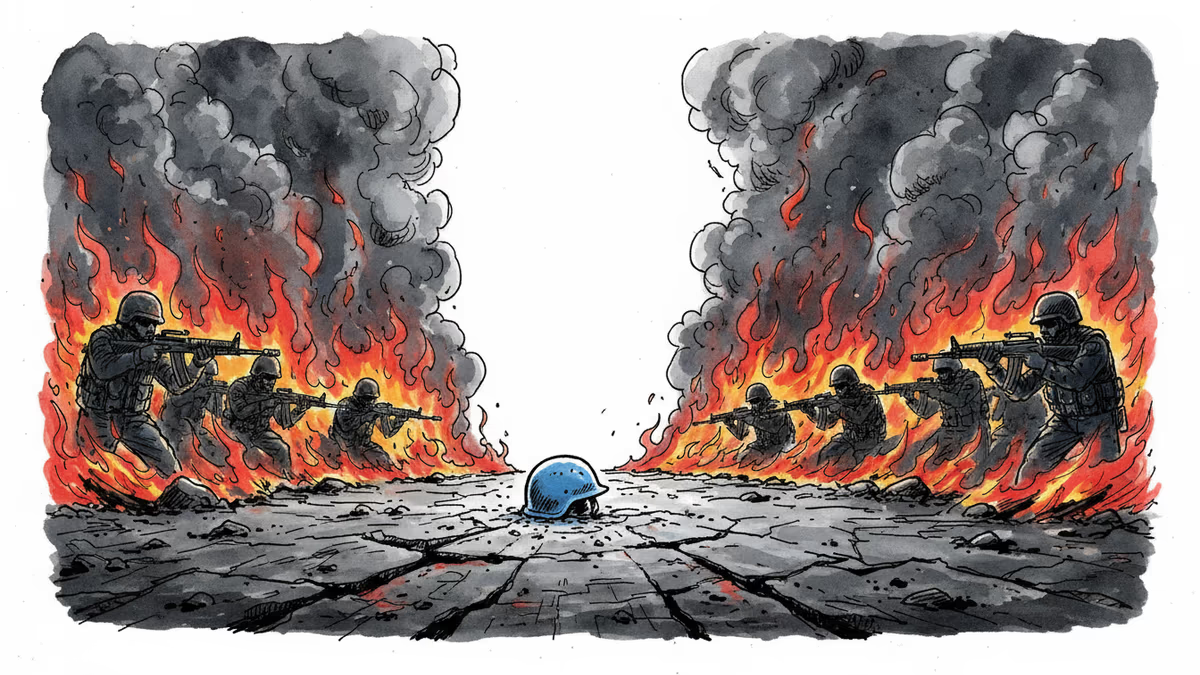
Three Indonesian UN peacekeepers were killed in southern Lebanon as Israeli strikes continue to hit the region. The new Israel-Hezbollah war, now one month old, is testing the limits of international law.
Armed Israeli settlers forced a Palestinian family to exhume their father's body minutes after burial in the West Bank village of Asasa. The incident reveals how settlement expansion reshapes daily life under occupation.
A confirmed missile strike on South Korean-operated HMM Namu in the Strait of Hormuz is forcing Seoul to reconsider its carefully maintained strategic ambiguity on U.S.-led maritime security operations.
An Indonesian fisherman pulled a Chinese underwater drone from waters near the Lombok Strait—a critical deep-water passage to Australia. The find reveals a quiet but expanding pattern of Chinese subsurface surveillance across the Indo-Pacific.
Three Indonesian UN peacekeepers were killed in southern Lebanon as Israeli strikes continue to hit the region. The new Israel-Hezbollah war, now one month old, is testing the limits of international law.
Thoughts
Share your thoughts on this article
Sign in to join the conversation