
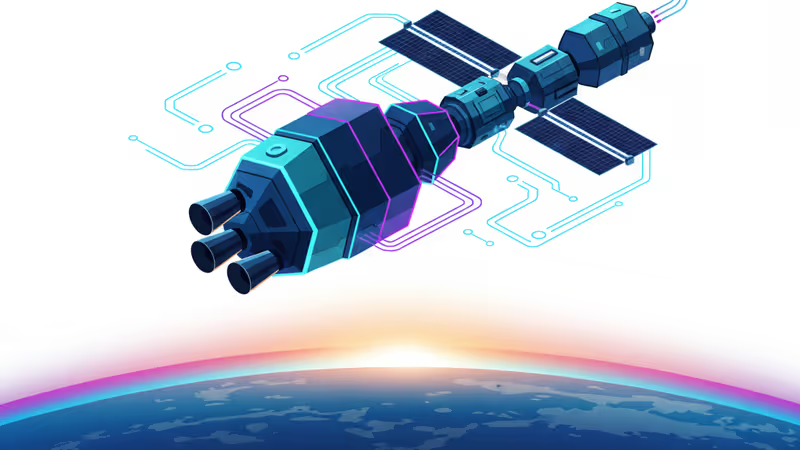
Stranded: How Boeing's Starliner Failure Left NASA Astronauts in Orbit for 9 Months
An in-depth look at the critical malfunctions on Boeing's Starliner that stranded two NASA astronauts on the ISS for nine months, forcing a rescue mission by rival SpaceX.
Two astronauts, launched aboard Boeing's much-delayed spacecraft in June 2024 for what was meant to be a week-long mission, were ultimately forced to return to Earth nine months later aboard a rival SpaceX Dragon capsule. A series of critical malfunctions on the Starliner made it too risky for the return journey, leaving the crew stranded on the International Space Station (ISS) and raising serious questions about Boeing's role in human spaceflight.
A Cascade of Failures En Route
The first crewed flight of the , carrying astronauts Butch Wilmore and Suni Williams, was a milestone over a decade in the making. But trouble began during its trip to the ISS. Engineers detected multiple, pernicious and, more alarmingly, several of the spacecraft's began to fail due to overheating.
The situation became critical as the capsule approached the station. For a short time, Starliner commander Wilmore lost the ability to control the spacecraft's movements. While engineers on the ground managed to recover most thruster functions to allow for a successful docking, the vehicle's reliability was now in serious doubt.
The Long Wait and a Rival's Rescue
After evaluating the thruster and leak issues, officials determined it was too risky to bring Wilmore and Williams home in the compromised Boeing capsule. Their planned one or two-week stay turned into a nine-month orbital marathon while the agency figured out a new ride home.
The solution came from Boeing's chief competitor. Last March, the two astronauts flew back to Earth aboard a spacecraft, a scenario that underscored the severity of the Starliner's problems. A subsequent safety advisory panel found that this uncertainty about the vehicle's health had also permeated NASA's own workforce during the crisis.
The Starliner incident is more than a technical failure; it's a critical stress test of NASA's Commercial Crew Program. It starkly contrasts Boeing's troubled development with SpaceX's operational dominance, raising serious questions about vendor reliability and the future of competition in human spaceflight.
This content is AI-generated based on source articles. While we strive for accuracy, errors may occur. We recommend verifying with the original source.
Related Articles
Tory Bruno has resigned as CEO of United Launch Alliance after a decade. The move comes amid intense competition from SpaceX and just after the successful debut of ULA's new Vulcan rocket.
ULA CEO Tory Bruno has resigned after 12 years, following the long-awaited debut of the Vulcan rocket. We analyze what his departure means for the SpaceX rival's future in a fiercely competitive space launch market.

A new report reveals China's breakthrough in chip-making machinery, drastically closing the semiconductor gap as U.S. and Chinese satellites engage in orbital "dogfighting."
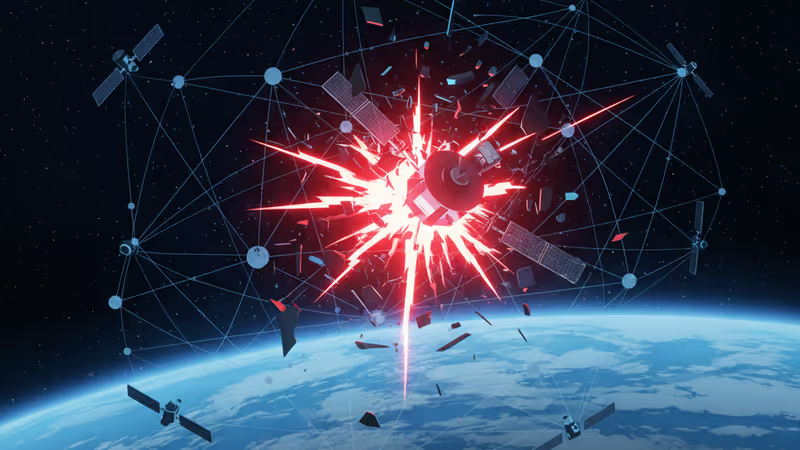
A single Starlink satellite failure signals systemic risk for LEO megaconstellations, impacting regulation, investment, and the future of the space economy.