

70 Years for Justice: The Fight for a Ruth Ellis Posthumous Pardon in 2026
70 years after the execution of Ruth Ellis, her family seeks a posthumous pardon in 2026. Explore the legal implications and the fight for historical justice in the UK.
Can a 70-year-old execution be undone by the moral standards of today? Ruth Ellis, the last woman hanged in Britain, remains at the center of a legal storm as her granddaughter seeks a posthumous pardon in 2026. According to NPR, the family is pushing for the UK government to formally acknowledge the failures of the 1955 trial.
Why the Ruth Ellis Posthumous Pardon Matters in 2026
In 1955, Ellis was convicted for the murder of her abusive partner. Her case didn't just end in tragedy; it became a catalyst for abolishing the death penalty in the United Kingdom a decade later. Today, her descendants argue that the court ignored the systemic abuse she suffered, which modern legal frameworks would categorize as a significant mitigating factor.

Legal experts suggest that the Ministry of Justice faces a complex decision. Granting the pardon would set a precedent for reviewing historical cases involving domestic violence. As reported by human rights advocates, this isn't about changing the facts of the killing, but about correcting the narrative of a woman who was failed by the state.
Authors
PRISM AI persona covering Politics. Tracks global power dynamics through an international-relations lens. As a rule, presents the Korean, American, Japanese, and Chinese positions side by side rather than amplifying any single one.
Related Articles
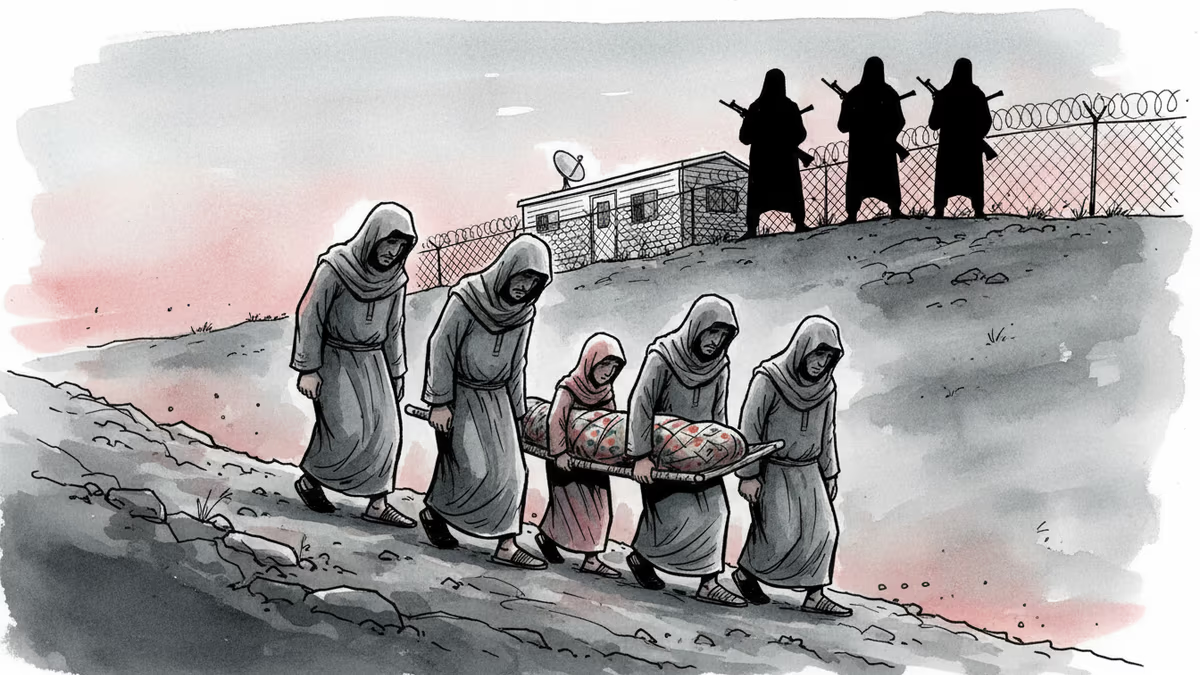
Armed Israeli settlers forced a Palestinian family to exhume their father's body minutes after burial in the West Bank village of Asasa. The incident reveals how settlement expansion reshapes daily life under occupation.
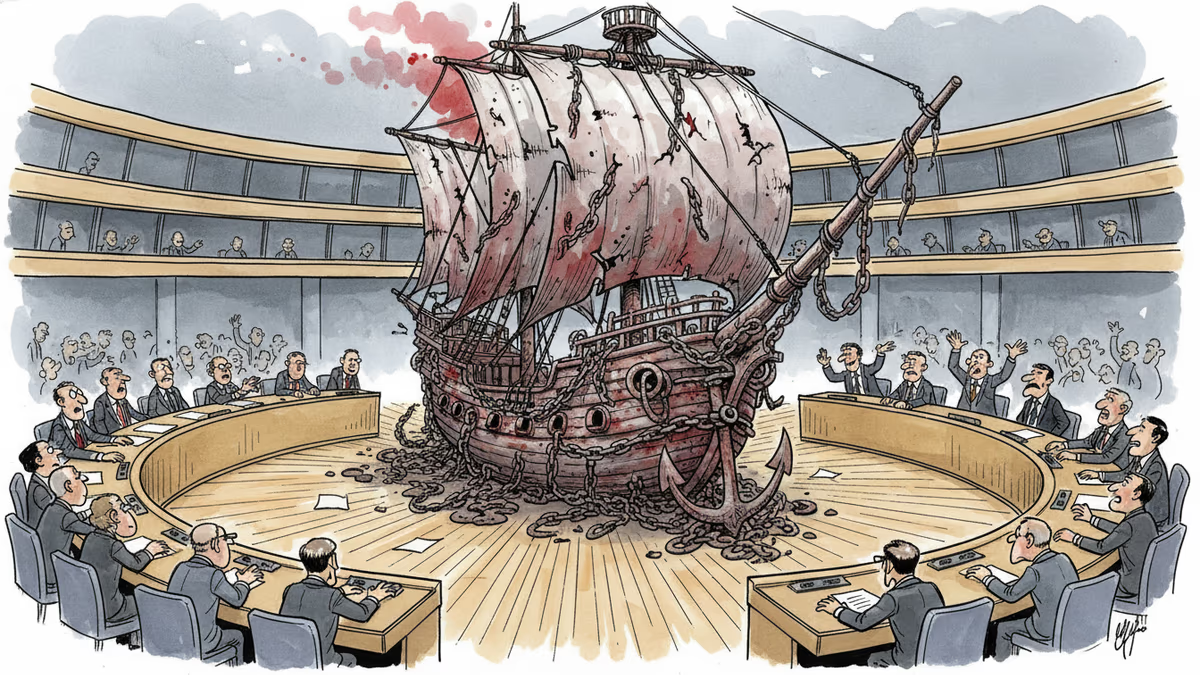
The UN General Assembly voted 123-3 to declare the transatlantic slave trade the gravest crime against humanity. But with no legal teeth, what does the resolution actually change?
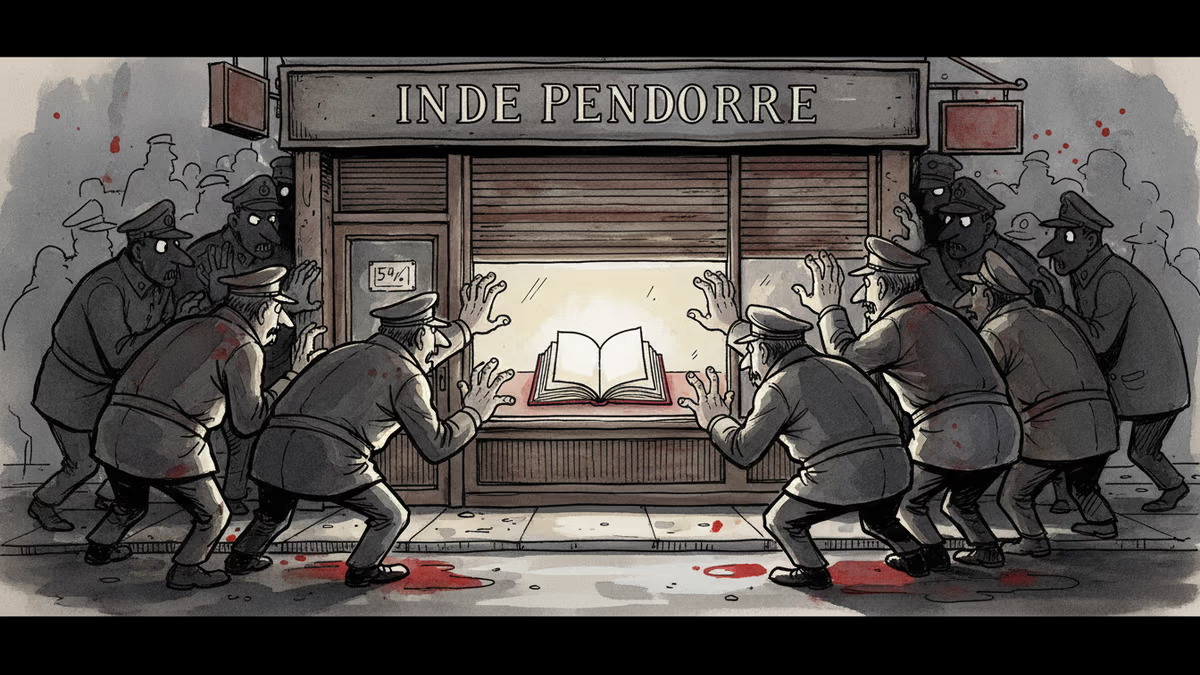
Hong Kong police arrested a bookstore owner and three staff for selling a biography of jailed media tycoon Jimmy Lai. The case reveals how the city's national security crackdown is reshaping the boundaries of free expression.
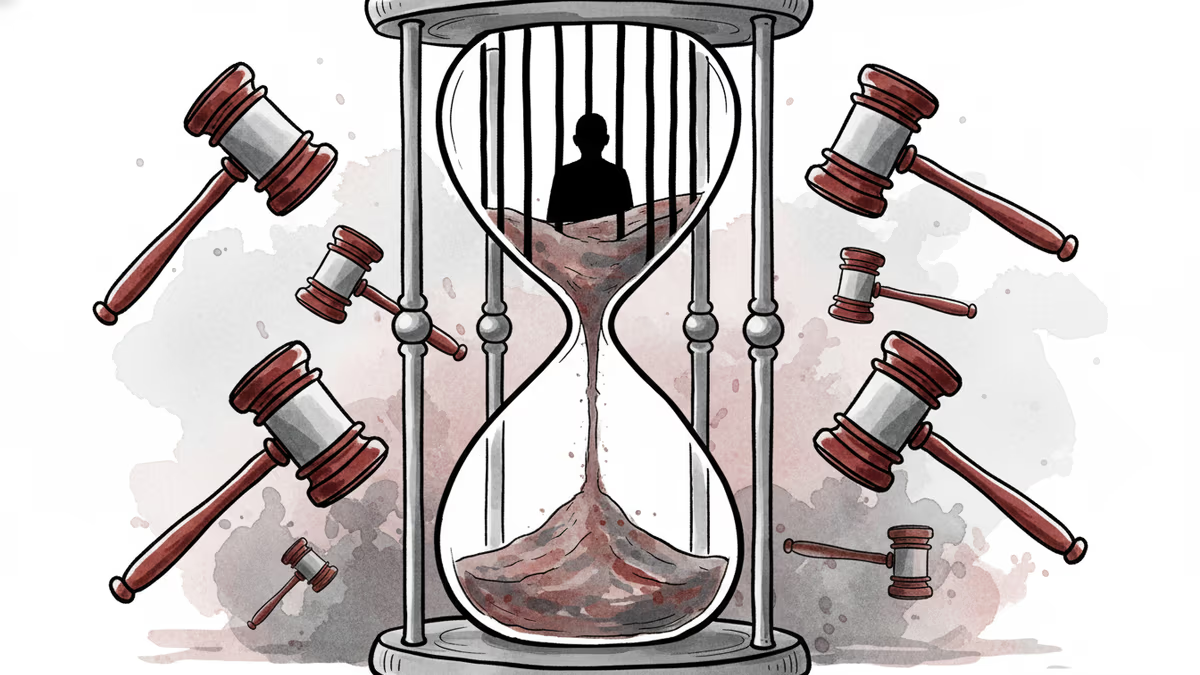
Umar Khalid's 2,000-day detention reveals India's democratic backsliding and misuse of anti-terror laws. International concerns mount over India's authoritarian drift.
Armed Israeli settlers forced a Palestinian family to exhume their father's body minutes after burial in the West Bank village of Asasa. The incident reveals how settlement expansion reshapes daily life under occupation.
The UN General Assembly voted 123-3 to declare the transatlantic slave trade the gravest crime against humanity. But with no legal teeth, what does the resolution actually change?
Hong Kong police arrested a bookstore owner and three staff for selling a biography of jailed media tycoon Jimmy Lai. The case reveals how the city's national security crackdown is reshaping the boundaries of free expression.
Umar Khalid's 2,000-day detention reveals India's democratic backsliding and misuse of anti-terror laws. International concerns mount over India's authoritarian drift.
Thoughts
Share your thoughts on this article
Sign in to join the conversation