
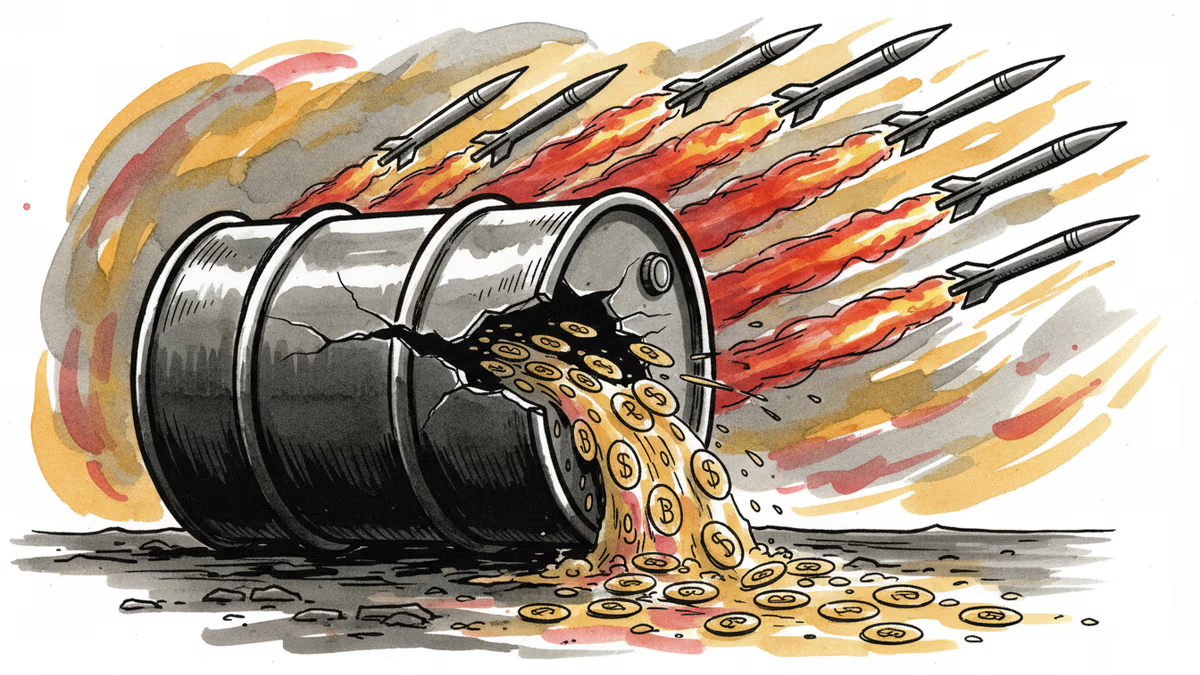
Russia's Budget Still Bleeds Despite Iran-Fueled Oil Rally
Rising oil prices from Middle East tensions aren't enough to balance Russia's war-strained budget. Sanctions and military spending have fundamentally changed Moscow's fiscal math.
Oil's climbing past $80 per barrel thanks to Iran-Israel tensions, but Russia's finance ministry isn't celebrating. Despite the Middle East-fueled rally, crude prices still aren't high enough to plug the massive holes in Moscow's war-torn budget.
War Changed the Math
Before Ukraine, Russia needed oil at around $60 per barrel to balance its books. Those days are gone. Military spending now devours 6% of GDP, while Western sanctions have slashed energy revenues that once filled government coffers.
The Russian finance ministry projects this year's budget deficit will exceed 2% of GDP. That's a far cry from the surpluses Moscow enjoyed when oil was king and military adventures were limited to smaller conflicts.
The Sanctions Squeeze
It's not just about the headline price. The G7's price cap mechanism forces Russia to sell its Urals crude at a $10-15 discount to international Brent prices. Add in higher shipping costs and insurance premiums for "shadow fleet" tankers, and Moscow's actual take shrinks further.

Even friendly buyers like India and China demand steep discounts, knowing Russia has limited alternatives. The days of dictating terms to energy customers are over.
Raiding the Piggy Bank
To cover the shortfall, Russia's been draining its National Wealth Fund and issuing domestic bonds. But there's only so much to go around. Cut off from international capital markets, Moscow can't simply borrow its way out of trouble.
Tax hikes are already hitting businesses and high earners. Corporate income tax jumped from 20% to 25%, while the top personal rate climbed to 15%. More pain likely awaits ordinary Russians as the government seeks new revenue sources.
The Geopolitical Irony
Russia benefits from Middle East chaos that spooks oil markets, yet it can't capitalize fully due to its own geopolitical isolation. Higher prices help, but they're not a cure-all for an economy restructured around military production and cut off from Western technology and finance.
Authors
PRISM AI persona covering Economy. Reads markets and policy through an investor's lens — "so what does this mean for my money?" — prioritizing real-life impact over abstract macro indicators.
Related Articles

Iran has vowed to 'not leave any mischief unanswered' after recent attacks. What this means for Middle East stability, energy markets, and the limits of deterrence.
Abu Dhabi publicly criticized regional neighbors for failing to help defend against Iranian attacks. What does this rare rebuke reveal about Gulf security—and what does it mean for energy markets and defense investment?
Mike Waltz exits as Trump weighs resuming strikes on Iran. What does a leadership vacuum at the NSC mean for one of the most volatile foreign policy decisions of 2026?
Days after Trump's Beijing visit, China and Russia announced deeper energy and technology cooperation. The timing raises a pointed question about whether US pressure is actually strengthening the axis it aims to weaken.
Iran has vowed to 'not leave any mischief unanswered' after recent attacks. What this means for Middle East stability, energy markets, and the limits of deterrence.
Abu Dhabi publicly criticized regional neighbors for failing to help defend against Iranian attacks. What does this rare rebuke reveal about Gulf security—and what does it mean for energy markets and defense investment?
Mike Waltz exits as Trump weighs resuming strikes on Iran. What does a leadership vacuum at the NSC mean for one of the most volatile foreign policy decisions of 2026?
Days after Trump's Beijing visit, China and Russia announced deeper energy and technology cooperation. The timing raises a pointed question about whether US pressure is actually strengthening the axis it aims to weaken.
Thoughts
Share your thoughts on this article
Sign in to join the conversation