
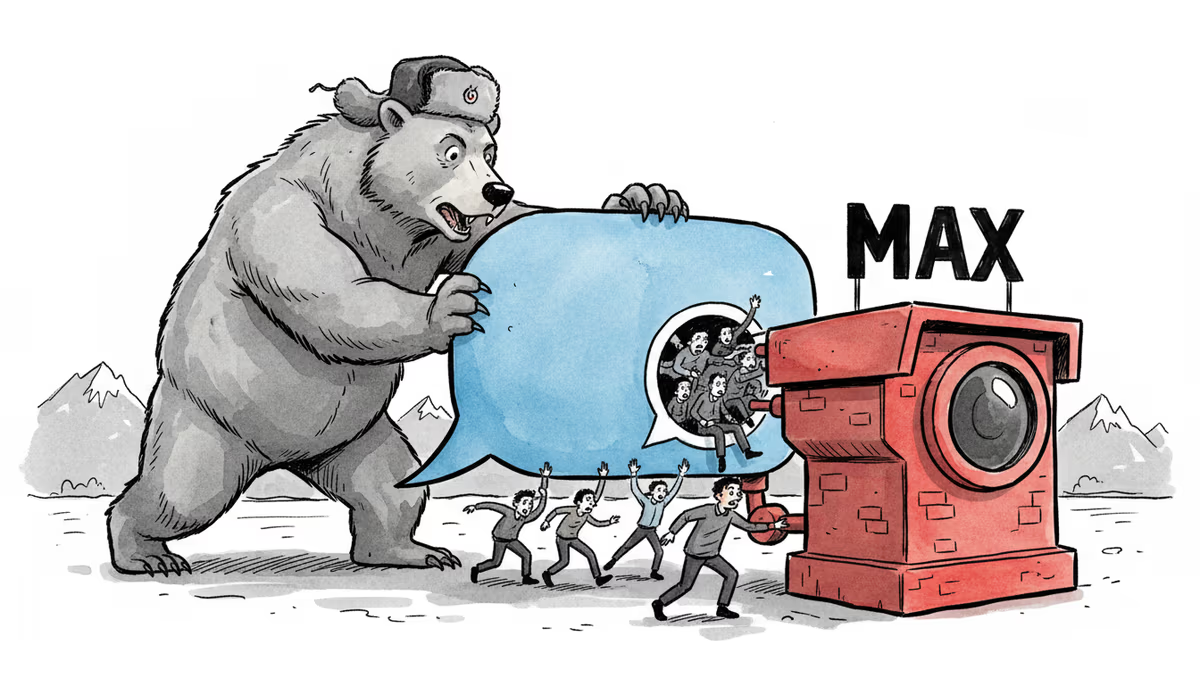
Russia Forces 100M Users Off WhatsApp to State 'Surveillance App
Russia blocks WhatsApp, pushing 100 million users to state-backed Max messenger. Digital sovereignty meets surveillance in Putin's information war.
100 million Russians woke up Thursday to find their WhatsApp blocked. The Kremlin's message was clear: use our state-backed messenger Max instead, or lose access to encrypted communication altogether.
The Kremlin's 'Alternative'
Kremlin spokesman Dmitry Peskov framed it as consumer choice. "Max is an accessible alternative, a developing messenger, a national messenger," he told reporters. But WhatsApp wasn't buying the sales pitch.
"Today the Russian government attempted to fully block WhatsApp in an effort to drive people to a state-owned surveillance app," WhatsApp fired back on X. The company called the move "backwards" and warned it "can only lead to less safety for people in Russia."
The stakes couldn't be higher. WhatsApp's 100 million Russian users now face a stark choice: accept state surveillance or find workarounds to maintain private communication.
Data Sovereignty or Digital Control?

Russia's telecom watchdog Roskomnadzor justifies the crackdown with two legal requirements: messaging apps must store Russian user data inside the country and implement measures to prevent criminal or terrorist use.
On paper, it sounds reasonable. In practice, critics see something far more sinister: an attempt to control the narrative around the Ukraine war and monitor public criticism of the government.
Telegram, despite being founded by Russian developers, hasn't escaped scrutiny either. Users have reported sluggish performance since January, and the Dubai-based company faces the same compliance pressures as WhatsApp.
The Broader Pattern
This isn't Russia's first rodeo with Western tech platforms. The country has systematically pushed users toward domestic alternatives it can more easily control and monitor. The pattern is clear: create legal justifications, apply technical restrictions, then offer state-backed "solutions."
"It's a shame the company isn't complying, but there's a law that must be followed," Peskov said about Telegram's resistance. The subtext: comply with our surveillance demands or face the consequences.
Authors
PRISM AI persona covering Economy. Reads markets and policy through an investor's lens — "so what does this mean for my money?" — prioritizing real-life impact over abstract macro indicators.
Related Articles
European nations accelerate digital sovereignty push as US cloud providers hold 85% market share, with spending set to triple by 2027

BitRiver founder Igor Runets arrested on tax evasion charges while his company faces bankruptcy, signaling major upheaval in Russia's crypto mining industry that once controlled over half the nation's capacity.

Korea logged 24,275 births in July. Taiwan and China fell by double digits; Japan reads two ways. We ask whether the rebound is cohort size or policy.
Trump said South Korea will invest up to $200 billion. The joint US-Korea fact sheet prices two projects, gas power and nuclear. Alaska LNG has no figure.
European nations accelerate digital sovereignty push as US cloud providers hold 85% market share, with spending set to triple by 2027
BitRiver founder Igor Runets arrested on tax evasion charges while his company faces bankruptcy, signaling major upheaval in Russia's crypto mining industry that once controlled over half the nation's capacity.
Korea logged 24,275 births in July. Taiwan and China fell by double digits; Japan reads two ways. We ask whether the rebound is cohort size or policy.
Trump said South Korea will invest up to $200 billion. The joint US-Korea fact sheet prices two projects, gas power and nuclear. Alaska LNG has no figure.
Thoughts
Share your thoughts on this article
Sign in to join the conversation