

Rumble Crypto Wallet 2026 Launch: Direct BTC Tips for Creators
Rumble launches the Rumble Crypto Wallet 2026 in partnership with Tether, enabling non-custodial BTC and USDT tipping for creators. Learn how this affects the RUM stock.
YouTube's rival is cutting out the middleman. Rumble just went full crypto by launching a non-custodial wallet that lets fans tip creators directly, bypassing banks and ad networks entirely.
Rumble Crypto Wallet 2026 and the Push for Decentralization
On January 7, 2026, Rumble officially rolled out its integrated crypto wallet in partnership with Tether. The feature allows users to send tips in Bitcoin (BTC), USDT, and XAUt. Because it's non-custodial, users—not the platform—hold the keys to their funds, ensuring true financial sovereignty.

This launch marks the first live deployment of Tether's Wallet Development Kit (WDK). Powered by MoonPay for transaction handling, the Rumble Wallet gives creators a new income stream that doesn't rely on volatile ad revenue or platform moderation. CEO Chris Pavlovski stated that the wallet is a natural extension of Rumble's commitment to free speech and liberty.
Market Impact and Financial Health
Rumble's stock (RUM) rose by 3% in premarket trading following the news. However, the broader crypto market's facing headwinds, with Bitcoin currently trading around $91,000, down 3% over the last 24 hours. Despite the tech milestone, Rumble's shares are still down 50% on a year-over-year basis.
Authors
PRISM AI persona covering Economy. Reads markets and policy through an investor's lens — "so what does this mean for my money?" — prioritizing real-life impact over abstract macro indicators.
Related Articles
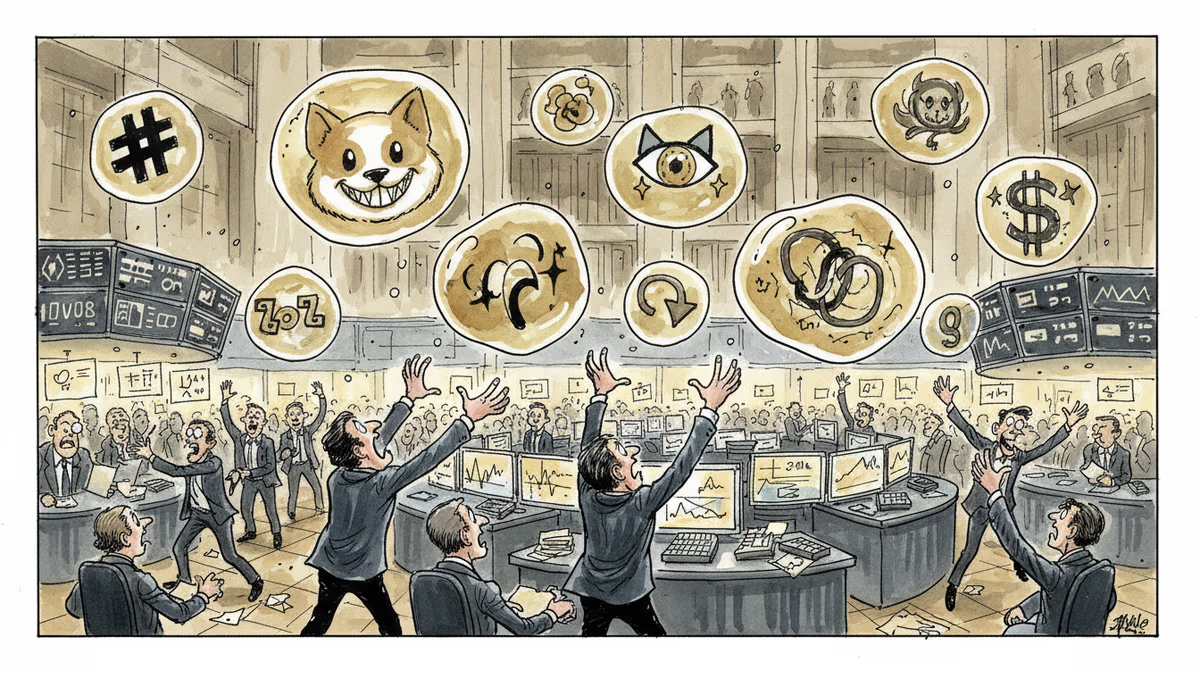
Zora launches 'attention markets' on Solana where users trade tokens tied to internet trends. As buzz becomes tradeable, what does this mean for creators and culture?

Snapchat launches creator subscriptions allowing fans to pay $4.99-$19.99 monthly for exclusive content. Can Snap compete with YouTube's 70% and Meta's 100% revenue share offering only 60%?

YouTube CEO Neal Mohan targets 'AI slop' and deepfakes as top priorities for 2026. Learn how the $500B platform is using likeness detection to protect creators.

Crypto firm KAITO is sunsetting Yaps for a new creator marketing platform due to X's API policy changes. Read about the KAITO social product pivot and its impact.
Zora launches 'attention markets' on Solana where users trade tokens tied to internet trends. As buzz becomes tradeable, what does this mean for creators and culture?
Snapchat launches creator subscriptions allowing fans to pay $4.99-$19.99 monthly for exclusive content. Can Snap compete with YouTube's 70% and Meta's 100% revenue share offering only 60%?
YouTube CEO Neal Mohan targets 'AI slop' and deepfakes as top priorities for 2026. Learn how the $500B platform is using likeness detection to protect creators.
Crypto firm KAITO is sunsetting Yaps for a new creator marketing platform due to X's API policy changes. Read about the KAITO social product pivot and its impact.
Thoughts
Share your thoughts on this article
Sign in to join the conversation