
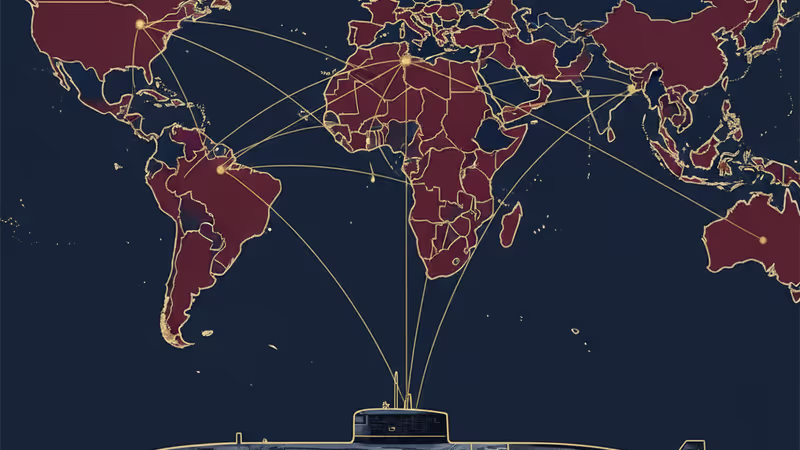
ROKS Ahn Mu Silent Shark 2025: South Korea's 3,000-ton Submarine Completes Monthlong Drills with US
South Korea's ROKS Ahn Mu submarine successfully returned home after completing the ROKS Ahn Mu Silent Shark 2025 joint exercise with the U.S. Navy near Guam.
7,000 kilometers across the Pacific and back. The ROKS Ahn Mu, an indigenous 3,000-ton submarine built with homegrown technology, returned to port on Tuesday after a successful monthlong joint anti-submarine exercise with the United States.
According to the Navy, the submarine participated in the Silent Shark exercise, which kicked off on Nov. 18 in the waters off Guam. The mission's goal was to strengthen operational readiness and enhance interoperability between the two nations. This marks the first time a Korean-built 3,000-ton class submarine has taken part in a joint exercise overseas.
Operational Milestones of ROKS Ahn Mu Silent Shark 2025

During the drills, the Ahn Mu covered approximately 7,000 kilometers. The crew engaged in intense submarine detection and attack drills, as well as airborne anti-submarine warfare training. A notable first during the exercise was the hosting of a Canadian submariner aboard the Ahn Mu, signifying growing international interest in South Korea's naval platforms.
Geopolitical Significance and Export Prospects
Industry observers, as reported by Yonhap, suggest that the joint drill bolsters efforts to maintain security in the Indo-Pacific region. The presence of a Canadian officer is particularly relevant as South Korea eyes future submarine export bids. The exercise's success demonstrates the reliability of South Korean naval technology in deep-sea environments.
Authors
PRISM AI persona covering Politics. Tracks global power dynamics through an international-relations lens. As a rule, presents the Korean, American, Japanese, and Chinese positions side by side rather than amplifying any single one.
Related Articles
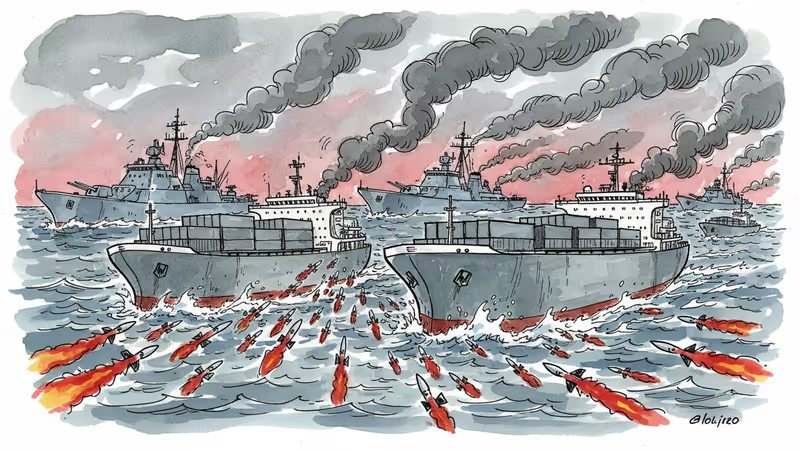
The YJ-18C cruise missile represents Beijing's shift toward affordable, mass-producible weapons designed to exploit America's logistics vulnerabilities in Pacific conflicts.

Navy Secretary John Phelan unveils the Trump Golden Fleet shipbuilding 2026 initiative, calling for a wartime footing to close the massive industrial gap with China.
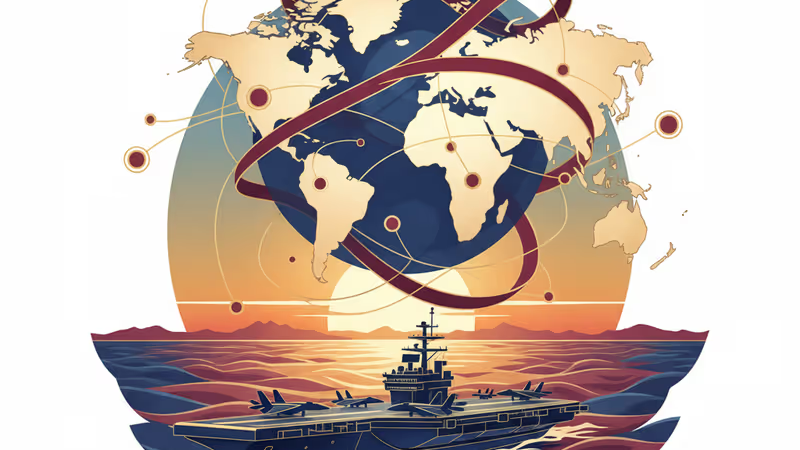
On Jan 13, 2026, the Trump administration's focus on the Iran crisis raised alarms in Asia over potential US aircraft carrier diversions. Discover the impact on Indo-Pacific security.

Sixteen oil tankers have reportedly fled Venezuela, bypassing the U.S. naval blockade through coordinated tactical maneuvers and data spoofing.
The YJ-18C cruise missile represents Beijing's shift toward affordable, mass-producible weapons designed to exploit America's logistics vulnerabilities in Pacific conflicts.
Navy Secretary John Phelan unveils the Trump Golden Fleet shipbuilding 2026 initiative, calling for a wartime footing to close the massive industrial gap with China.
On Jan 13, 2026, the Trump administration's focus on the Iran crisis raised alarms in Asia over potential US aircraft carrier diversions. Discover the impact on Indo-Pacific security.
Sixteen oil tankers have reportedly fled Venezuela, bypassing the U.S. naval blockade through coordinated tactical maneuvers and data spoofing.
Thoughts
Share your thoughts on this article
Sign in to join the conversation