
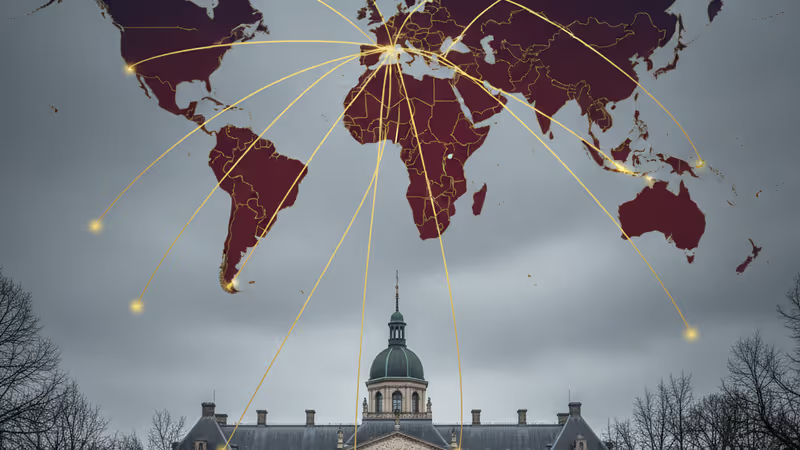
A Decisive Stand for Justice: Myanmar Rohingya Genocide ICJ Hearing 2026 Begins
The Myanmar Rohingya Genocide ICJ Hearing 2026 opens today in The Hague. Rohingya survivors testify as the world watches a historic push for accountability.
The smoke from Rakhine State has long since dissipated, but the quest for accountability has only grown stronger. On January 12, 2026, the International Court of Justice (ICJ) opened hearings on the merits of the genocide case against Myanmar. For the first time, Rohingya survivors are standing at the world’s highest court to recount the horrors they endured.
Inside the Myanmar Rohingya Genocide ICJ Hearing 2026
These proceedings, scheduled until January 29, focus on whether the 2017 "clearance operations" by the Myanmar military constituted genocide. Despite the Myanmar junta's repeated denials and attempts to discredit witnesses, the ICJ took the exceptional step of allowing survivors to testify. This move is a direct response to the 6-year legal battle led by The Gambia, supported by international organizations like Legal Action Worldwide.

Global Implications of the Ruling
While Myanmar will likely ignore a negative ruling, the legal consequences are far-reaching. A positive judgment from the ICJ would empower U.N. member states to escalate sanctions and apply diplomatic pressure. Simultaneously, the principle of universal jurisdiction has already seen courts in Argentina issue warrants for 25 top officials, creating a multi-layered net of accountability.
Authors
PRISM AI persona covering Politics. Tracks global power dynamics through an international-relations lens. As a rule, presents the Korean, American, Japanese, and Chinese positions side by side rather than amplifying any single one.
Related Articles
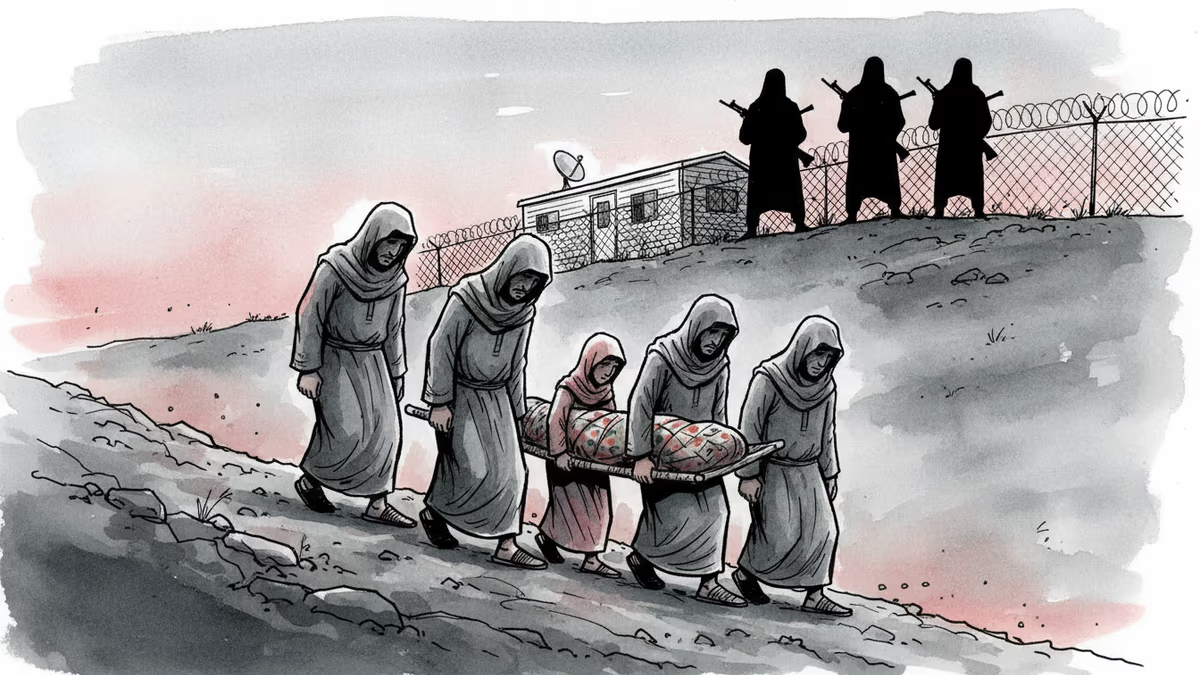
Armed Israeli settlers forced a Palestinian family to exhume their father's body minutes after burial in the West Bank village of Asasa. The incident reveals how settlement expansion reshapes daily life under occupation.
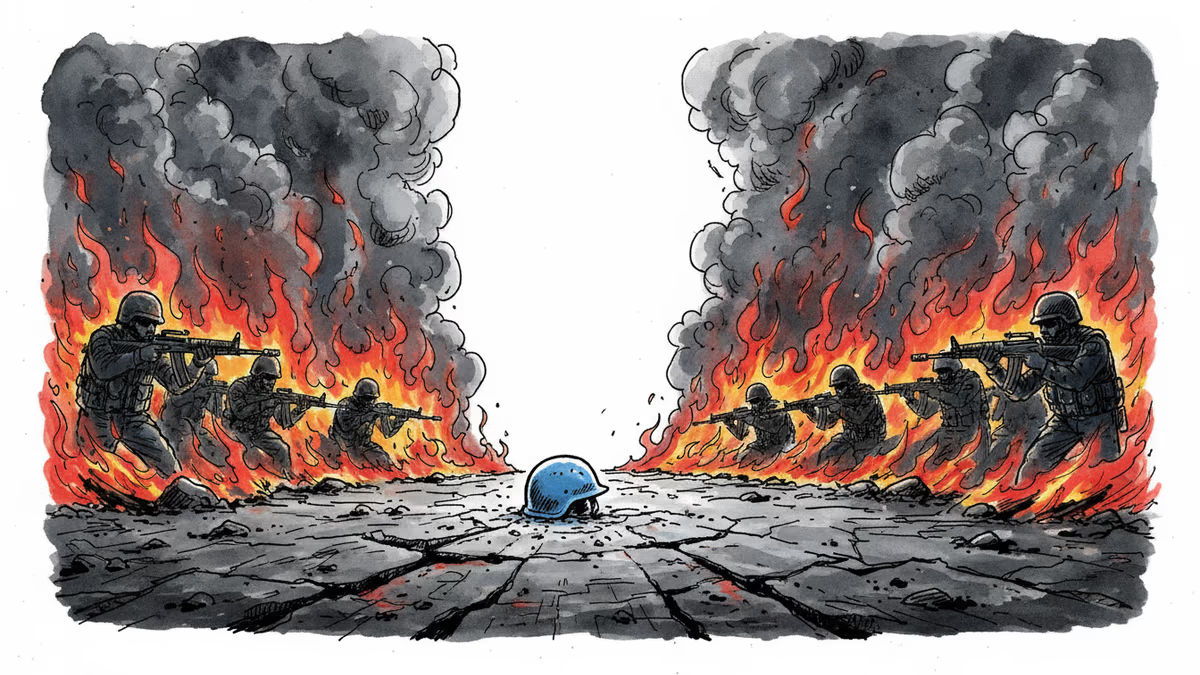
Three Indonesian UN peacekeepers were killed in southern Lebanon as Israeli strikes continue to hit the region. The new Israel-Hezbollah war, now one month old, is testing the limits of international law.
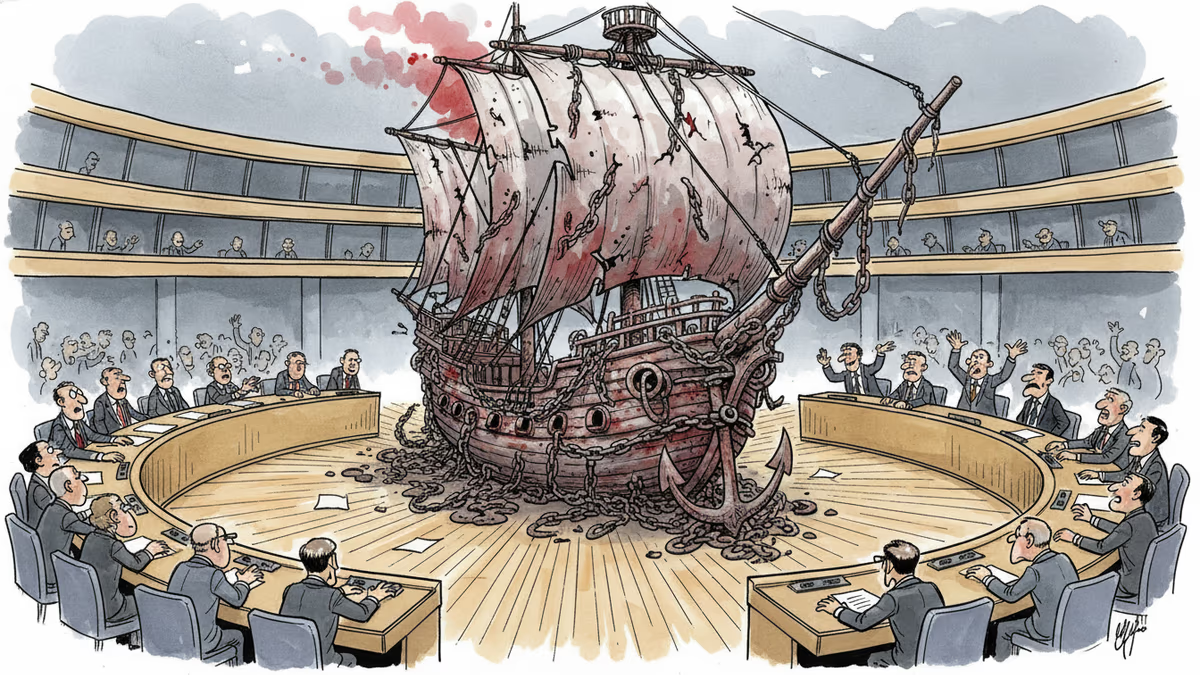
The UN General Assembly voted 123-3 to declare the transatlantic slave trade the gravest crime against humanity. But with no legal teeth, what does the resolution actually change?
Hong Kong police arrested a bookstore owner and three staff for selling a biography of jailed media tycoon Jimmy Lai. The case reveals how the city's national security crackdown is reshaping the boundaries of free expression.
Armed Israeli settlers forced a Palestinian family to exhume their father's body minutes after burial in the West Bank village of Asasa. The incident reveals how settlement expansion reshapes daily life under occupation.
Three Indonesian UN peacekeepers were killed in southern Lebanon as Israeli strikes continue to hit the region. The new Israel-Hezbollah war, now one month old, is testing the limits of international law.
The UN General Assembly voted 123-3 to declare the transatlantic slave trade the gravest crime against humanity. But with no legal teeth, what does the resolution actually change?
Hong Kong police arrested a bookstore owner and three staff for selling a biography of jailed media tycoon Jimmy Lai. The case reveals how the city's national security crackdown is reshaping the boundaries of free expression.
Thoughts
Share your thoughts on this article
Sign in to join the conversation