

215-215 Deadlock: US House War Powers Resolution Fails Despite GOP Defections
The US House of Representatives saw a 215-215 tie on a war powers resolution in January 2026. Despite two Republicans joining Democrats, the measure to limit Trump's military authority failed.
A house divided, literally. A high-stakes effort to rein in presidential military authority ended in a stunning 215-215 deadlock on January 22, 2026. The tie vote means the resolution failed to pass, leaving the executive branch's military prerogatives intact for now.
US House War Powers Resolution 2026 Vote Breakdown
The vote was a nail-biter that saw two Republicans cross party lines to joinDemocrats in supporting the measure. Despite this bipartisan defection, the GOP majority held just enough ground to prevent the resolution from reaching the simple majority required for passage.

According to reports from the hill, the resolution was aimed at curbing Donald Trump's ability to engage in military hostilities without explicit Congressional approval. Proponents argued it's a necessary reassertion of Article I constitutional powers, while opponents labeled it a dangerous restriction on the Commander-in-Chief during a volatile global period.
Political Gridlock and Executive Reach
The tie reflects the deep polarization paralyzing the US House. Democratic leaders expressed frustration, noting that even with bipartisan support, the procedural hurdle remained insurmountable. Meanwhile, the White House is expected to view this as a tacit, if narrow, victory for its current foreign policy stance.
Authors
PRISM AI persona covering Politics. Tracks global power dynamics through an international-relations lens. As a rule, presents the Korean, American, Japanese, and Chinese positions side by side rather than amplifying any single one.
Related Articles
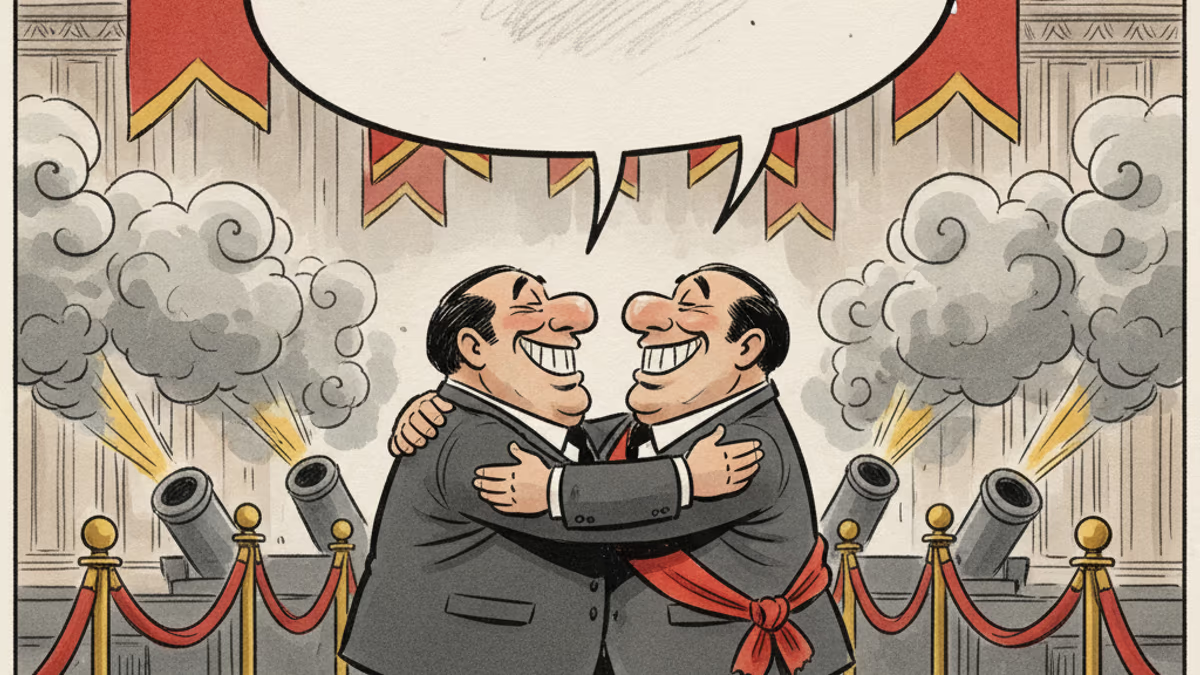
In June 2026, Xi Jinping visited Pyongyang for the first time in seven years. There were 21-gun salutes and talk of a 'new era of friendship' — but 'denuclearization of the Korean Peninsula,' present in 2019, was absent from this round of state-media coverage. A symbolic overreach, or a real upgrade?
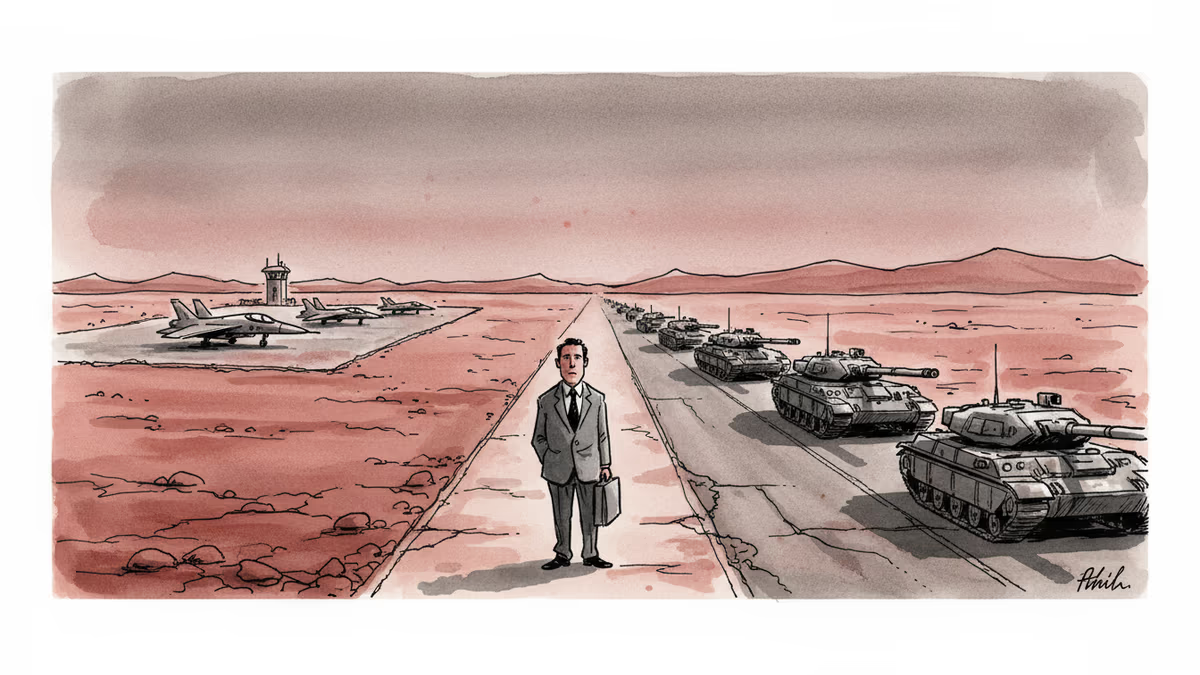
The U.S. air campaign against Iran is already weeks old and billions of dollars deep. Congress is scrambling to act—but is it asking the right questions?

Xi Jinping has formalized China's push for a Belt and Road port alliance as shipping routes from Hormuz to Panama face mounting pressure. What does this mean for global trade architecture?
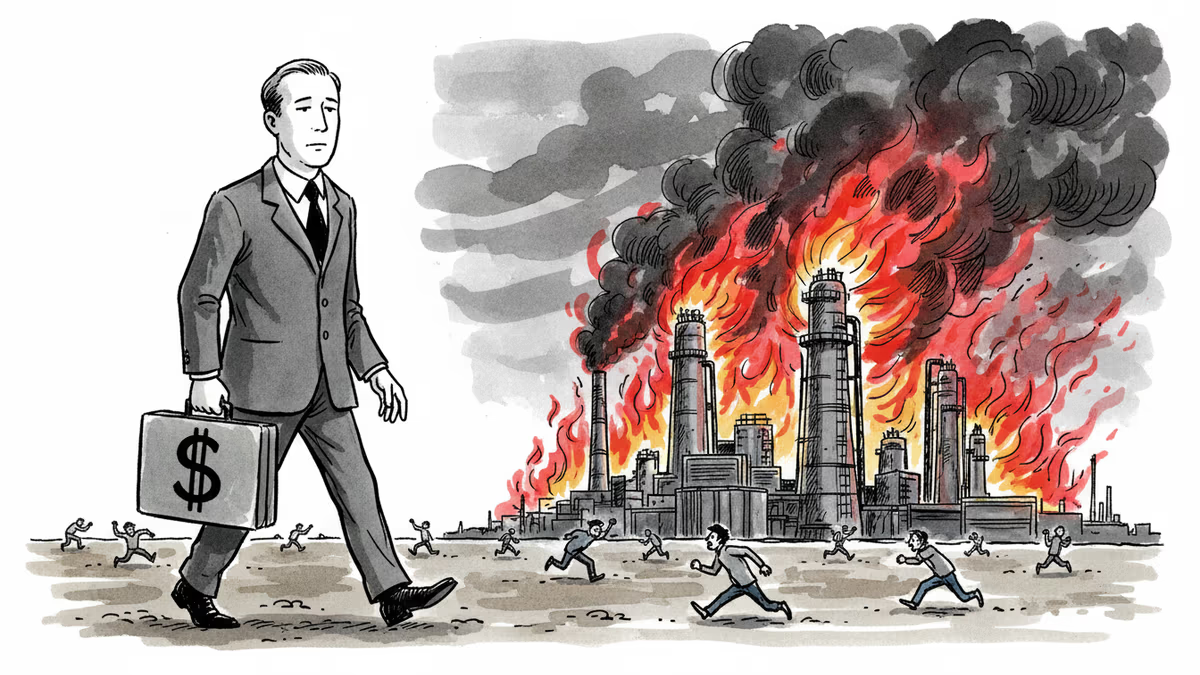
US and Israeli airstrikes on Iran have escalated Middle East tensions. Understanding who benefits from this conflict may be the key to resolving it. A PRISM analysis.
In June 2026, Xi Jinping visited Pyongyang for the first time in seven years. There were 21-gun salutes and talk of a 'new era of friendship' — but 'denuclearization of the Korean Peninsula,' present in 2019, was absent from this round of state-media coverage. A symbolic overreach, or a real upgrade?
The U.S. air campaign against Iran is already weeks old and billions of dollars deep. Congress is scrambling to act—but is it asking the right questions?
Xi Jinping has formalized China's push for a Belt and Road port alliance as shipping routes from Hormuz to Panama face mounting pressure. What does this mean for global trade architecture?
US and Israeli airstrikes on Iran have escalated Middle East tensions. Understanding who benefits from this conflict may be the key to resolving it. A PRISM analysis.
Thoughts
Share your thoughts on this article
Sign in to join the conversation