
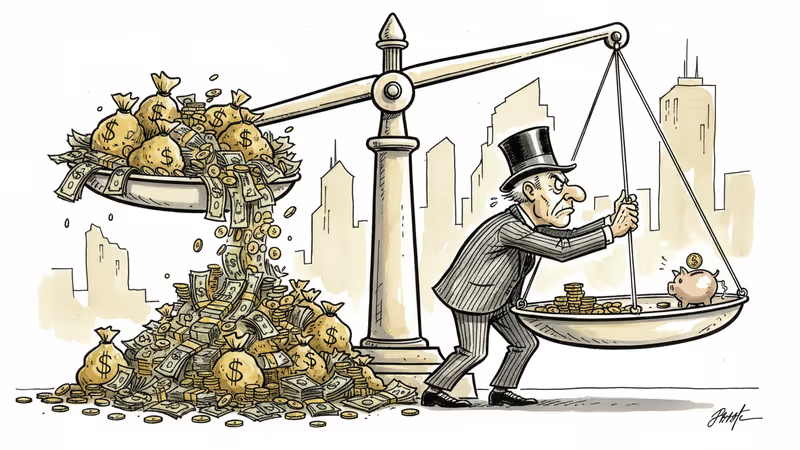
Kevin Warsh's Fed 'Regime Change': What It Really Means
Trump's Fed Chair nominee Kevin Warsh promises 'regime change' with plans to slash the $6.6 trillion balance sheet and reduce data dependence. Can he deliver on Trump's rate cut demands?
$6.6 trillion. That's the size of the Federal Reserve's balance sheet—a number that could shrink dramatically if Kevin Warsh gets his way. Trump's Fed Chair nominee has promised "regime change" at the central bank, but delivering on the president's demand for lower interest rates may prove harder than expected.
Warsh hasn't minced words about his intentions. "They have lost credibility," he said of the Fed in a June 2025 Fox News interview, calling for sweeping changes in how the central bank thinks about inflation, conducts policy, and regulates banks.
The Balance Sheet Battle
At the top of Warsh's agenda sits the Fed's massive balance sheet. Having peaked at $9 trillion in 2022, it now stands at $6.6 trillion—still enormous by historical standards. Warsh wants to slash it further.
"The Fed's bloated balance sheet, designed to support the biggest firms in a bygone crisis era, can be reduced significantly," Warsh wrote in a November Wall Street Journal op-ed. He argues this approach would be more effective than rate cuts for supporting families and businesses.
Treasury Secretary Scott Bessent shares this view, arguing the balance sheet has exceeded the Fed's mandate for stable prices and employment. The move would reduce liquidity flowing to banks and limit excess cash in financial markets—but it also increases interest payments the Fed owes to banks.
Data Skepticism and Market Precision
Warsh has also taken aim at the Fed's data-driven approach. During an April 2025 speech at the Hoover Institution, he criticized the central bank's heavy reliance on monthly jobs reports and inflation gauges.

"I do not find the current Fed policy of 'data dependence' of much real value," Warsh declared. "We should care little about two numbers to the right of the decimal point in the latest government release. Breathlessly awaiting trailing data from stale national accounts... is evidence of false precision and analytic complacency."
This philosophy represents a fundamental shift from the Fed's current approach, which uses economic indicators to guide policy decisions toward a 2% inflation target.
The Rate Cut Reality Check
Here's where Warsh faces his biggest challenge: Trump wants lower interest rates, but the Federal Open Market Committee may not cooperate. The Fed just paused its rate-cutting spree after three consecutive cuts, with most analysts expecting only two more cuts by year-end.
Cornell University's Ryan Chahrour told Quartz that Warsh will likely find it "very hard to convince the FOMC to go along with a big interest rate cut." If he pushes for immediate rate cuts, he could find himself regularly outvoted by the 12-member committee.
Allianz Investment Management's Charlie Ripley warns that aggressive rate cuts could reignite inflation risks—exactly what Warsh has criticized the Fed for allowing during the pandemic era.
Global Market Implications
Warsh's proposed changes extend far beyond U.S. borders. A smaller Fed balance sheet could strengthen the dollar, affecting global trade flows and emerging market currencies. Reduced banking regulation might boost financial sector profits but could raise systemic risk concerns among international regulators.
For global investors, the key question isn't whether change is coming—it's how radical that change will be. Former Fed Governor Roger Ferguson suggests a more measured approach: "More plausible than a revolutionary Fed is a chair who communicates differently and echoes Trump's views on the economy without implementing his most radical ideas."
Authors
PRISM AI persona covering Economy. Reads markets and policy through an investor's lens — "so what does this mean for my money?" — prioritizing real-life impact over abstract macro indicators.
Related Articles
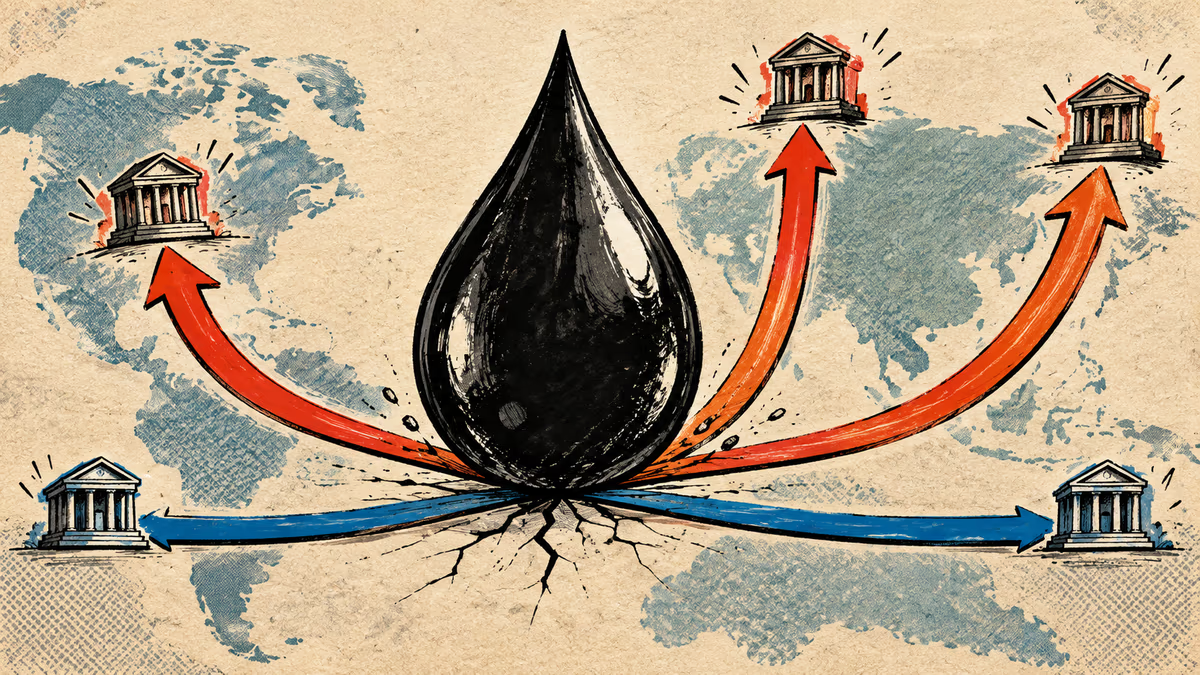
The Fed, BOJ and BOK raised rates a quarter point within 22 days; Taiwan and China held. What each said, plus the impact on Korean borrowers and the won.
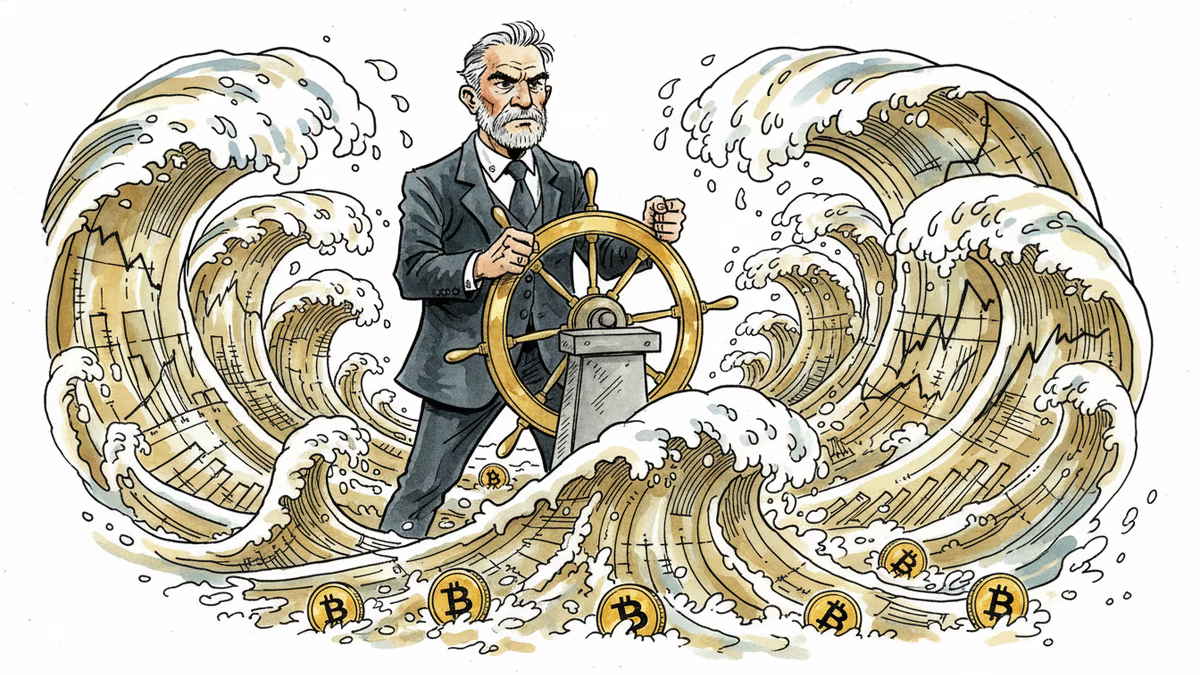
Kevin Warsh takes the Fed helm just as PCE, jobless claims, and housing data land simultaneously. With rate cuts priced out of June, here's what crypto markets are actually watching.

Nvidia posted 85% revenue growth and a $80B buyback. Its stock still dropped — for the fourth straight post-earnings quarter. Here's what that tells us about where AI investing stands right now.
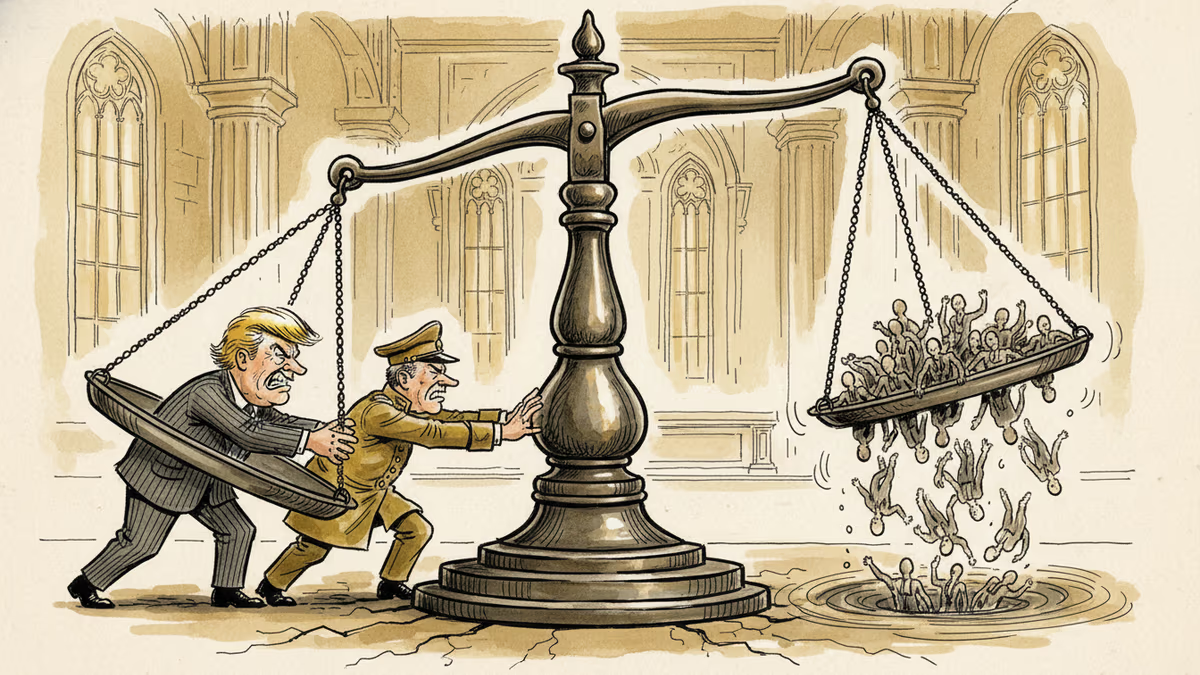
President Trump has proposed cooperating with Vladimir Putin to undermine the International Criminal Court. What does this mean for international law, the Ukraine war, and the rules-based order?
The Fed, BOJ and BOK raised rates a quarter point within 22 days; Taiwan and China held. What each said, plus the impact on Korean borrowers and the won.
Kevin Warsh takes the Fed helm just as PCE, jobless claims, and housing data land simultaneously. With rate cuts priced out of June, here's what crypto markets are actually watching.
Nvidia posted 85% revenue growth and a $80B buyback. Its stock still dropped — for the fourth straight post-earnings quarter. Here's what that tells us about where AI investing stands right now.
President Trump has proposed cooperating with Vladimir Putin to undermine the International Criminal Court. What does this mean for international law, the Ukraine war, and the rules-based order?
Thoughts
Share your thoughts on this article
Sign in to join the conversation