
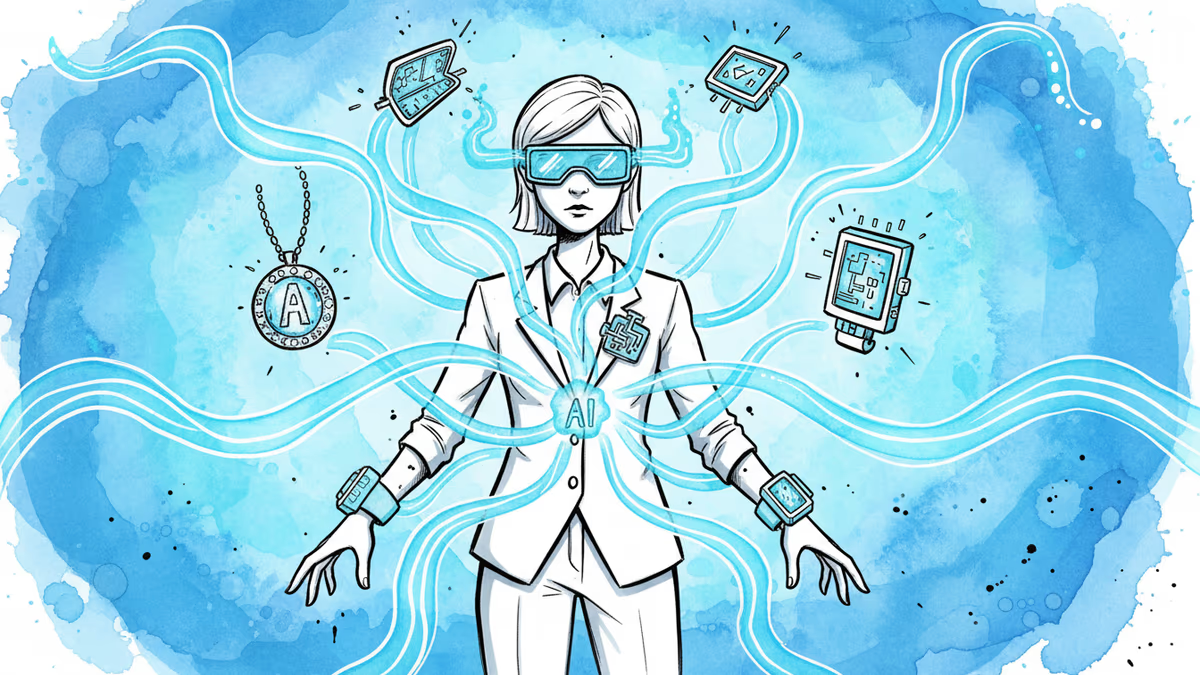
Beyond the Wrist: Qualcomm's Bet on AI Everywhere
Qualcomm's new Snapdragon Wear Elite chip targets pendants, pins, and smart glasses, expanding AI wearables beyond smartwatches. Is this the future or just another tech fantasy?
The $50 Billion Wearables Market Just Got Crowded
Qualcomm just threw down the gauntlet in the wearables race. Their new Snapdragon Wear Elite chip isn't just another smartwatch processor - it's a "wrist plus" play targeting pendants, pins, and display-free smart glasses. The company's betting that AI will escape the confines of our wrists and colonize our entire bodies.
Built on 3nm process technology, the Elite packs dual AI engines: an eNPU and Hexagon NPU. Qualcomm isn't replacing their existing W5 Plus chip but expanding the battlefield. The message is clear: smartwatches were just the beginning.
Apple's Quiet Panic?
This puts Apple in an interesting position. The company dominates smartwatches with 36% market share, but Qualcomm's move could fragment that dominance across multiple device categories. Apple's been rumored to be working on smart glasses and other wearables, but they've been characteristically secretive.
Google's track record here is mixed. Remember Google Glass? Or the more recent Pixel Buds that promised AI assistance but delivered mostly frustration? The tech graveyard is littered with ambitious wearables that couldn't find their audience.

The Battery Reality Check
Here's the uncomfortable truth: most smartwatches barely last a day with moderate use. Now Qualcomm wants to power even smaller devices with AI processing. The 3nm process should help with power efficiency, but physics still matters. A pendant running continuous AI inference while maintaining a socially acceptable size? That's a tall order.
Then there's the privacy angle. Americans are already skeptical of big tech's data collection. Imagine wearing multiple AI devices that are constantly listening, analyzing, and transmitting. The regulatory scrutiny alone could kill this category before it takes off.
The Developer Dilemma
For app developers, this creates a new headache. Building for smartwatches was already challenging due to limited screen real estate and processing power. Now they'll need to consider devices with no screens at all, relying purely on voice and gesture interfaces.
The fragmentation could be brutal. Different form factors, different interaction models, different power constraints. It's reminiscent of the early Android ecosystem - lots of innovation, but also lots of confusion.
Authors
Related Articles

The Asus Zenbook A16 with Snapdragon X2 Elite Extreme beats Apple M4 Pro on Geekbench but drops from 20 hours to 9.5 hours of battery life. What that tradeoff reveals about Qualcomm's new strategy.

The same heartbeat reading, DNA sample, or facial scan has radically different legal protections depending on where you live. From 23andMe's bankruptcy to post-Dobbs data weaponization, here's how five legal regimes treat the data your body generates — and why 640 million smartwatch users should care.

AirPods Pro 3 drops to $199.99 at Amazon, Walmart, and Best Buy. But the real story isn't the discount — it's what earbuds are quietly becoming.

Meta plans to launch a smartwatch with AI features in 2025 after scrapping a similar project in 2022. We analyze why the company is trying again and what it means for the wearable market.
The Asus Zenbook A16 with Snapdragon X2 Elite Extreme beats Apple M4 Pro on Geekbench but drops from 20 hours to 9.5 hours of battery life. What that tradeoff reveals about Qualcomm's new strategy.
The same heartbeat reading, DNA sample, or facial scan has radically different legal protections depending on where you live. From 23andMe's bankruptcy to post-Dobbs data weaponization, here's how five legal regimes treat the data your body generates — and why 640 million smartwatch users should care.
AirPods Pro 3 drops to $199.99 at Amazon, Walmart, and Best Buy. But the real story isn't the discount — it's what earbuds are quietly becoming.
Meta plans to launch a smartwatch with AI features in 2025 after scrapping a similar project in 2022. We analyze why the company is trying again and what it means for the wearable market.
Thoughts
Share your thoughts on this article
Sign in to join the conversation