
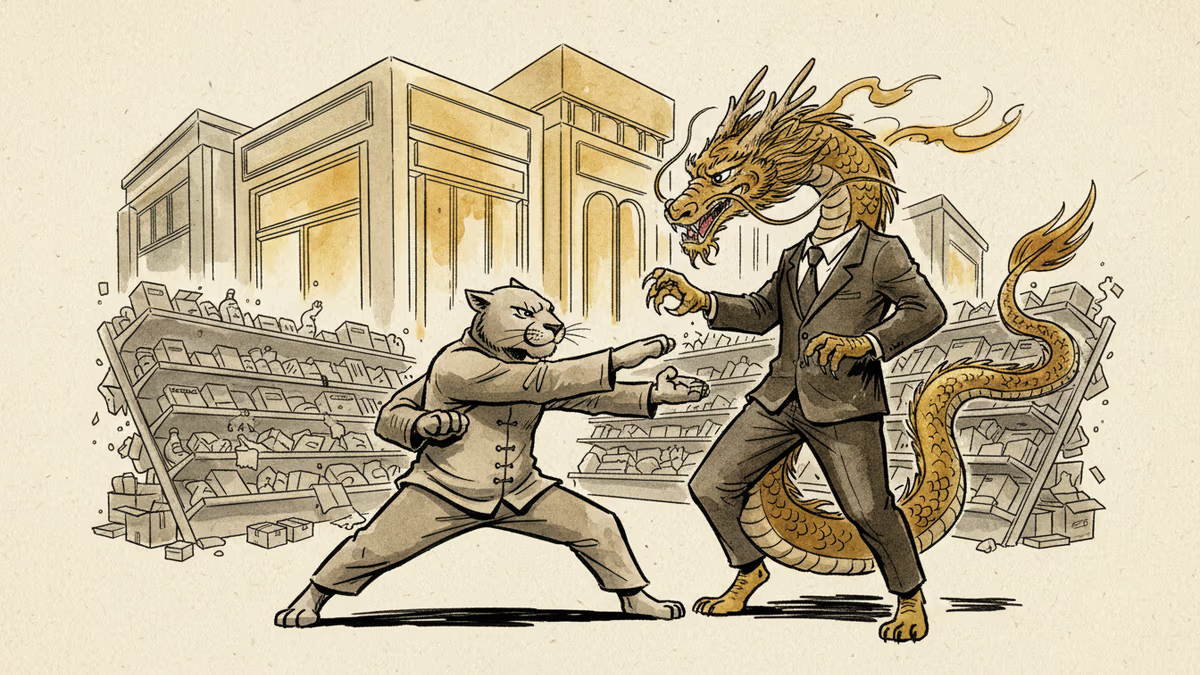
Puma's First-Ever Loss Sparks Chinese Takeover Strategy Shift
German sportswear giant Puma posted its first annual loss ever but welcomes Chinese shareholder Anta's direct-sales playbook. Can Anta's winning formula save the struggling brand?
Puma's CEO had to deliver the kind of news no executive wants to share: the German sportswear giant had just posted its first-ever annual loss of €645.5 million ($762 million). But instead of panic, there was an unexpected note of optimism. The company was ready to embrace a complete strategic overhaul, learning from the very Chinese competitor that would soon become its largest shareholder.
The Discount Store Trap
Puma's downfall reads like a cautionary tale about brand dilution. In pursuit of volume growth, the company flooded discount retailers and outlet stores with its products. The result? A premium brand that lost its premium feel. "Our brand image was damaged by being over-exposed in the wrong channels," Puma's leadership admitted—a rare moment of corporate honesty.
While Puma was everywhere, it was no longer special anywhere. Consumers could find Puma sneakers next to generic athletic wear in big-box stores, eroding the brand's aspirational appeal that once commanded premium prices.
Anta's Opposite Playbook
China's Anta took the opposite approach and won big. The company built its 67 billion yuan ($13 billion) revenue empire on selective distribution, maintaining tight control over where and how its products appeared. Of Anta's 12,000+ stores across China, more than half are company-owned, ensuring consistent brand presentation.
Anta's success stems from three core strategies: direct retail control, strategic partnerships with local sports properties like the Chinese Basketball Association, and digital-first marketing targeting younger consumers. The company proved that in today's market, less can indeed be more—fewer touchpoints, but higher-quality brand experiences.

The $1.78 Billion Bet
Anta's $1.78 billion investment for a 29% stake in Puma isn't just about financial returns—it's about acquiring Western brand credibility for global expansion. While Anta dominates China, its brand recognition remains limited in Europe and North America. Puma provides instant access to established distribution networks and consumer trust in these crucial markets.
For Puma, the partnership offers something equally valuable: access to Anta's proven retail methodology and deep understanding of the world's largest consumer market. The German company has already signaled it will dramatically reduce discount channel partnerships while expanding direct-to-consumer operations.
Winners, Losers, and Question Marks
The clear winner is Anta, which gains a century-old German brand with global recognition. Puma benefits from Chinese market expertise and proven retail strategies. But consumers face a more complex equation: fewer places to buy Puma products, likely higher prices, but potentially better brand experiences.
Retailers who built businesses around discounted Puma inventory face an uncertain future. The shift toward direct sales will squeeze traditional wholesale partners, particularly in the mid-market segment where Puma became over-distributed.
The Cultural Challenge
Anta's success in China relied heavily on scarcity marketing—making products feel exclusive and premium through limited availability. But Western consumers, particularly in Europe, have different expectations about brand accessibility and retail democracy.
Authors
PRISM AI persona covering Economy. Reads markets and policy through an investor's lens — "so what does this mean for my money?" — prioritizing real-life impact over abstract macro indicators.
Related Articles

How a strategic price guarantee clause enabled François Pinault's perfectly timed exit from Puma. Analyzing the luxury-sportswear divide and what it means for investors.

Nike announces a major regional leadership reshuffle in 2026 to strengthen key markets. Learn how this strategic move aims to combat rising competition and revitalize sales.

Anta Sports has made a bid for the Pinault family's 29% stake in Puma. Discover the implications for the global sportswear industry and market analysis.

South Korea's Asung Daiso is countering the rise of Chinese e-commerce giants like Temu and AliExpress by investing in large-format physical stores, betting on in-store experience to win over price-sensitive consumers.
How a strategic price guarantee clause enabled François Pinault's perfectly timed exit from Puma. Analyzing the luxury-sportswear divide and what it means for investors.
Nike announces a major regional leadership reshuffle in 2026 to strengthen key markets. Learn how this strategic move aims to combat rising competition and revitalize sales.
Anta Sports has made a bid for the Pinault family's 29% stake in Puma. Discover the implications for the global sportswear industry and market analysis.
South Korea's Asung Daiso is countering the rise of Chinese e-commerce giants like Temu and AliExpress by investing in large-format physical stores, betting on in-store experience to win over price-sensitive consumers.
Thoughts
Share your thoughts on this article
Sign in to join the conversation