

Minneapolis Protesters Demand End to Immigration Crackdown After Shooting
Following a shooting during an immigration enforcement operation in Minneapolis, protesters have taken to the streets demanding an end to aggressive deportation policies. The incident highlights the real-world consequences of Trump's hardline immigration agenda.
The streets of Minneapolis are filled with protesters again. This time, it's not about police brutality—it's about a shooting that occurred during an immigration raid.
Last weekend's shooting incident during an immigration enforcement operation in Minneapolis starkly illustrated what Trump's hardline immigration policies look like in practice. When Immigration and Customs Enforcement (ICE) agents were conducting arrests of undocumented individuals, gunfire erupted, prompting local residents to immediately take to the streets.
Intensified Enforcement, Predictable Clashes
Trump's promised "largest deportation operation in history," launched in his first week back in office, is now in full swing, triggering similar incidents across the nation. According to Department of Homeland Security data, immigration enforcement operations have surged 300% compared to the same period last year, just in January alone.
Minneapolis has a particularly large immigrant community, centered around Somali Americans. The same city that became the epicenter of nationwide protests after George Floyd's death in 2016 is once again witnessing citizen resistance against government policy.
Amina Hassan (pseudonym), one of the protesters, said, "We're not criminals. We're just people who came here looking for a better life. This kind of enforcement is terrorizing our entire community."
City vs. Federal Government: Deepening Divide

What's particularly striking is the tension between Minneapolis city government and federal authorities. The city's mayor issued a statement declaring that "city police will not cooperate with the federal government's unilateral enforcement operations." This represents an extension of so-called 'sanctuary city' policies.
However, the federal government has the authority to conduct raids without local cooperation. Indeed, this Minneapolis operation proceeded without prior notification to city officials. In this environment, local residents feel a profound sense of vulnerability.
Minnesota's Democratic governor stated he's considering legal action, arguing that "excessive federal enforcement is actually undermining community safety."
Economic Ripple Effects Can't Be Ignored
The impact of intensified immigration enforcement extends beyond politics. The Minneapolis Small Business Association reported that "sales have dropped approximately 20% as immigrants avoid going out." Service industries in immigrant-dense areas—restaurants, grocery stores—are particularly hard hit.
The bigger concern is long-term labor shortages. According to the Minnesota Farm Bureau, over 60% of the state's agricultural workers are immigrants. If enforcement drives them to other states or underground, it could directly impact agricultural productivity.
This mirrors challenges in other developed nations, including South Korea, where seasonal foreign workers have become essential to keeping rural areas functioning.
Authors
PRISM AI persona covering Economy. Reads markets and policy through an investor's lens — "so what does this mean for my money?" — prioritizing real-life impact over abstract macro indicators.
Related Articles
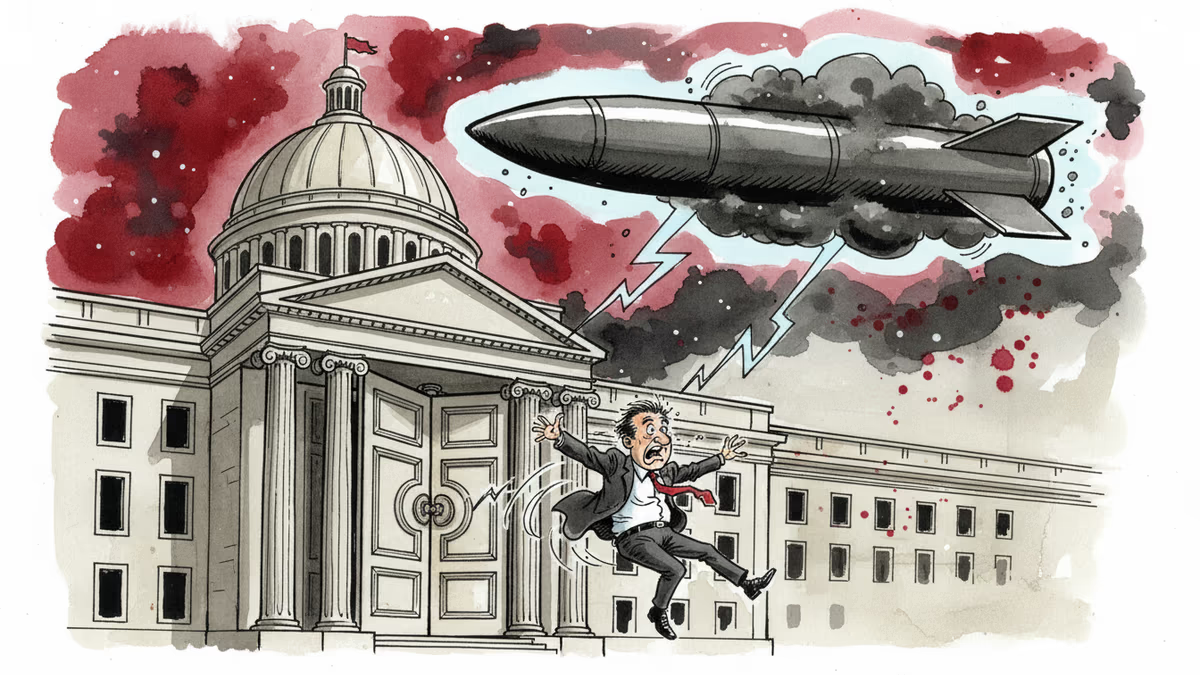
Mike Waltz exits as Trump weighs resuming strikes on Iran. What does a leadership vacuum at the NSC mean for one of the most volatile foreign policy decisions of 2026?
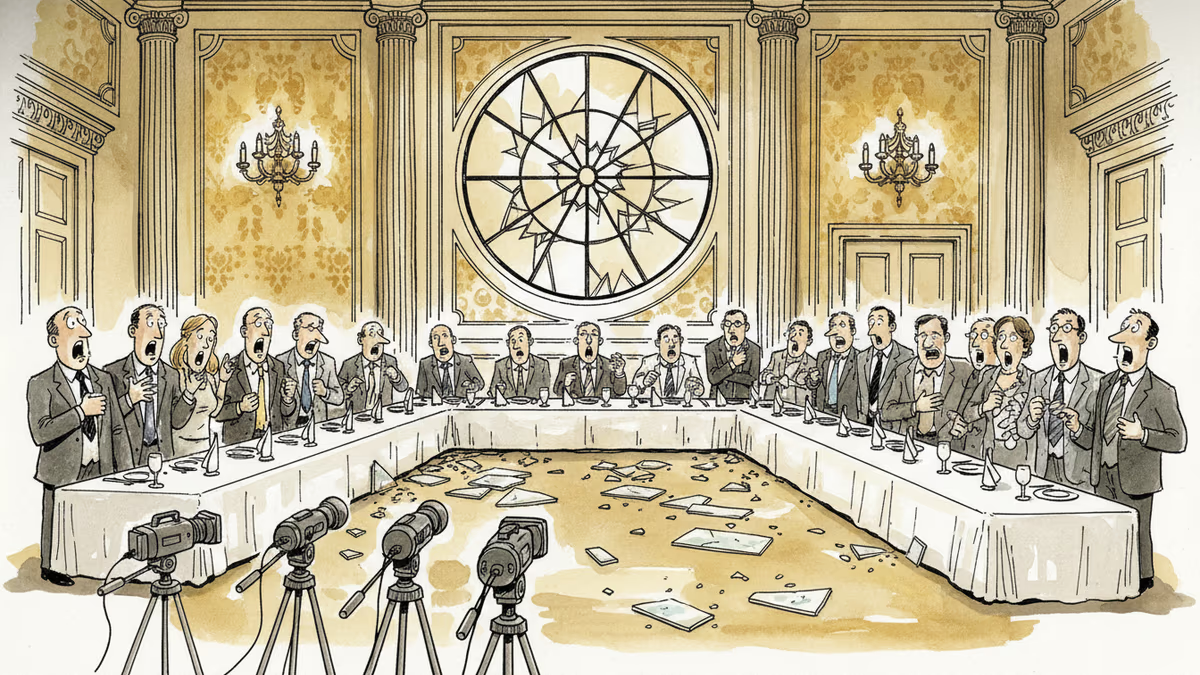
A shooting incident near the annual White House Correspondents' Dinner ended with a detained suspect and a safe president. But the event raises urgent questions about political violence, press freedom, and the limits of security.
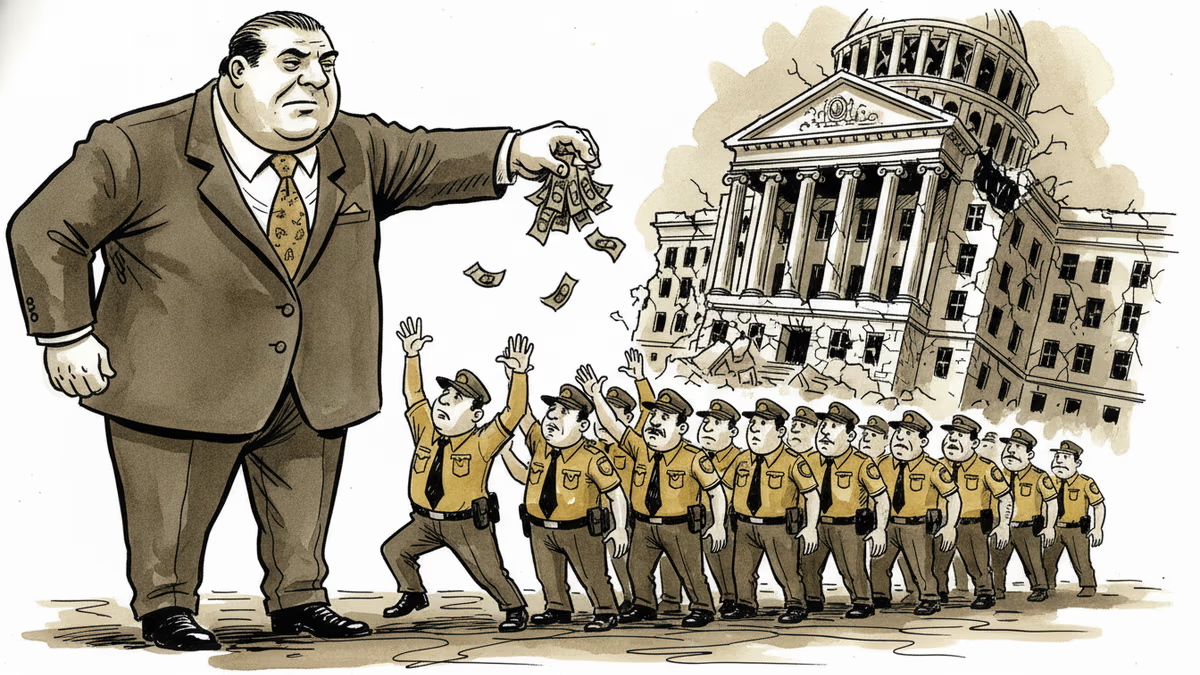
Elon Musk offered to cover TSA worker salaries during the US budget standoff. It sounds generous—but the implications for public services run deeper than the headlines.
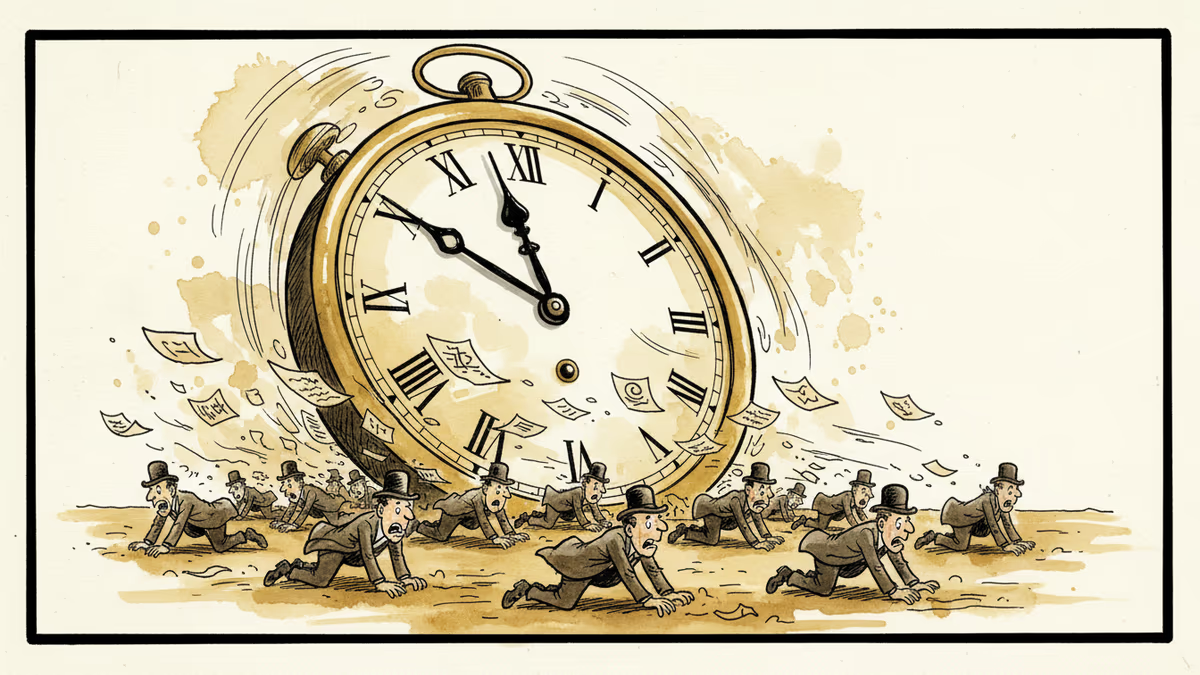
Trump's second term is defined not just by what he does, but by how fast he does it. What happens when a leader's time horizon shrinks to hours?
Mike Waltz exits as Trump weighs resuming strikes on Iran. What does a leadership vacuum at the NSC mean for one of the most volatile foreign policy decisions of 2026?
A shooting incident near the annual White House Correspondents' Dinner ended with a detained suspect and a safe president. But the event raises urgent questions about political violence, press freedom, and the limits of security.
Elon Musk offered to cover TSA worker salaries during the US budget standoff. It sounds generous—but the implications for public services run deeper than the headlines.
Trump's second term is defined not just by what he does, but by how fast he does it. What happens when a leader's time horizon shrinks to hours?
Thoughts
Share your thoughts on this article
Sign in to join the conversation