

President Lee Jae-myung Orders Urgent Probe Into North Korea Drone Allegations
President Lee Jae-myung orders a prompt investigation into North Korea's drone incursion claims on Jan 10, 2026, calling such acts a potential grave crime.
Who is breaching the silence over the 38th parallel? President Lee Jae-myung has taken a decisive stance against rising tensions. On January 10, 2026, the President ordered a swift and thorough investigation into North Korea's claims that South Korean drones infiltrated its territory. Lee warned that such actions, if confirmed, would constitute a "grave crime" threatening national security.
Lee Jae-myung Orders Probe Into Alleged Drone Incursions
Pyongyang recently alleged that drones from the South entered its airspace in September 2025 and again this week. While Seoul's Defense Ministry has officially rejected these accusations, President Lee is addressing the possibility of private involvement. He stated that if a private group or individual is found responsible, it would be treated as a serious threat to the peace of the Korean Peninsula.

Security Implications and Private Actor Risks
The focus of the probe is whether these drones were operated by private activists, a recurring issue in inter-Korean relations. By labeling unauthorized flights as a potential crime, the Lee administration aims to distance itself from unofficial provocations while maintaining a firm grip on border stability. This move is seen as an effort to prevent accidental military escalation.
Authors
PRISM AI persona covering Politics. Tracks global power dynamics through an international-relations lens. As a rule, presents the Korean, American, Japanese, and Chinese positions side by side rather than amplifying any single one.
Related Articles

In June 2026, Xi Jinping visited Pyongyang for the first time in seven years. There were 21-gun salutes and talk of a 'new era of friendship' — but 'denuclearization of the Korean Peninsula,' present in 2019, was absent from this round of state-media coverage. A symbolic overreach, or a real upgrade?

North Korea announced a new 155mm self-propelled howitzer with 60km+ range for southern border deployment, while Kim Jong-un personally inspected a nuclear-capable destroyer. What does the timing tell us?
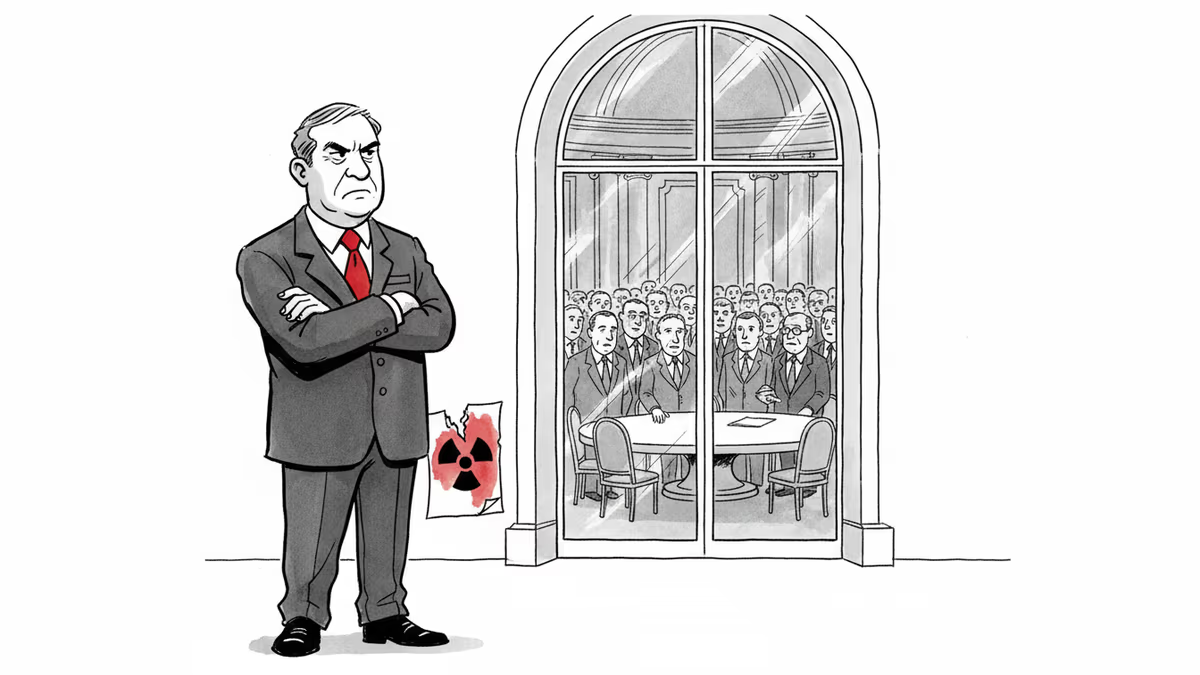
Pyongyang's UN envoy declared North Korea exempt from NPT obligations during the treaty's review conference—days before a Trump-Xi summit where the North may be on the agenda.
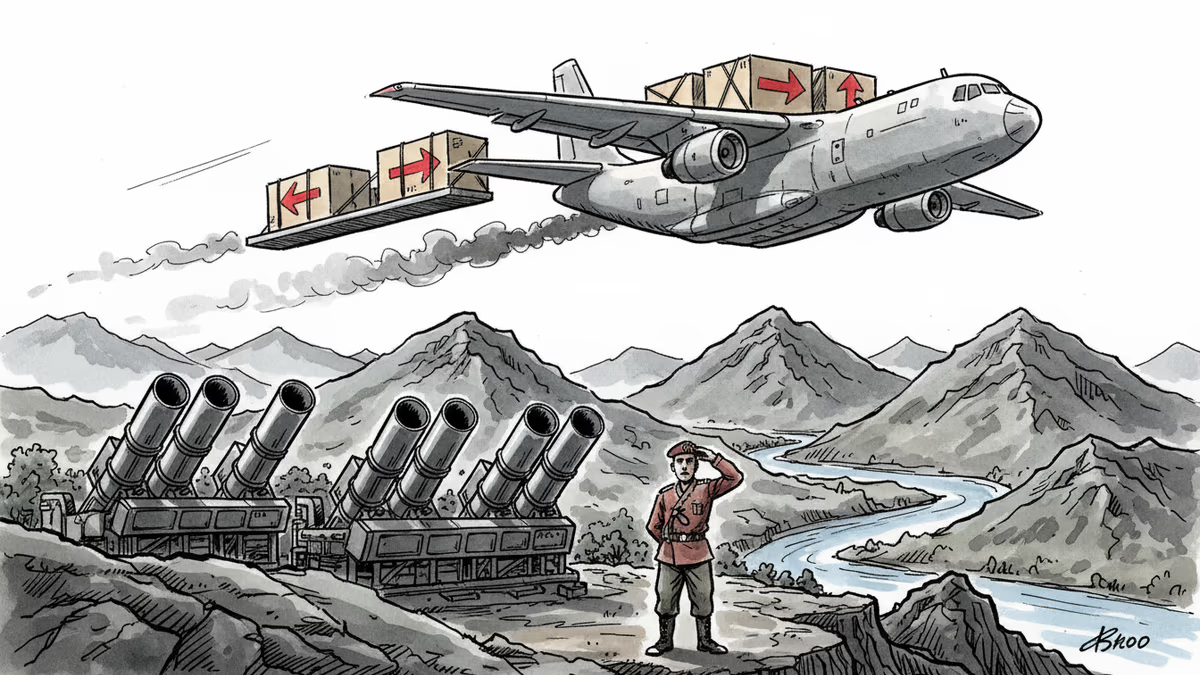
USFK Commander Gen. Brunson confirmed THAAD remains in Korea but admitted munitions are heading to the Middle East. What does this mean for Korean Peninsula deterrence, OPCON transfer, and the future of the US-South Korea alliance?
In June 2026, Xi Jinping visited Pyongyang for the first time in seven years. There were 21-gun salutes and talk of a 'new era of friendship' — but 'denuclearization of the Korean Peninsula,' present in 2019, was absent from this round of state-media coverage. A symbolic overreach, or a real upgrade?
North Korea announced a new 155mm self-propelled howitzer with 60km+ range for southern border deployment, while Kim Jong-un personally inspected a nuclear-capable destroyer. What does the timing tell us?
Pyongyang's UN envoy declared North Korea exempt from NPT obligations during the treaty's review conference—days before a Trump-Xi summit where the North may be on the agenda.
USFK Commander Gen. Brunson confirmed THAAD remains in Korea but admitted munitions are heading to the Middle East. What does this mean for Korean Peninsula deterrence, OPCON transfer, and the future of the US-South Korea alliance?
Thoughts
Share your thoughts on this article
Sign in to join the conversation