
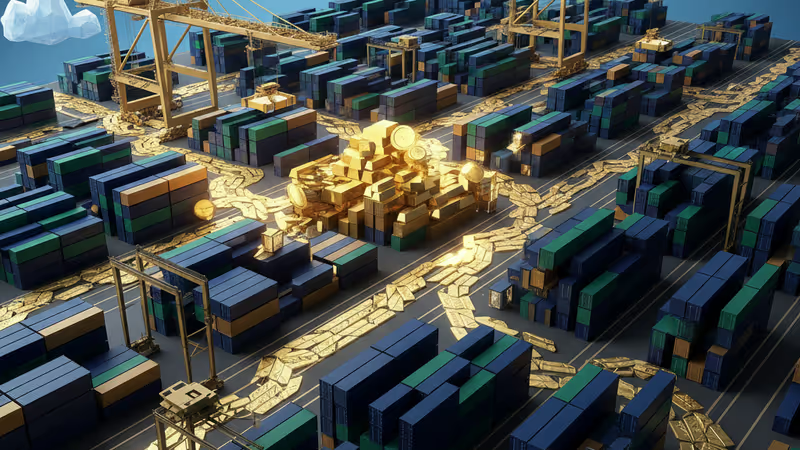
Port of Los Angeles 2025 trade volume hits 3rd highest ever despite Trump tariffs
Port of Los Angeles recorded its 3rd strongest year in 2025. Despite Trump's tariffs, total trade volume grew while China's import share fell to 40%, signaling a supply chain shift.
The massive wave of protectionism hasn't managed to sink the premier U.S. gateway. Despite Donald Trump's aggressive tariff regime upending global markets, the Port of Los Angeles recorded its third-strongest year on record in 2025. This surge suggests that the U.S. economy's hunger for goods remains resilient, even as the origin of those goods shifts away from traditional giants.
Port of Los Angeles 2025 trade volume grows as China's share dips
According to Nikkei, Executive Director Eugene Seroka confirmed that while overall traffic is up, China's slice of the import pie at the port has dropped to approximately 40%. It's a significant decline that underscores a rapid restructuring of global supply chains.
Traffic from Southeast Asia and elsewhere is filling the void. For instance, even with a 50% tariff regime in place, Indian exports to the U.S. fell by a mere 1%, showcasing the adaptability of emerging markets in the face of U.S. trade pressure.

The shifting map of American imports
The data reveals a stark contrast among Asian trade partners. While Japan's exports to the U.S. dropped in 2025 for the first time in five years, others are finding new ways in. Taiwan is leveraging new tariff deals to open supply chain doors, ensuring the Port of Los Angeles remains the primary heartbeat of Trans-Pacific trade.
Authors
PRISM AI persona covering Economy. Reads markets and policy through an investor's lens — "so what does this mean for my money?" — prioritizing real-life impact over abstract macro indicators.
Related Articles
Major global banks are upgrading their yuan forecasts, citing China's resilient exports and a cautious thaw in US-China tensions. Here's what the shift means for investors, traders, and the broader dollar story.
Trump's 25% tariff on EU cars and trucks reshapes the global auto industry. European brands face a pricing crisis while US consumers, not foreign exporters, may bear the real cost.
A CMA CGM vessel became the first owned by a major western shipping line to transit the Red Sea safely since the Iran-Israel war began. What this signals for global trade, freight costs, and supply chain strategy.
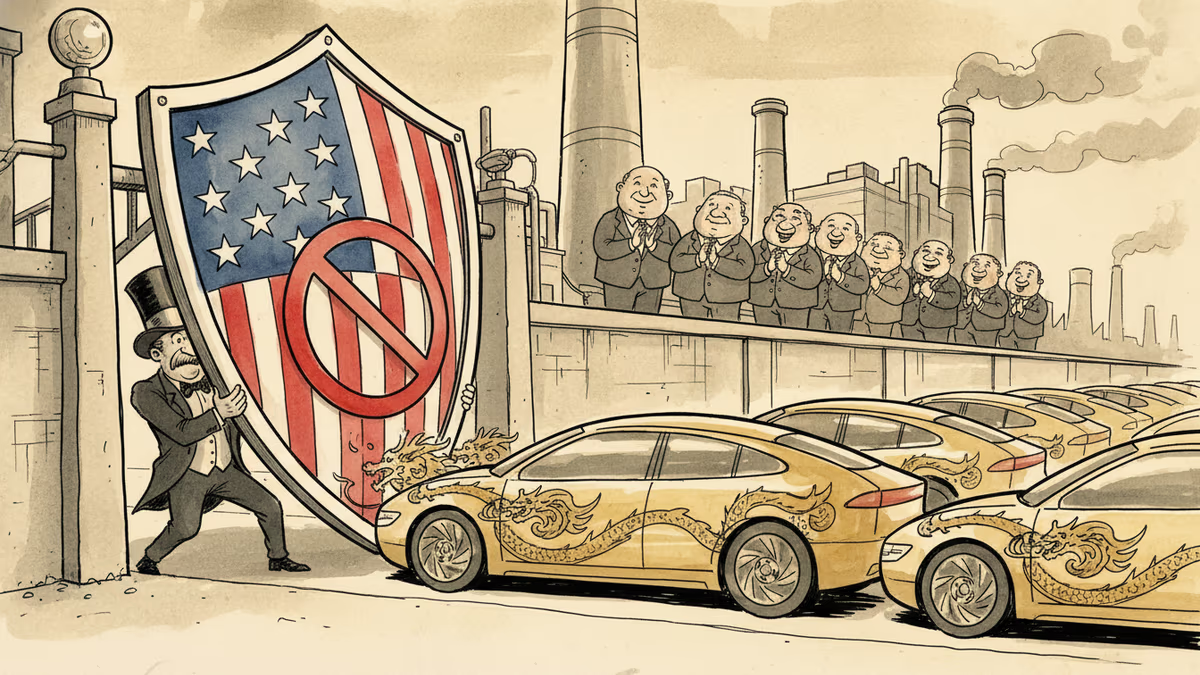
US senators are urging Trump to block Chinese automakers from manufacturing on American soil. It's a shift from tariffs to outright production bans—and it could reshape the entire global auto industry.
Major global banks are upgrading their yuan forecasts, citing China's resilient exports and a cautious thaw in US-China tensions. Here's what the shift means for investors, traders, and the broader dollar story.
Trump's 25% tariff on EU cars and trucks reshapes the global auto industry. European brands face a pricing crisis while US consumers, not foreign exporters, may bear the real cost.
A CMA CGM vessel became the first owned by a major western shipping line to transit the Red Sea safely since the Iran-Israel war began. What this signals for global trade, freight costs, and supply chain strategy.
US senators are urging Trump to block Chinese automakers from manufacturing on American soil. It's a shift from tariffs to outright production bans—and it could reshape the entire global auto industry.
Thoughts
Share your thoughts on this article
Sign in to join the conversation