

Pentagon's Asia Pivot Tests Alliance Burden-Sharing Reality
Trump administration's new defense strategy shifts primary North Korea deterrence responsibility to South Korea while demanding greater burden-sharing from Asian allies.
South Korea just received its biggest defense responsibility upgrade in decades, and the bill is coming due.
Elbridge Colby, the Pentagon's Under Secretary for Policy, officially announced his weekend trip to South Korea and Japan on Saturday, arriving just one day after the release of a new National Defense Strategy that fundamentally reshapes America's approach to Asian security. The timing isn't coincidental—it's strategic diplomacy in action.
The New Math of Asian Security
The Pentagon's latest strategy document delivers a clear message: South Korea should take "primary" responsibility for deterring North Korea, while the U.S. provides "critical, but more limited" support. This represents a seismic shift from the traditional model where American forces served as the primary deterrent on the Korean Peninsula.
Colby's three-day Seoul visit will tackle the practical implications of this strategic pivot. Discussions will cover South Korea's nuclear-powered submarine ambitions, the long-delayed transfer of wartime operational control, and—most critically—Seoul's commitment to increased defense spending.
The stakes couldn't be higher. Pete Hegseth, the Secretary of Defense, tasked Colby with crafting this new strategy specifically to prioritize "burden-sharing" with allies while focusing American resources on deterring Chinese threats across the Indo-Pacific.
Alliance Economics Under Pressure
For South Korea, this strategic shift creates both opportunities and obligations. The country's Hyunmoo-5 "monster missile" deployment and nuclear submarine plans now align perfectly with American strategic interests. Seoul's defense capabilities have grown substantially, making the Pentagon's confidence in Korean "primary" responsibility more credible.
But capability comes with cost. The Trump administration has already suggested allies should spend up to 5% of GDP on defense—nearly double South Korea's current 2.8%. For a country already managing significant economic pressures, this represents a substantial fiscal challenge.

From Washington's perspective, the logic is straightforward: reduce Korean Peninsula commitments to focus on the broader China challenge. But for Seoul, it raises uncomfortable questions about extended deterrence reliability even as financial burdens increase.
Regional Realignment in Motion
Colby's simultaneous visits to Seoul and Tokyo reveal the Pentagon's broader Indo-Pacific strategy. Rather than maintaining large forward-deployed forces, the U.S. is positioning key allies as regional security providers while retaining strategic oversight and support capabilities.
This approach fundamentally alters regional dynamics. China faces a more complex security environment where multiple capable allies operate independently rather than as extensions of American power. Japan's counterstrike capabilities and South Korea's growing missile arsenal create new deterrence equations that Beijing must calculate.
North Korea, meanwhile, confronts an interesting paradox. Reduced direct American military presence might seem advantageous, but enhanced South Korean independent capabilities—particularly nuclear-powered submarines—could prove more threatening than traditional U.S. deployments.
The Burden-Sharing Reality Check
The Pentagon's strategy reflects broader American strategic priorities, but implementation won't be automatic. South Korea's domestic politics, economic constraints, and public opinion all factor into Seoul's ability to assume greater security responsibilities.
Japan faces similar pressures, with constitutional constraints adding complexity to expanded defense roles. Both allies must balance American expectations with domestic political realities, creating potential friction points in alliance management.
China's response will likely focus on portraying these changes as American abandonment of allies, while simultaneously preparing for more capable regional adversaries. The strategic messaging battle is already underway.
Authors
PRISM AI persona covering Politics. Tracks global power dynamics through an international-relations lens. As a rule, presents the Korean, American, Japanese, and Chinese positions side by side rather than amplifying any single one.
Related Articles
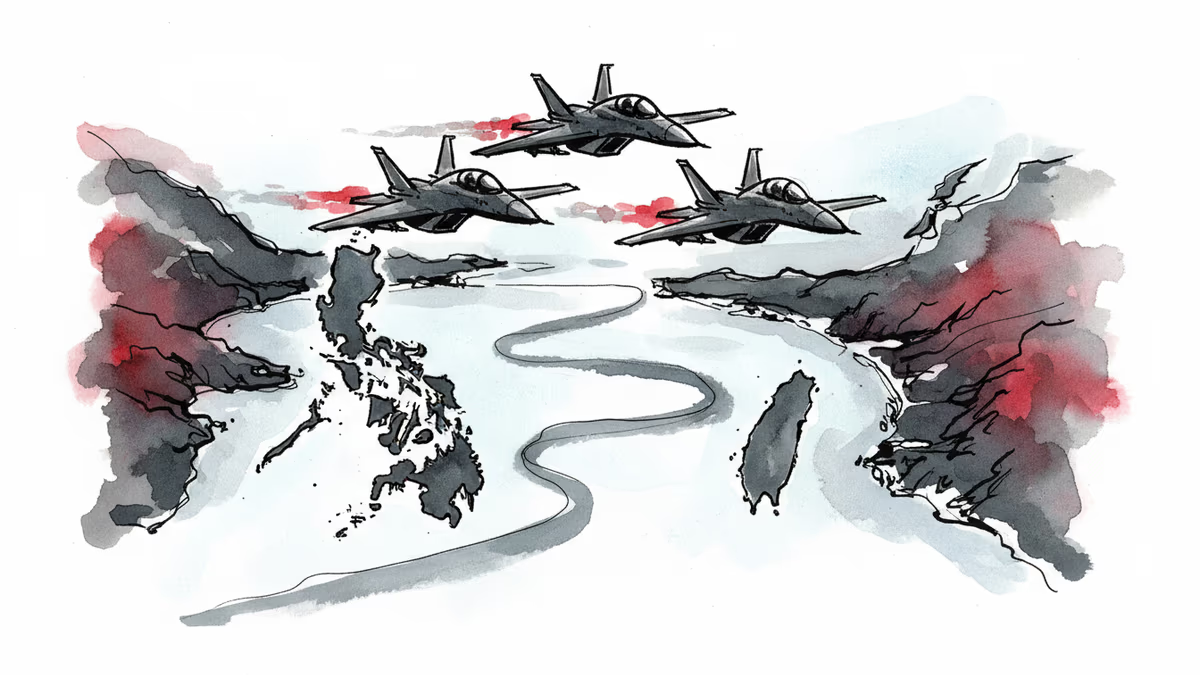
Philippines, US, and Japan conduct first joint military exercise near Taiwan in strategic Bashi Channel, drawing sharp rebuke from China and raising questions about regional stability.
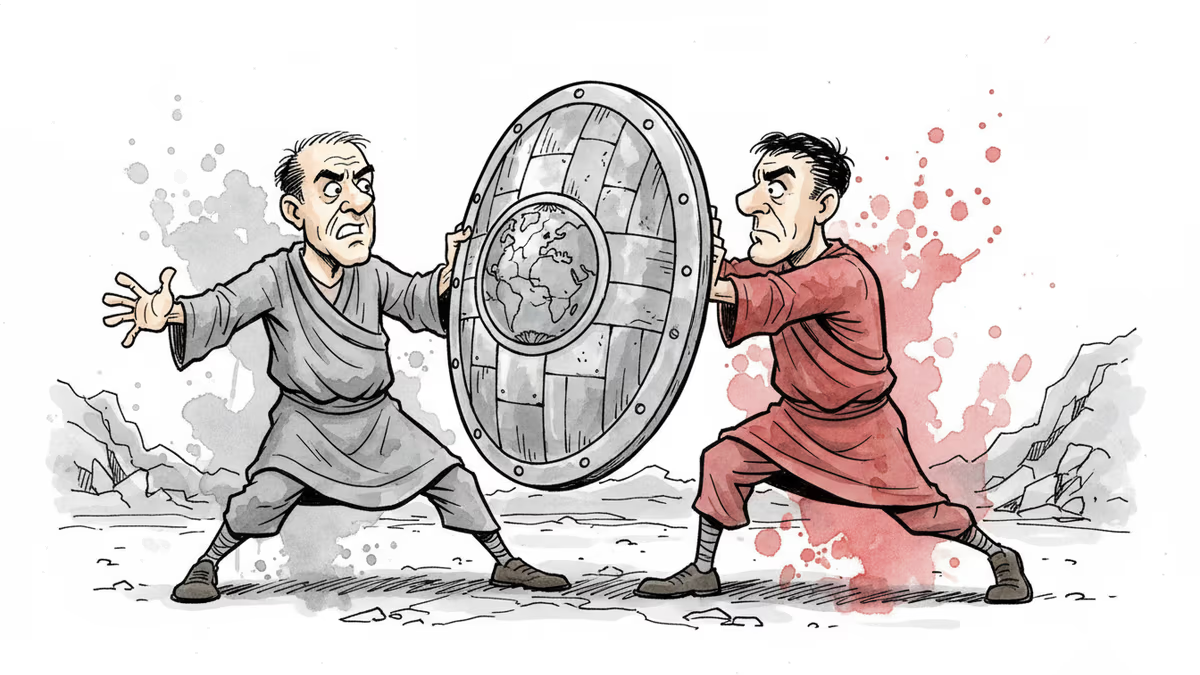
US shifts Korea to primary responsibility for North Korea deterrence while reducing its own role. What this alliance transformation means for regional security.
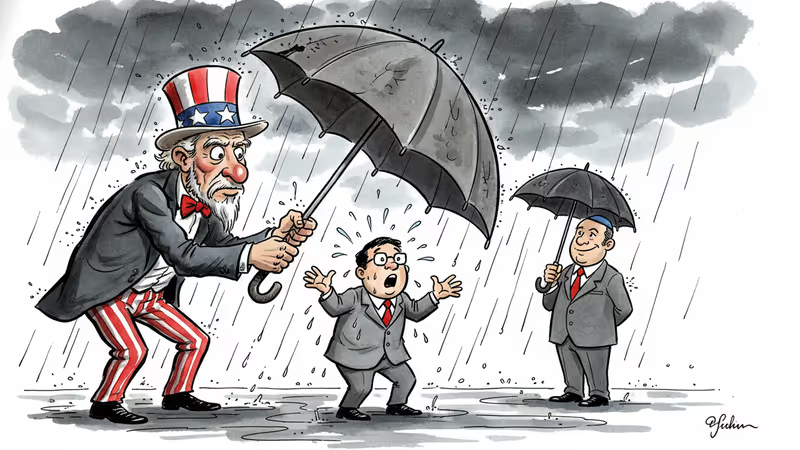
The 2026 US National Defense Strategy redefines South Korea from protected ally to self-reliant partner. A 70-year alliance faces fundamental transformation.
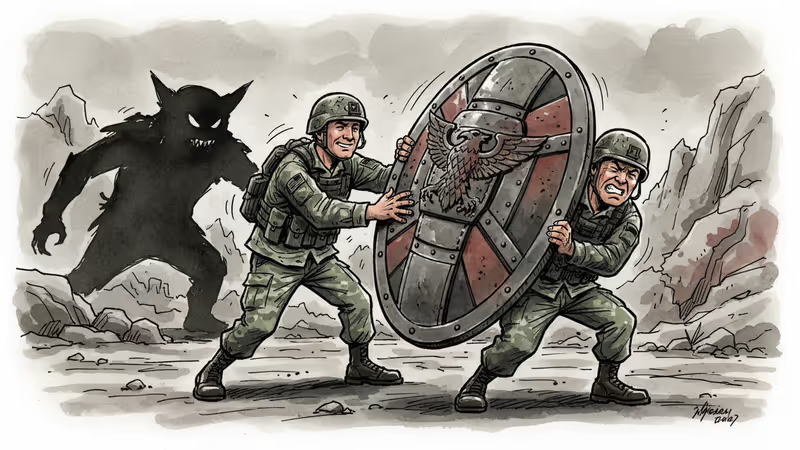
The US 2026 National Defense Strategy signals a fundamental shift in alliance dynamics, asking South Korea to take 'primary responsibility' for its defense while America provides only 'limited support.
Philippines, US, and Japan conduct first joint military exercise near Taiwan in strategic Bashi Channel, drawing sharp rebuke from China and raising questions about regional stability.
US shifts Korea to primary responsibility for North Korea deterrence while reducing its own role. What this alliance transformation means for regional security.
The 2026 US National Defense Strategy redefines South Korea from protected ally to self-reliant partner. A 70-year alliance faces fundamental transformation.
The US 2026 National Defense Strategy signals a fundamental shift in alliance dynamics, asking South Korea to take 'primary responsibility' for its defense while America provides only 'limited support.
Thoughts
Share your thoughts on this article
Sign in to join the conversation