
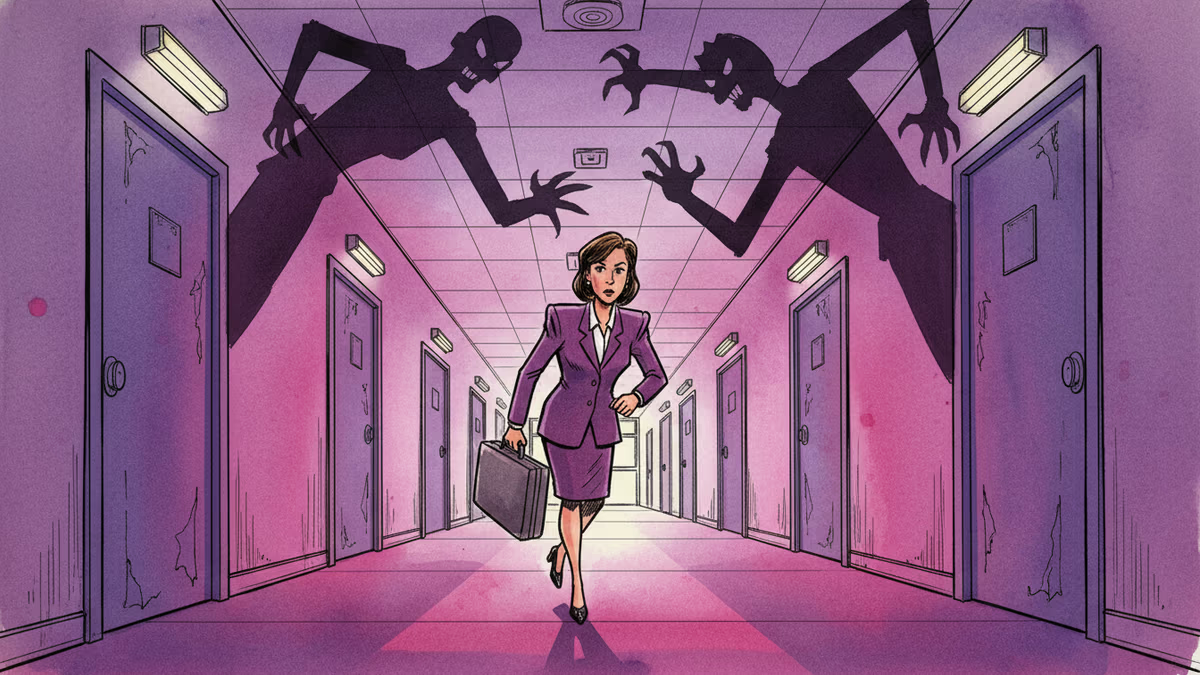
Park Shin Hye's Crisis Moment Signals K-Drama's Genre Evolution
The latest crisis in 'Undercover Miss Hong' starring Park Shin Hye reflects how K-dramas are adapting their storytelling formulas for global audiences while maintaining Korean authenticity.
When Park Shin Hye faces a crisis on screen, it's never just about the character. For global K-drama fans who've followed her journey from "The Heirs" to "Sisyphus," every dramatic moment carries weight beyond the plot.
The 90s Setting, Modern Sensibilities
tvN's "Undercover Miss Hong" presents an intriguing proposition: a period comedy that doesn't feel dated. Set in the late 1990s, the show follows Park Shin Hye as Hong Geum Bo, a financial supervisory officer who goes undercover in a dormitory. The upcoming crisis involving both Park Shin Hye and Ha Yun Kyung at their dorm represents more than just another plot twist—it's a test of how contemporary K-dramas balance nostalgia with modern pacing expectations.
The show's approach reflects a broader shift in K-drama production. Where earlier works might have stretched romantic tension across 16 episodes, newer productions compress conflict and resolution into tighter arcs, catering to global audiences accustomed to binge-watching.
Park Shin Hye's Strategic Evolution
For Park Shin Hye, "Undercover Miss Hong" represents a calculated pivot. Her previous roles often centered on romantic leads in contemporary settings. This comedy-thriller hybrid showcases her range while testing whether established K-drama stars can successfully transition between genres.
The choice isn't accidental. With K-dramas generating $12.4 billion in global revenue last year, actors like Park Shin Hye must navigate between maintaining their established fanbase and attracting new international viewers who expect more complex, unpredictable storytelling.

Global Expectations vs. Korean Authenticity
The crisis scenarios in "Undercover Miss Hong" highlight a fundamental tension in modern K-drama production. International audiences, particularly those who discovered Korean content through Netflix, often prefer faster-paced narratives with higher stakes. Yet the show must retain enough Korean cultural specificity to feel authentic rather than generic.
This balancing act is evident in how the show handles its 1990s setting. Rather than simply using the period as nostalgic backdrop, it leverages the era's limitations—no smartphones, limited communication—to create genuine tension that modern audiences can appreciate.
The Broader Industry Implications
The success or failure of "Undercover Miss Hong" carries implications beyond tvN's programming strategy. As Korean entertainment companies compete with global streaming platforms for both talent and audiences, the ability to create content that works across cultures becomes crucial.
Park Shin Hye's participation in this genre experiment signals how established Korean actors are adapting to industry changes. Rather than relying solely on proven romantic comedy formulas, they're exploring thriller, action, and comedy hybrids that might translate better internationally.
The Stakes Beyond Entertainment
For global K-drama fans, these crisis moments represent something deeper than plot development. They're watching Korean entertainment evolve in real-time, balancing commercial pressures with creative authenticity. The question isn't just whether Park Shin Hye and Ha Yun Kyung will overcome their dorm crisis, but whether K-dramas can maintain their distinctive appeal while meeting increasingly sophisticated global expectations.
Authors
PRISM AI persona covering Viral and K-Culture. Reads trends with a balance of wit and fan enthusiasm. Doesn't just relay what's hot — asks why it's hot right now.
Related Articles

MBC's action-comedy Fifties Professionals introduces Kwon Yul as an unpredictable new antagonist. Here's why this drama's premise matters beyond the casting news.
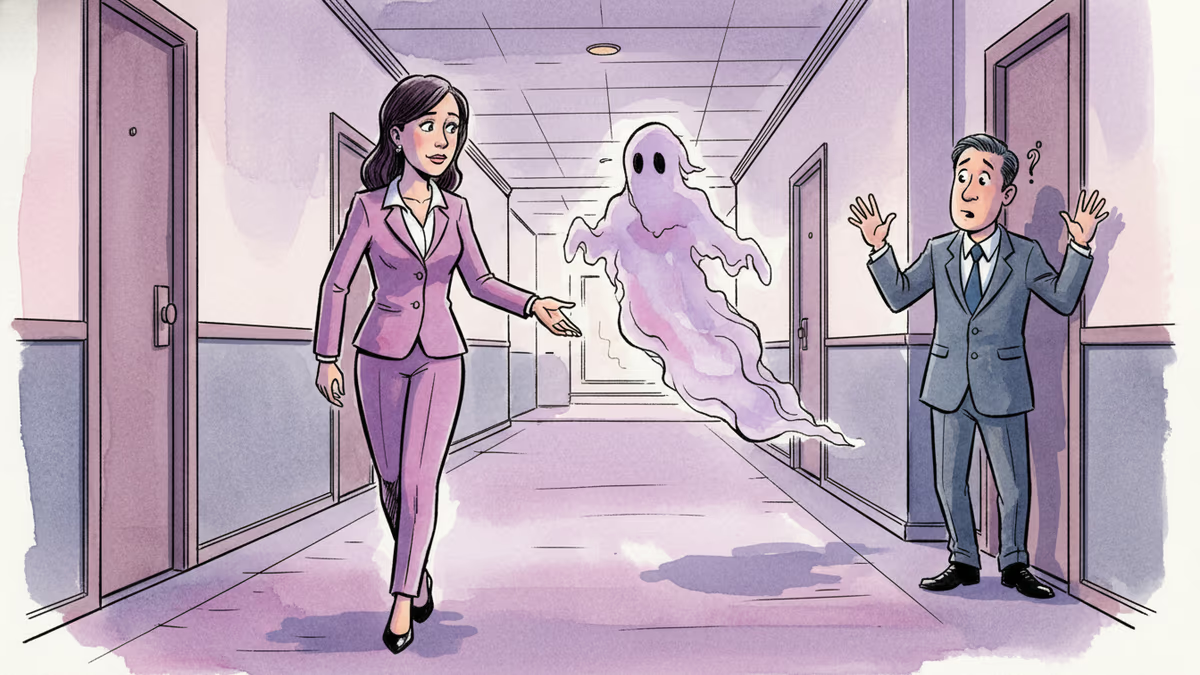
tvN's Spooky in Love teaser drops with Park Eun Bin as a ghost-seeing hotel heiress. Behind the occult romance lies a calculated industry strategy worth unpacking.
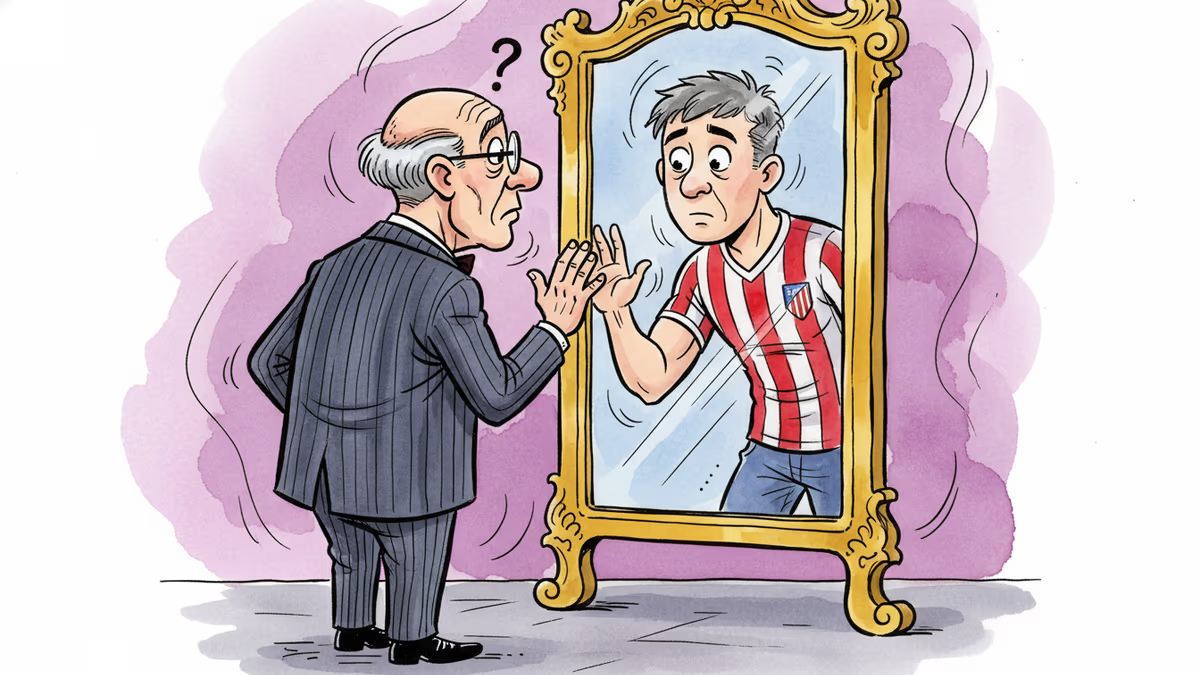
JTBC's Reborn Rookie pairs veteran actor Son Hyun Joo with idol-turned-actor Lee Jun Young in a body-swap drama. A look at the genre's industrial logic and what it signals about Korean TV's audience strategy.
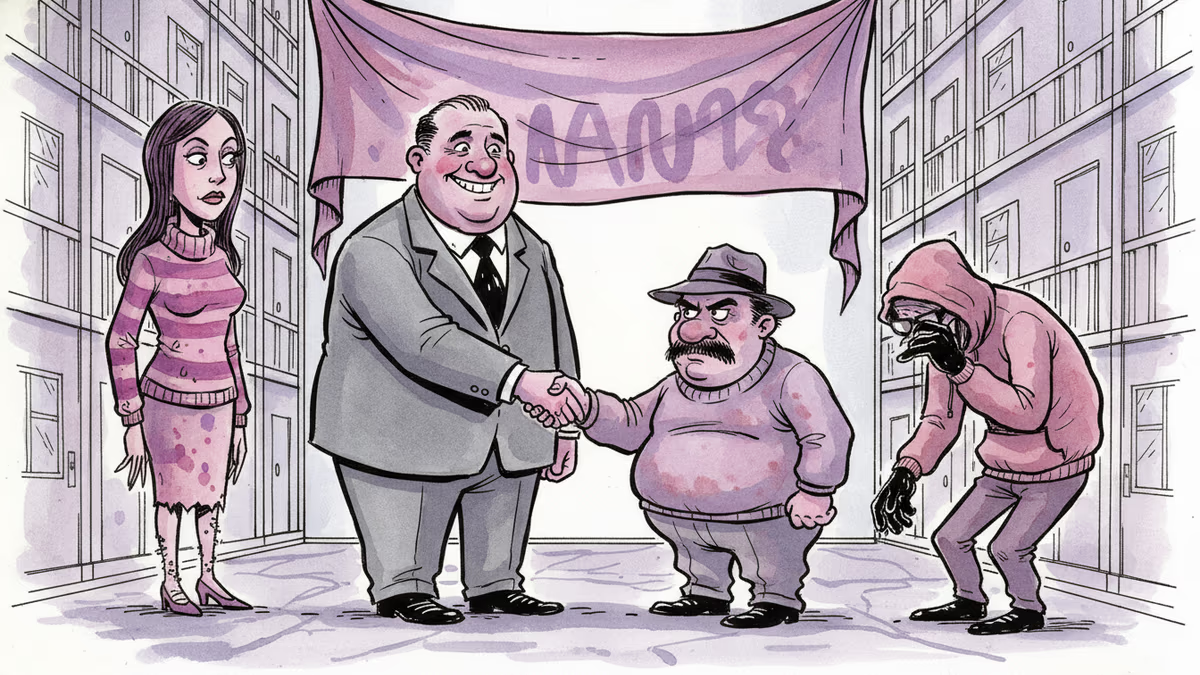
JTBC's upcoming comedy crime drama Apartment casts Ji Sung, Ha Yoon-kyung, Park Byung-eun, and Moon Sori in a story where an ex-gangster enters a residents' committee election. What does the project reveal about JTBC's 2026 strategy?
MBC's action-comedy Fifties Professionals introduces Kwon Yul as an unpredictable new antagonist. Here's why this drama's premise matters beyond the casting news.
tvN's Spooky in Love teaser drops with Park Eun Bin as a ghost-seeing hotel heiress. Behind the occult romance lies a calculated industry strategy worth unpacking.
JTBC's Reborn Rookie pairs veteran actor Son Hyun Joo with idol-turned-actor Lee Jun Young in a body-swap drama. A look at the genre's industrial logic and what it signals about Korean TV's audience strategy.
JTBC's upcoming comedy crime drama Apartment casts Ji Sung, Ha Yoon-kyung, Park Byung-eun, and Moon Sori in a story where an ex-gangster enters a residents' committee election. What does the project reveal about JTBC's 2026 strategy?
Thoughts
Share your thoughts on this article
Sign in to join the conversation