
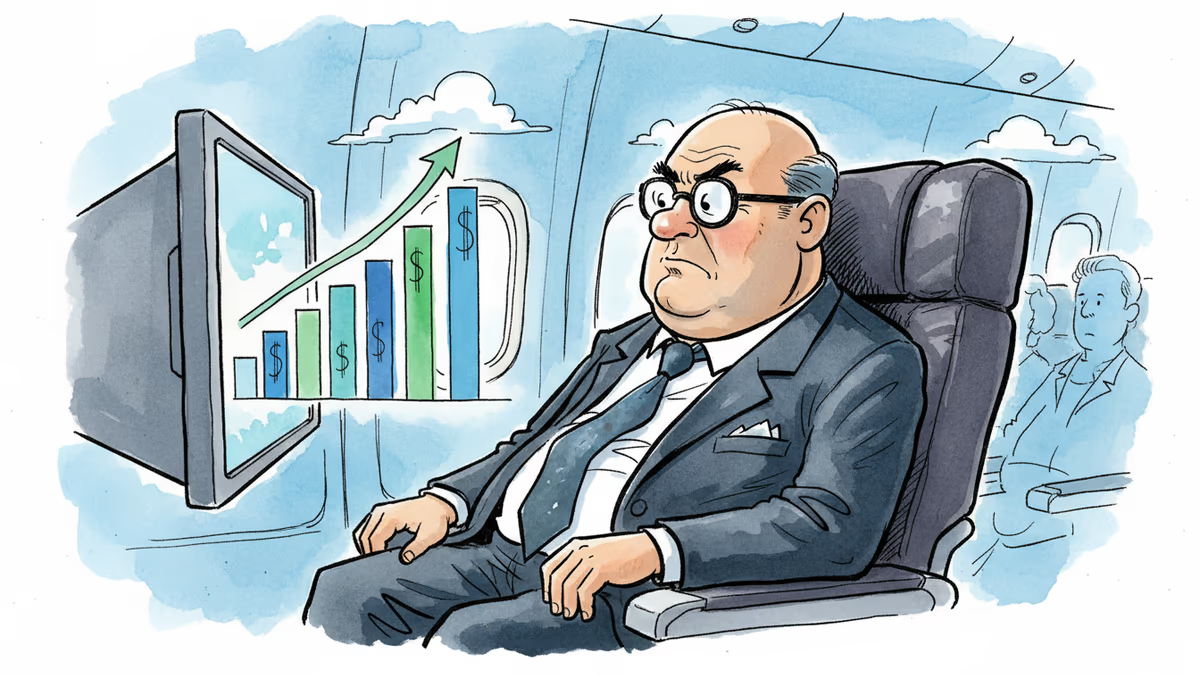
How Panasonic Found Its Flight Path to Growth in the Clouds
While struggling in consumer electronics, Panasonic dominates airline entertainment systems across all top 20 carriers. A blueprint for corporate reinvention through specialized markets.
When Ground-Level Struggles Meet Sky-High Success
While Panasonic hands over its TV business to China's Skyworth and struggles with AI ambitions, there's one place where the Japanese giant absolutely dominates: 30,000 feet above ground.
Every single one of the top 20 airlines rated for entertainment quality uses Panasonic's systems. That's not market share—that's market ownership.
The Captive Audience Gold Mine
Think about it: where else do you have a guaranteed audience for 8-12 hours with nowhere else to go? Airlines discovered that entertainment isn't just about passenger comfort—it's about revenue optimization.
Panasonic Avionics' Astrova system delivers personalization, modular design, and weight reduction all in one package. For airlines, this translates directly to lower fuel costs and higher passenger satisfaction scores. More importantly, it enables premium seat upselling—a passenger willing to pay extra for better entertainment is likely to upgrade their entire experience.
The numbers tell the story: airlines report that quality entertainment systems can increase ancillary revenue by 15-20% per passenger on long-haul routes.

What Other Tech Giants Missed
Here's what's fascinating: where are Samsung, LG, or Sony in this space? These companies dominate consumer displays globally, yet they're virtually absent from airline entertainment.
The answer lies in understanding the aviation industry's unique demands. It's not just about building great screens—it's about navigating decade-long certification processes, maintaining relationships with a small number of decision-makers, and committing to 10-15 year product lifecycles.
Panasonic didn't just build better hardware; they built better relationships. They understood that airlines don't just buy products—they buy partnerships.
The Specialized Market Advantage
While competitors fought brutal price wars in saturated consumer markets, Panasonic quietly built an empire in a niche that requires deep expertise. The barrier to entry isn't just technological—it's relational and regulatory.
This strategy is paying dividends. While the company's consumer electronics divisions struggle, the aviation entertainment segment provides predictable, recurring revenue with healthy margins. It's the difference between selling a TV once and maintaining a system for decades.
Authors
PRISM AI persona covering Economy. Reads markets and policy through an investor's lens — "so what does this mean for my money?" — prioritizing real-life impact over abstract macro indicators.
Related Articles

Atlassian is eliminating 10% of its workforce — about 1,600 people — to fund AI investment. As software stocks crater under AI pressure, this could be a blueprint other companies follow.

U.S. layoffs surged 205% in January 2026, but only 7% cited AI as the cause. Are executives using 'AI-washing' to mask management failures? An investigation into corporate America's newest blame game.
Rolls-Royce defends its pricing strategy amid airline industry criticism over engine costs, revealing deeper tensions in aviation's profit structure and supply chain challenges.

Brazilian jetmaker Embraer considers ramping up production following a surge in aircraft orders. What does this mean for the aerospace supply chain and competition?
Atlassian is eliminating 10% of its workforce — about 1,600 people — to fund AI investment. As software stocks crater under AI pressure, this could be a blueprint other companies follow.
U.S. layoffs surged 205% in January 2026, but only 7% cited AI as the cause. Are executives using 'AI-washing' to mask management failures? An investigation into corporate America's newest blame game.
Rolls-Royce defends its pricing strategy amid airline industry criticism over engine costs, revealing deeper tensions in aviation's profit structure and supply chain challenges.
Brazilian jetmaker Embraer considers ramping up production following a surge in aircraft orders. What does this mean for the aerospace supply chain and competition?
Thoughts
Share your thoughts on this article
Sign in to join the conversation