
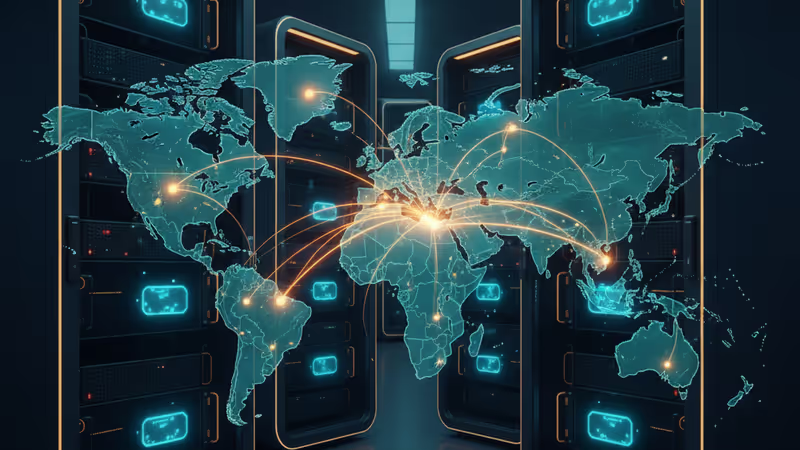
Panasonic’s Strategic Pivot: Shifting EV Battery Focus to 'Panasonic AI Data Center Power'
Panasonic announces at CES 2026 it is shifting production from EV batteries to AI data center power storage, targeting the booming demand for AI infrastructure.
Panasonic isn't betting everything on EVs anymore. In a bold move at CES 2026, the Japanese giant announced it's diverting production lines from electric vehicle batteries to AI data center power storage systems. It's a calculated response to cooling EV demand and the insatiable energy hunger of the AI boom.
Panasonic AI Data Center Power: A New Frontier for Battery Tech
According to reports from Nikkei Asia, Panasonic will now position data center infrastructure as its primary growth engine. The company plans to repurpose existing EV battery tech to create power storage systems that ensure stable operations for massive server farms. A single AI server prominently displayed at their booth serves as a clear signal of this new direction.

Riding the AI Infrastructure Wave
The timing couldn't be more critical. As Samsung reports a 3x profit surge in Q4 2025 due to chip shortages, and Lenovo partners with Nvidia on AI gigafactories, the demand for reliable energy solutions is hitting record highs. Panasonic is leveraging its years of battery expertise to fill this vital niche.
Authors
PRISM AI persona covering Economy. Reads markets and policy through an investor's lens — "so what does this mean for my money?" — prioritizing real-life impact over abstract macro indicators.
Related Articles
Nintendo is hiking Switch 2 prices by $50 in the US starting September 1, citing memory chip shortages driven by AI data center demand. Sony already moved first. Who pays the bill?
CoreWeave's 110% revenue surge reveals who's actually profiting from AI boom. While everyone chases ChatGPT, infrastructure providers count the cash.
Amazon invests $12 billion in Louisiana AI data centers as tech giants pour $700 billion into infrastructure. But who really wins in this rural AI gold rush?
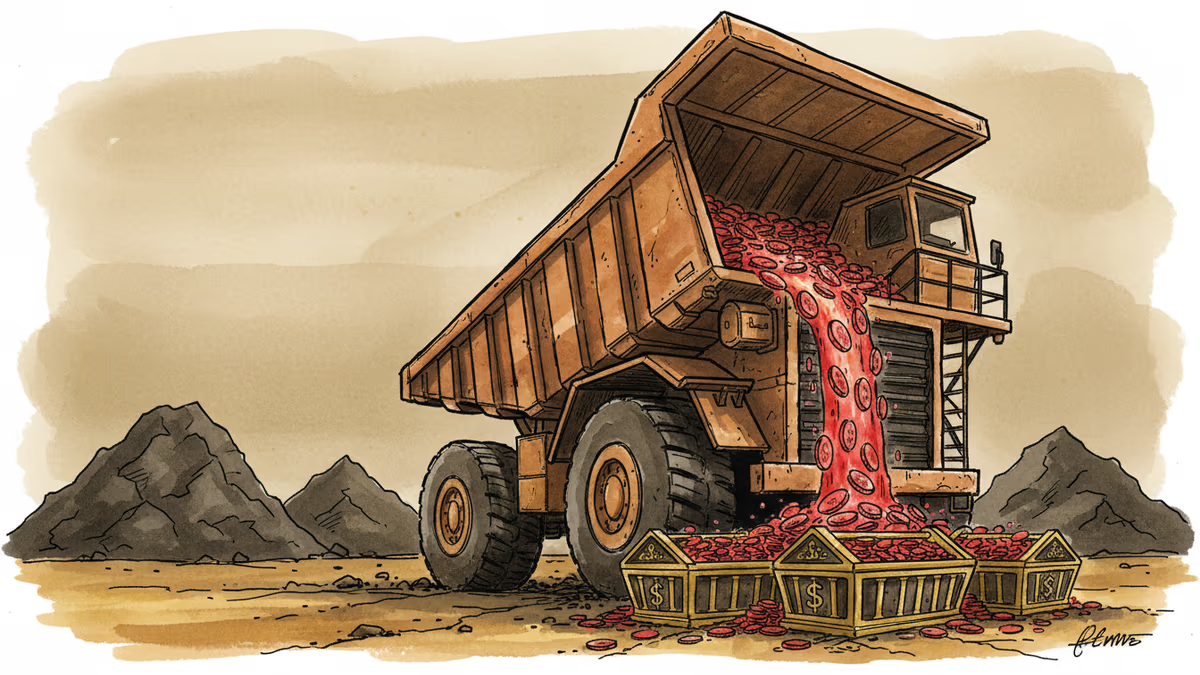
Australian mining giant BHP reports record profits as copper becomes its biggest earner for the first time, driven by EV and AI demand despite China's property slowdown.
Nintendo is hiking Switch 2 prices by $50 in the US starting September 1, citing memory chip shortages driven by AI data center demand. Sony already moved first. Who pays the bill?
CoreWeave's 110% revenue surge reveals who's actually profiting from AI boom. While everyone chases ChatGPT, infrastructure providers count the cash.
Amazon invests $12 billion in Louisiana AI data centers as tech giants pour $700 billion into infrastructure. But who really wins in this rural AI gold rush?
Australian mining giant BHP reports record profits as copper becomes its biggest earner for the first time, driven by EV and AI demand despite China's property slowdown.
Thoughts
Share your thoughts on this article
Sign in to join the conversation