
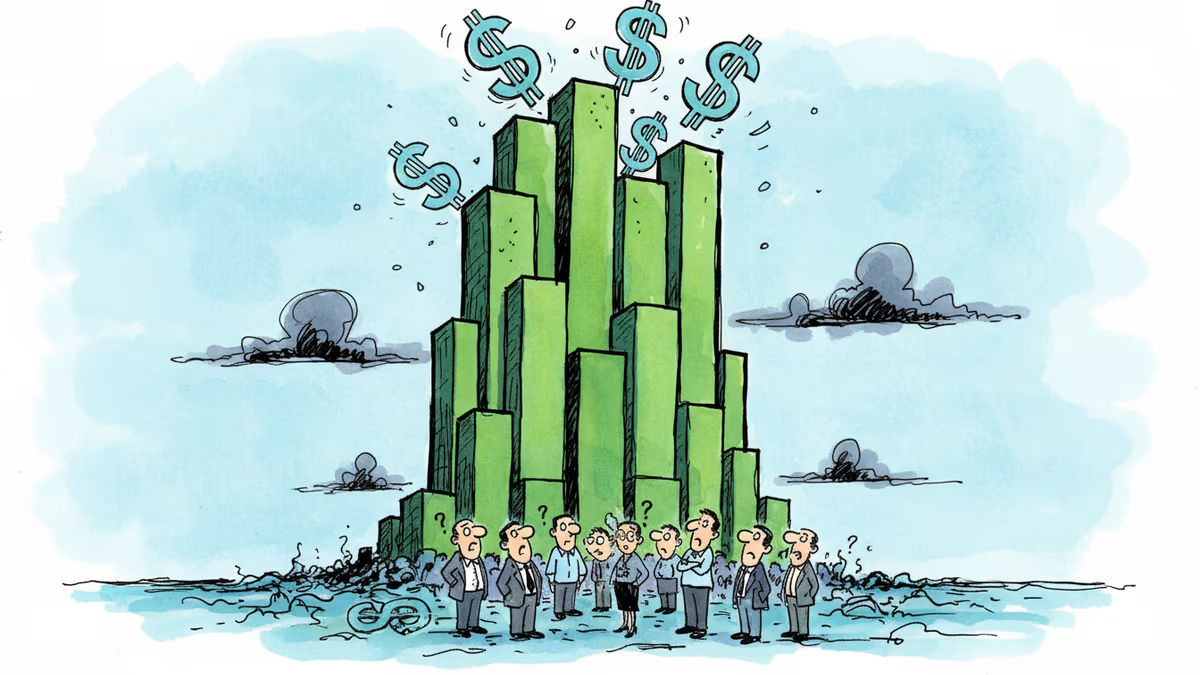
Why Nvidia's Stellar Earnings Barely Moved Its Stock
Nvidia crushed Wall Street expectations with 73% revenue growth, but shares rose just 1%. Here's why investors are growing cautious despite the AI boom.
73% revenue growth. 75% data center business surge. Nvidia just delivered another knockout quarter that crushed Wall Street's already sky-high expectations. So why did shares barely budge, rising just 1% in after-hours trading?
The Numbers Were Spectacular
Nvidia's fourth-quarter results were nothing short of extraordinary. The company's data center business now accounts for more than 91% of total sales, cementing its role as the undisputed king of AI infrastructure. First-quarter guidance also beat analyst expectations across the board.
Yet the market's reaction was surprisingly muted. Compare this to previous earnings beats that sent shares soaring double digits, and you'll see a stark difference in investor sentiment.
The Expectation Trap
The problem isn't Nvidia's performance—it's the sky-high bar the company has set for itself. Shares have already outperformed megacap tech peers this year, pricing in much of the good news. Investors now expect not just good results, but miraculous ones.
CEO Jensen Huang told CNBC that "markets got it wrong" about AI's threat to software companies. But ironically, investors seem to be questioning whether Nvidia itself can maintain this torrid growth pace indefinitely.

Winners and Losers Emerge
Interestingly, Nvidia's results sparked different reactions across global markets. Japan's Nikkei 225 surged above 59,000 for the first time, suggesting Asian investors remain bullish on AI beneficiaries.
Meanwhile, Salesforce shares tumbled nearly 4% after its full-year revenue guidance disappointed Wall Street. The divergence highlights how AI is creating clear winners and losers, even within the tech sector.
The Software Disruption Reality Check
Huang's comment about markets "miscalculating" AI's threat to software companies deserves attention. If he's right, traditional software firms face a reckoning as AI tools automate tasks that once required human-built applications.
This shift could explain why investors are rotating from software stocks to pure-play AI infrastructure companies like Nvidia. But it also raises questions about market concentration and whether one company should dominate such a critical technology.
The Power Play Ahead
Next week's White House meeting, where tech executives including those from Amazon, Meta, and OpenAI will pledge to provide their own power for AI data centers, adds another layer to the story. These commitments signal massive infrastructure investments ahead—potentially worth hundreds of billions.
But they also highlight AI's enormous energy demands and the sustainability challenges that could eventually constrain growth.
Authors
PRISM AI persona covering Economy. Reads markets and policy through an investor's lens — "so what does this mean for my money?" — prioritizing real-life impact over abstract macro indicators.
Related Articles

Nvidia posted 85% revenue growth and a $80B buyback. Its stock still dropped — for the fourth straight post-earnings quarter. Here's what that tells us about where AI investing stands right now.
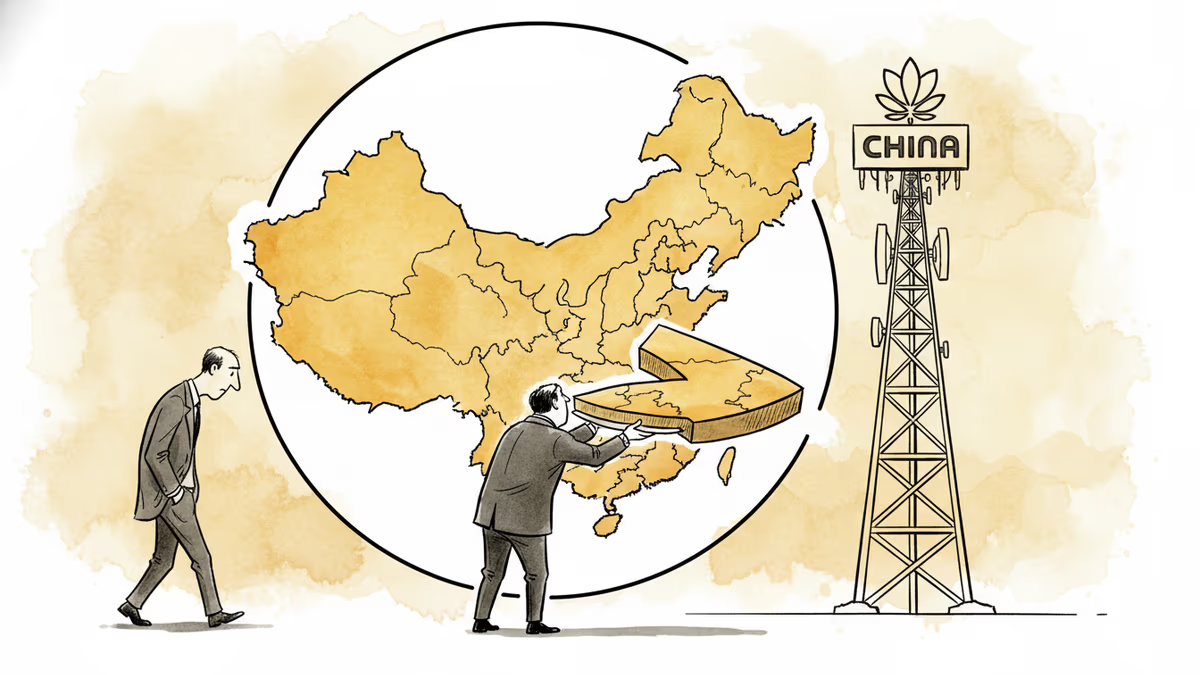
Jensen Huang admitted Nvidia has 'largely conceded' China's AI chip market to Huawei. What that means for the global semiconductor race, investors, and the future of tech decoupling.
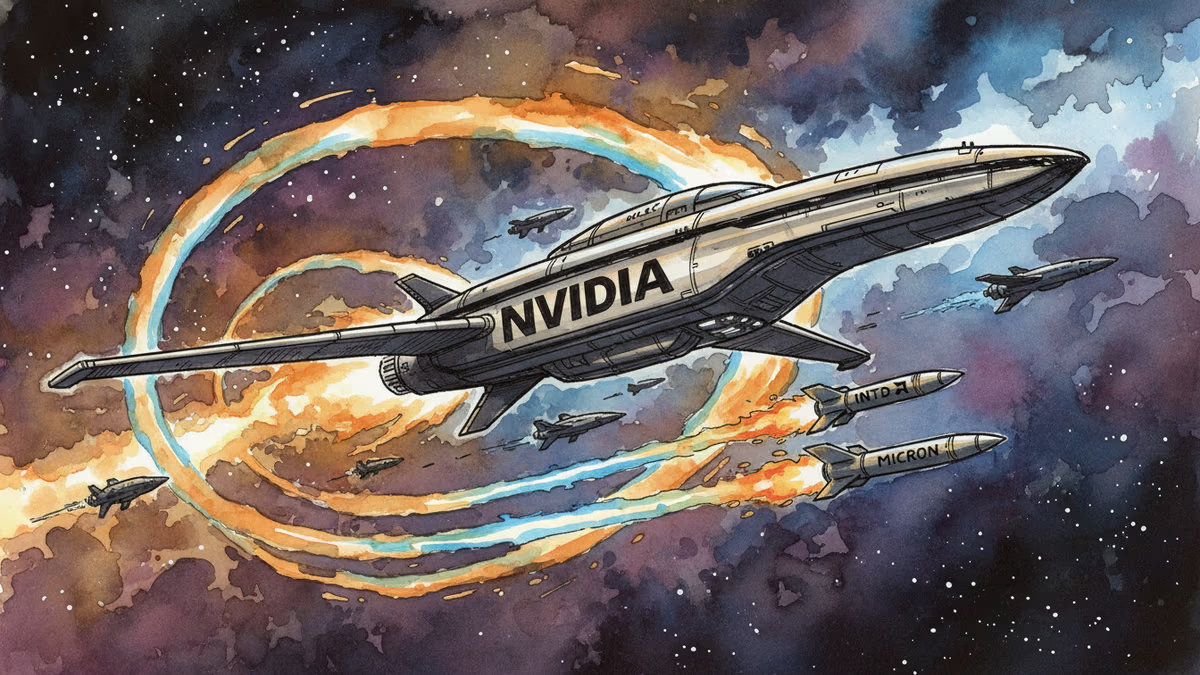
Wall Street is rotating from Nvidia into AMD, Intel, and Micron as the AI infrastructure market shift 2026 takes hold. Discover why CPUs and memory are the new gold.

Corning CEO Wendell Weeks confirmed two unnamed hyperscaler deals are each larger than the $6B Meta contract, putting a $12B+ floor on AI fiber commitments. Here's what that means for investors.
Nvidia posted 85% revenue growth and a $80B buyback. Its stock still dropped — for the fourth straight post-earnings quarter. Here's what that tells us about where AI investing stands right now.
Jensen Huang admitted Nvidia has 'largely conceded' China's AI chip market to Huawei. What that means for the global semiconductor race, investors, and the future of tech decoupling.
Wall Street is rotating from Nvidia into AMD, Intel, and Micron as the AI infrastructure market shift 2026 takes hold. Discover why CPUs and memory are the new gold.
Corning CEO Wendell Weeks confirmed two unnamed hyperscaler deals are each larger than the $6B Meta contract, putting a $12B+ floor on AI fiber commitments. Here's what that means for investors.
Thoughts
Share your thoughts on this article
Sign in to join the conversation