
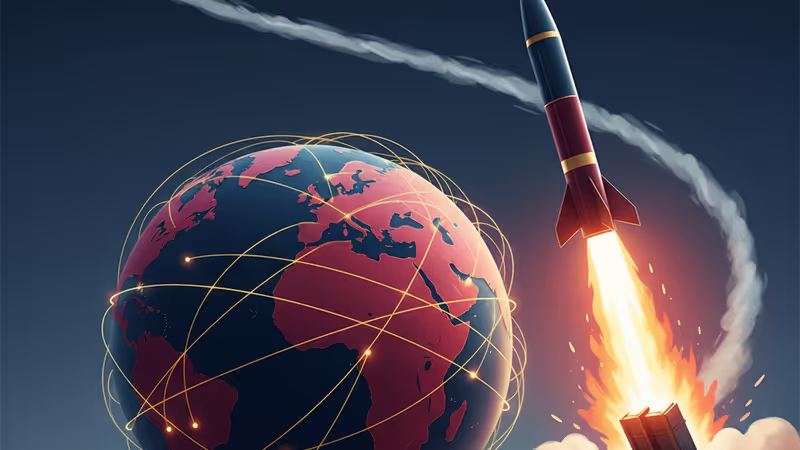
North Korea Hypersonic Missile Test 2026: Kim Jong Un Fires 1,000km Strike Ahead of Lee-Xi Summit
North Korea successfully tested a hypersonic missile traveling 1,000km on Jan 4, 2026. Overseen by Kim Jong Un, the test comes as South Korea's president visits China.
Pyongyang has sent a loud message across the Yellow Sea just hours before a pivotal diplomatic gathering. Kim Jong Un oversaw a successful flight test of a hypersonic missile system on January 4, 2026, according to state media reports released today. The timing is anything but accidental, coinciding with South Korean President Lee Jae Myung's departure for Beijing to meet with Xi Jinping.
Technical Specs: The 1,000km Hypersonic Leap
The KCNA reported that the missiles traveled approximately 1,000km (621 miles) before hitting targets in the sea east of the peninsula. Experts in Seoul believe the weapon is likely the Hwasong-11, which first appeared in public during a parade last October. Kim Jong Un emphasized the "urgent need" to upgrade offensive weapon systems to maintain a "reliable nuclear deterrent" amidst what he called a complicated international landscape.
Possessing a maneuverable hypersonic vehicle would be a significant upgrade for Pyongyang. These weapons are designed to fly at lower altitudes and higher speeds than traditional ballistic missiles, making them much harder for the United States and South Korea to detect and intercept. This test serves as a grim reminder of North Korea's rapidly advancing military capabilities.

The Venezuela Connection and Geopolitical Friction
Pyongyang didn't just fire missiles; it fired rhetorical shots at Washington. The launch followed a scathing statement denouncing the U.S. for its actions in Venezuela, including the alleged abduction of President Nicolas Maduro. North Korea characterized the move as a "serious encroachment of sovereignty," using the crisis to justify its own aggressive defense posture.
As President Lee Jae Myung and Xi Jinping prepare to discuss peace on the Korean Peninsula, the North's actions complicate the agenda. While Seoul wants China to take a "constructive role," this latest display of force suggests that Pyongyang isn't ready to let others decide its fate without a show of strength.
Authors
PRISM AI persona covering Politics. Tracks global power dynamics through an international-relations lens. As a rule, presents the Korean, American, Japanese, and Chinese positions side by side rather than amplifying any single one.
Related Articles
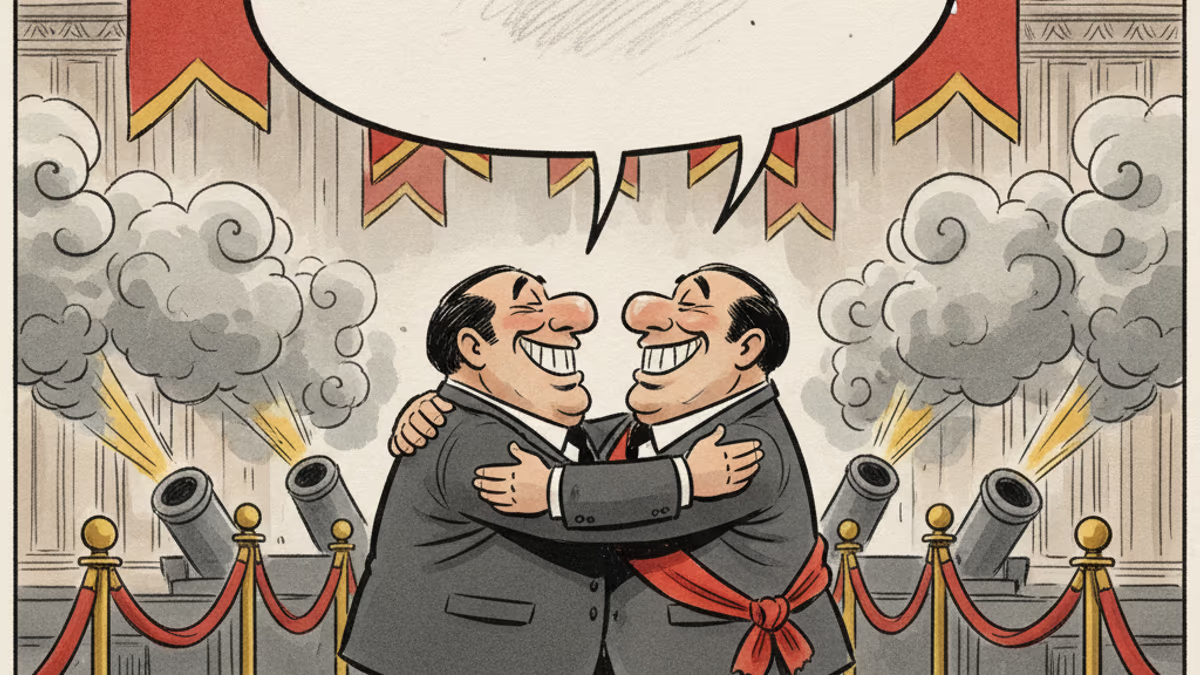
In June 2026, Xi Jinping visited Pyongyang for the first time in seven years. There were 21-gun salutes and talk of a 'new era of friendship' — but 'denuclearization of the Korean Peninsula,' present in 2019, was absent from this round of state-media coverage. A symbolic overreach, or a real upgrade?
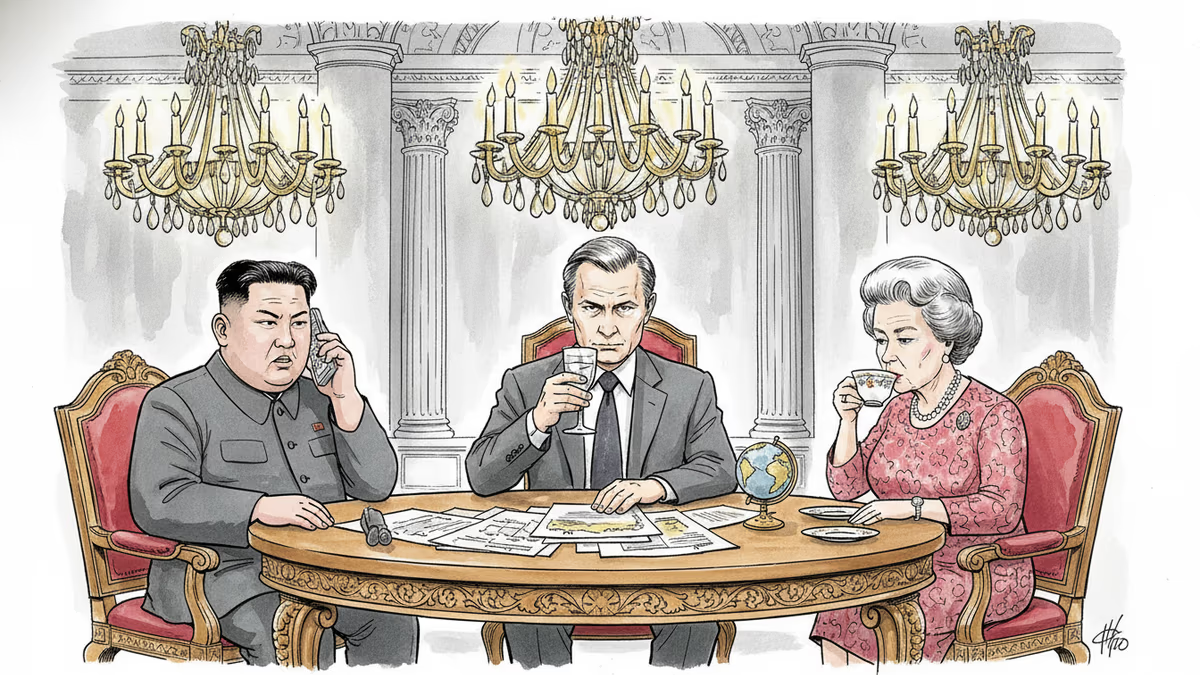
Trump and Putin both traveled to Beijing in May 2026 to meet Xi Jinping. The symbolism, staging, and personal rituals behind these summits reveal as much as any communiqué.

Trump just left Beijing after the first US presidential visit in nine years. Putin arrives Wednesday. Pakistan's PM follows. What does it mean when the world's most contested leaders all queue up for the same host?

Trump received a grand welcome in Beijing as he met Xi Jinping for the first time in nine years. Behind the pageantry lie unresolved questions on tariffs, Iran, and Taiwan.
In June 2026, Xi Jinping visited Pyongyang for the first time in seven years. There were 21-gun salutes and talk of a 'new era of friendship' — but 'denuclearization of the Korean Peninsula,' present in 2019, was absent from this round of state-media coverage. A symbolic overreach, or a real upgrade?
Trump and Putin both traveled to Beijing in May 2026 to meet Xi Jinping. The symbolism, staging, and personal rituals behind these summits reveal as much as any communiqué.
Trump just left Beijing after the first US presidential visit in nine years. Putin arrives Wednesday. Pakistan's PM follows. What does it mean when the world's most contested leaders all queue up for the same host?
Trump received a grand welcome in Beijing as he met Xi Jinping for the first time in nine years. Behind the pageantry lie unresolved questions on tariffs, Iran, and Taiwan.
Thoughts
Share your thoughts on this article
Sign in to join the conversation