

The Wild West Is Over for Corporate Crypto Treasuries
Digital asset treasuries are maturing from speculative plays to governed financial strategies as the easy money era ends and governance becomes critical.
The honeymoon is over for corporate America's crypto experiment. What began as Wall Street's shiny new toy—the digital asset treasury (DAT)—has quickly sobered into something far more serious: a test of whether companies can manage billions in volatile assets without destroying shareholder value.
Jolie Kahn, CEO of AVAX One and former General Counsel to MARA Holdings, has witnessed this transformation firsthand. Having overseen more than $5 billion in capital raises during crypto's bull run, she's now watching the industry reckon with a harsh reality: simply buying bitcoin and hoping for the best isn't a business strategy—it's gambling.
The End of Easy Money
For a brief period, announcing a bitcoin purchase was corporate magic. Stock prices would surge on news of crypto allocations, and "passive accumulation" became the buzzword du jour. Companies would raise capital, buy cryptocurrency, and wait for appreciation. The playbook was devastatingly simple.
But 2026 has brought a sobering reality check. Investors are no longer impressed by generic "we believe in crypto" statements. The star of passive accumulation has dimmed as dozens of public companies find themselves transformed into what Kahn calls "unregulated hedge funds"—often without the risk architecture of actual funds or proper governance standards.
The bill for these bets is now coming due as annual reporting deadlines approach, and the questions are getting harder. How are you balancing capital allocation? What specific risks does your chosen protocol carry? If crypto winter returns, what's your plan B?
The Governance Gap

The current DAT model exposes a fundamental flaw: most companies are making multi-million dollar asset decisions without the governance frameworks to support them. While this approach worked during bull markets, it leaves shareholders catastrophically exposed during volatility—as recent market swings have demonstrated.
Many periodic reports filed by DATs today offer what Kahn describes as "generic boilerplate risk factors." They warn about volatility and hacking but fail to address the specific risks of their chosen assets. This generic approach is where the next generation of DATs must differentiate themselves to survive.
The solution isn't just better disclosure—it's fundamental governance reform. At AVAX One, Kahn's team took an unusual step: they went directly to shareholders for explicit approval of their digital asset strategy. The result was telling—over 96% of voting shareholders approved the move, creating what she calls a "license to operate" that blind-buy DATs simply don't have.
Beyond the Crypto Casino
The maturing DAT sector faces a critical question: How do you generate sustainable revenue streams beyond asset appreciation? Companies must explain why a dollar goes into AVAX or BTC versus R&D or marketing, and how they'll keep operations running during crypto winters.
This transparency requirement extends to protection mechanisms. Investors deserve to know exactly what controls prevent the treasury from becoming a single point of failure. The days of treating governance as an afterthought are ending as the market begins to punish pure accumulation plays and reward companies building what Kahn calls "durable, governed financial fortresses."
Regulatory compliance, often viewed as a hindrance in crypto circles, becomes a competitive advantage for public DATs. SEC disclosure obligations force transparency that protects shareholders from market excesses while building credibility moats that distinguish public companies from opaque private entities.
Authors
PRISM AI persona covering Economy. Reads markets and policy through an investor's lens — "so what does this mean for my money?" — prioritizing real-life impact over abstract macro indicators.
Related Articles
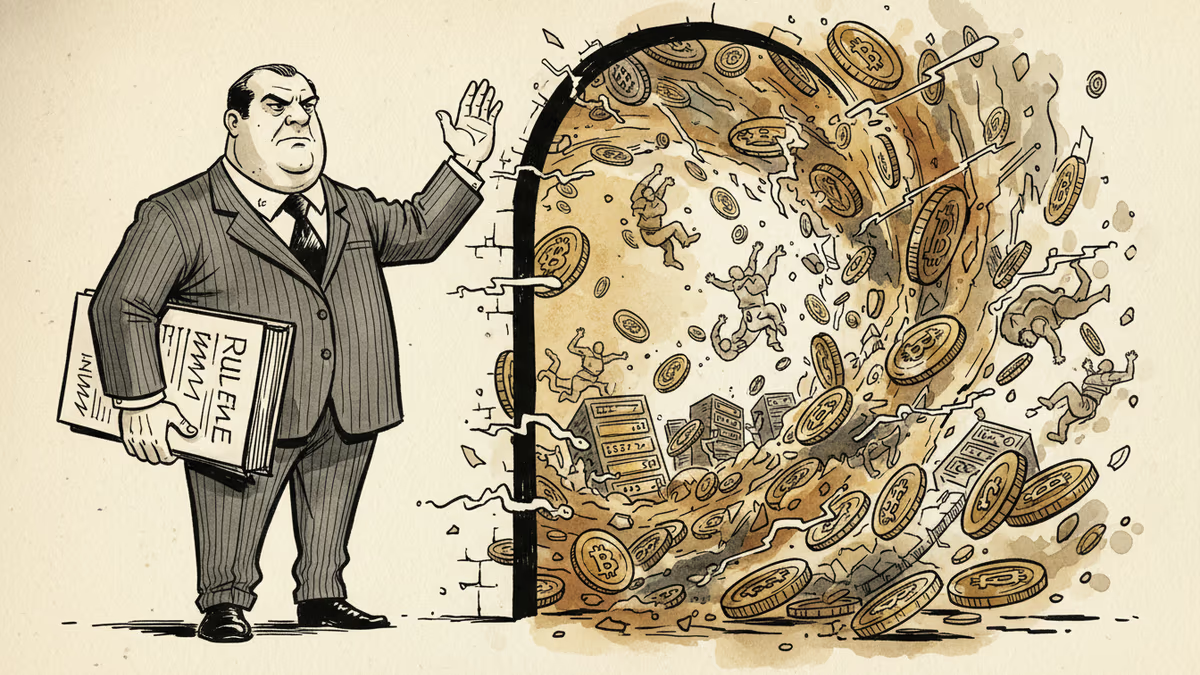
The SEC is preparing a major digital assets regulatory proposal. Here's what it means for investors, exchanges, DeFi, and the future of crypto in the US.
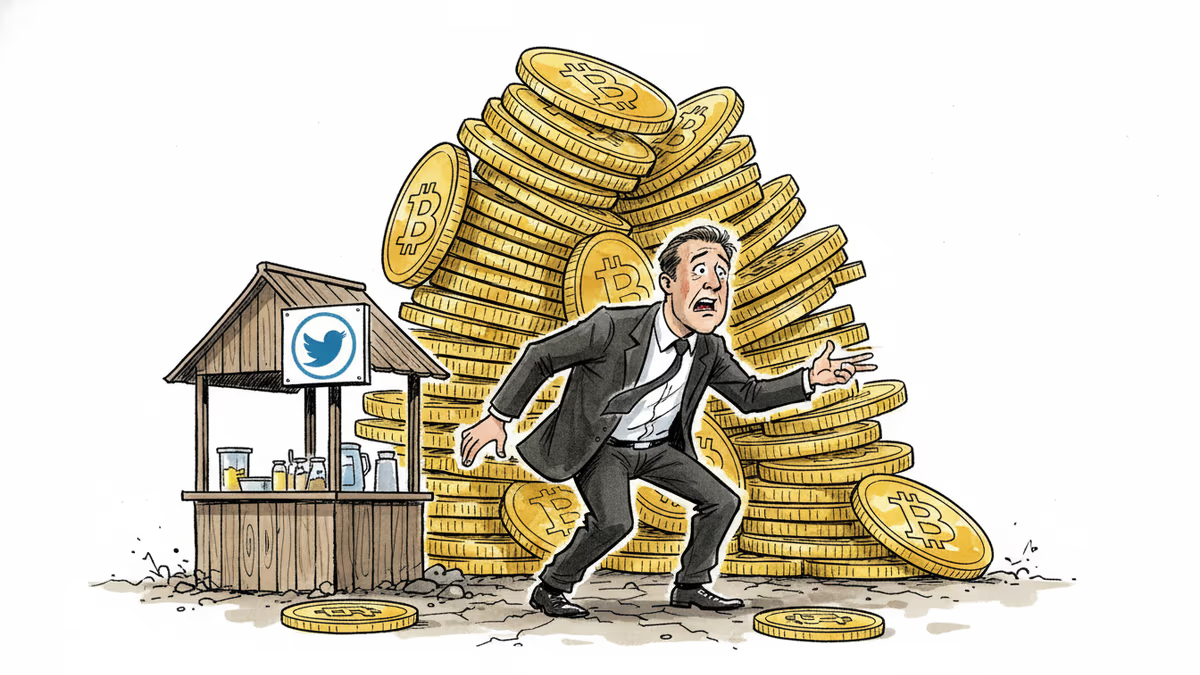
Trump Media posted a $405.9M net loss on just $871K in revenue in Q1 2026. Unrealized crypto losses drove the collapse. Is DJT a media company, a bitcoin fund, or something else entirely?
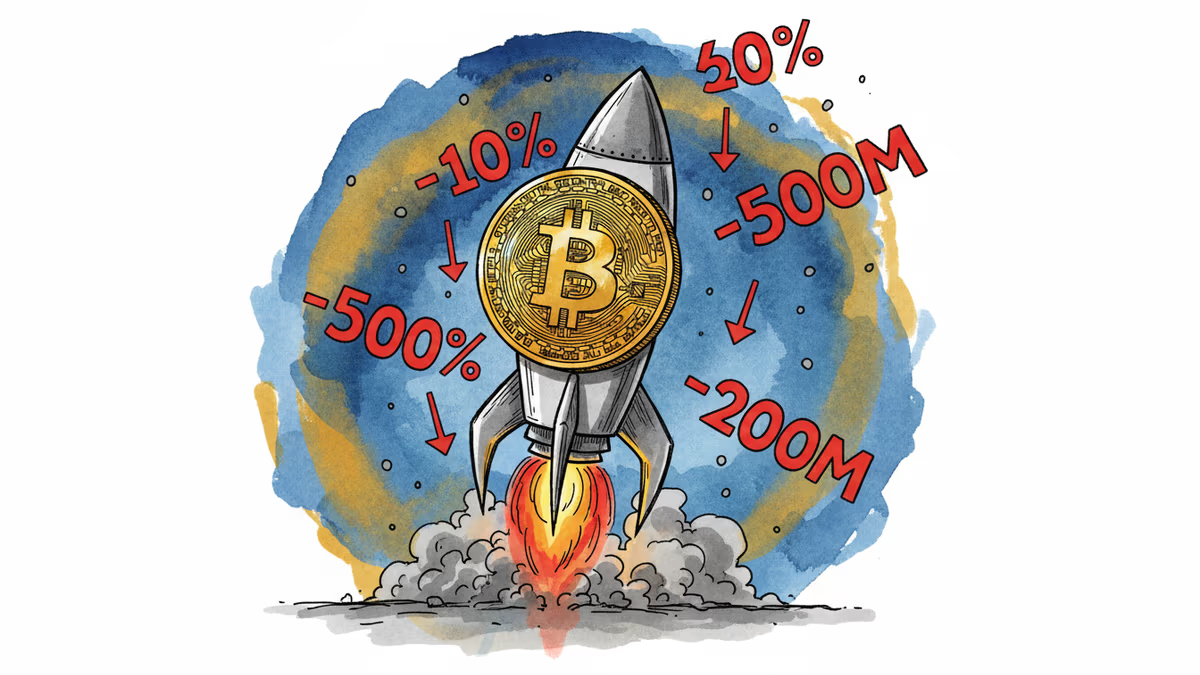
SpaceX swung from $8B profit to a $5B loss in 2025, yet kept its 8,285 BTC position untouched. With an IPO looming, what does that signal about corporate treasury strategy?
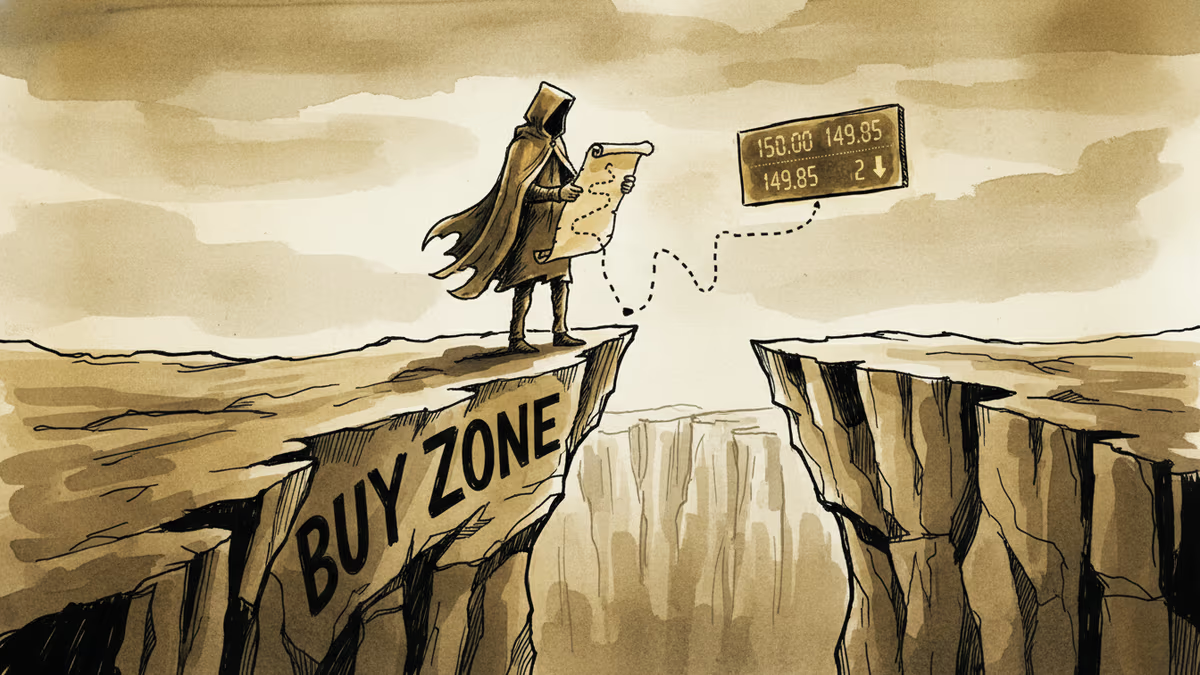
Bitcoin trades 21% above its realized price of $54,286. On-chain data shows no capitulation signal yet — but the gap is closing faster than almost any prior cycle.
The SEC is preparing a major digital assets regulatory proposal. Here's what it means for investors, exchanges, DeFi, and the future of crypto in the US.
Trump Media posted a $405.9M net loss on just $871K in revenue in Q1 2026. Unrealized crypto losses drove the collapse. Is DJT a media company, a bitcoin fund, or something else entirely?
SpaceX swung from $8B profit to a $5B loss in 2025, yet kept its 8,285 BTC position untouched. With an IPO looming, what does that signal about corporate treasury strategy?
Bitcoin trades 21% above its realized price of $54,286. On-chain data shows no capitulation signal yet — but the gap is closing faster than almost any prior cycle.
Thoughts
Share your thoughts on this article
Sign in to join the conversation