

Nintendo's Switch 2 Cartridge Gambit: A Masterclass in Redefining Physical Media
Nintendo is reportedly offering cheaper, smaller Switch 2 cartridges. This isn't just cost-saving; it's a strategic move to redefine physical media ownership.
The Lede: Beyond the Plastic
Reports of Nintendo offering cheaper, lower-capacity Switch 2 cartridges are circulating, seemingly a minor supply chain adjustment. This is not a story about manufacturing costs; it's a strategic masterclass in platform economics and future-proofing a multi-billion dollar retail ecosystem. Nintendo is subtly redefining what a "physical" game is in the digital age, a move designed to appease publishers, placate consumers, and maintain its iron grip on its highly profitable, closed platform.
Why It Matters
The controversy over "Game Key Cards"—essentially empty boxes with a download code—tapped into a core anxiety for modern gamers: true ownership. This new cartridge strategy is Nintendo's direct response, with significant second-order effects:
- Preserving the Retail Channel: By making physical production viable for a wider range of games, Nintendo shores up its crucial relationships with global retailers like GameStop, Target, and Walmart. This physical presence is a key market differentiator against the purely digital PC and mobile landscapes.
- Solving the 'Switch Tax': The original Switch was notorious for the "Switch tax," where games cost more on Nintendo's console due to expensive cartridge manufacturing. A tiered, more affordable cartridge system directly addresses this long-standing publisher and consumer pain point.
- Empowering Collectors and Resellers: A cartridge, even if it requires a supplemental download, retains inherent value. It can be collected, displayed, traded, or sold. This move validates the secondary market and the culture of game preservation, a loyal and vocal segment of Nintendo's user base.
The Analysis: A Lesson in Hybrid Warfare
Nintendo has always leveraged proprietary physical media as a tool for control, from the NES cartridge's lockout chip to the GameCube's mini-discs. The original Switch's high-cost flash memory, however, created a market distortion. Publishers, especially those with smaller or mid-tier games, were forced to choose between absorbing high costs, passing them to consumers, or opting for the despised "code-in-a-box" model.
This new tiered cartridge approach is a brilliant hybrid solution. It acknowledges the economic realities that forced publishers towards download codes while simultaneously throwing a lifeline to the concept of physical ownership. Consider the possibilities:
- The 'Key on a Cart': A small, cheap cartridge could hold the license key and essential launch data, requiring a significant but one-time download. This is existentially superior to a mere download code, as the cartridge itself acts as the non-transferable proof of ownership.
- Indie Game Viability: Smaller indie games that could never justify a 16GB or 32GB cartridge run can now get a cost-effective physical release on a 1GB or 2GB cart, satisfying a massive collector market.
This isn't a retreat from digital; it's the weaponization of physical media as a core component of a digital strategy. It allows Nintendo to capture revenue from both the digital download (hosted on their servers) and the physical sale (with its associated licensing fees).
PRISM Insight: The Platform is The Fortress
While Microsoft pushes an all-you-can-eat subscription model with Game Pass and Sony doubles down on its digital storefront, Nintendo is reinforcing its fortress walls. This move is a direct counter-play to the trends of cloud gaming and subscriptions which commoditize individual games. Nintendo's strategy asserts that the game itself, as a discrete product, still holds immense value.
From an investment perspective, this de-risks Nintendo's model. It ensures the Switch 2 ecosystem is not wholly dependent on digital discovery or internet infrastructure. By keeping the physical retail loop healthy, Nintendo maintains a powerful marketing and distribution channel that its competitors are slowly ceding. It's a moat-deepening exercise that competitors will find difficult to replicate.
PRISM's Take: The Psychology of Ownership
Nintendo understands something fundamental that its rivals sometimes forget: the psychology of ownership. A digital license feels ephemeral, but a physical cartridge feels permanent. By finding a clever economic path to preserve the cartridge, Nintendo isn't just selling games; it's selling certainty and nostalgia. This isn't about saving a few euros on manufacturing. It’s about securing the long-term loyalty of a fanbase that still believes in the magic of holding a game in their hands. It's a quiet, decisive, and characteristically Nintendo move that will pay dividends for years to come.
Related Articles
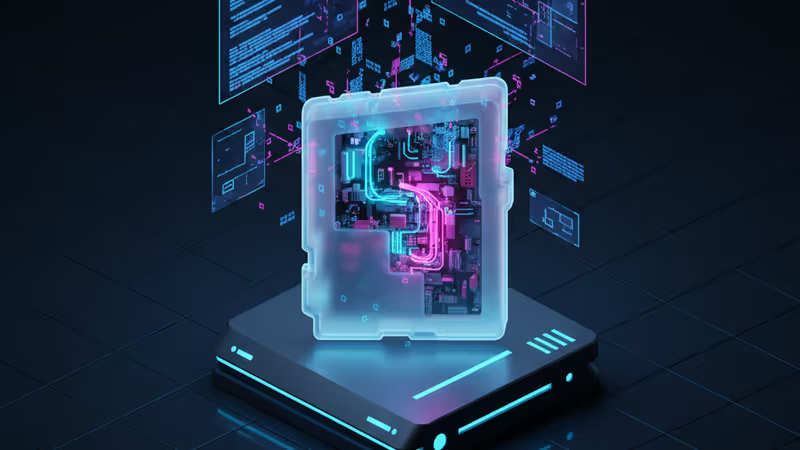
An accidental leak from a game publisher reveals Nintendo's secret weapon for the Switch 2: a new, tiered cartridge strategy to defend physical media.

Google's lawsuit against data scraper SerpApi is a strategic move to cut off data for AI competitors like Perplexity, redefining the war for AI dominance.
AI's insatiable demand for data centers isn't just a tech trend; it's a global economic reshuffle straining energy grids and creating new investment frontiers.
The 2026 NDAA is a catalyst for next-gen nuclear power, fueled by AI's insatiable energy needs and military strategy. An analysis for tech and energy leaders.