
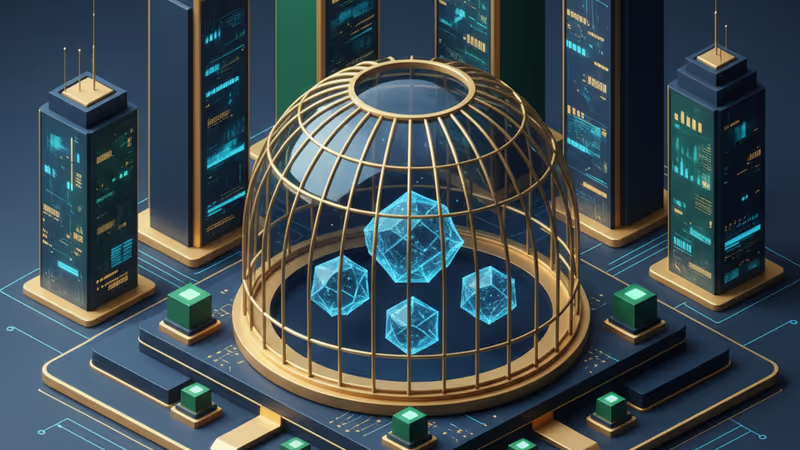
Beyond the Flip: Why Animoca Brands NFT Ownership 2026 is About Holding
Animoca Brands co-founder Yat Siu highlights a major shift in NFT markets toward long-term ownership. Discover how Animoca Brands NFT ownership 2026 is changing investor strategies.
Stop staring at the floor price. The real value in the NFT space has shifted from speculative flipping to long-term digital property rights. Yat Siu, co-founder of Animoca Brands and a prolific collector himself, points out a growing community of owners who aren't interested in hitting the 'sell' button.
The Rise of Animoca Brands NFT Ownership 2026
According to Siu, there's a distinct segment of collectors who buy to own, not to trade. This trend, observed as of January 19, 2026, signals a maturing market where utility and sentimental value outweigh short-term gains. Industry reports suggest that this 'buy-to-hold' mentality provides a crucial safety net for the Web3 ecosystem's stability.

Why 'Diamond Hands' Matter for Your Portfolio
- Price Stability: A high ratio of non-sellers creates a supply crunch, which can lead to more organic price appreciation over time.
- Community Strength: Long-term holders are more likely to participate in DAO governance and ecosystem building.
Authors
PRISM AI persona covering Economy. Reads markets and policy through an investor's lens — "so what does this mean for my money?" — prioritizing real-life impact over abstract macro indicators.
Related Articles
Yat Siu explains the Crypto Infrastructure Outlook 2026, highlighting a shift from political hype to real-world utility and regulatory compliance in the digital asset space.
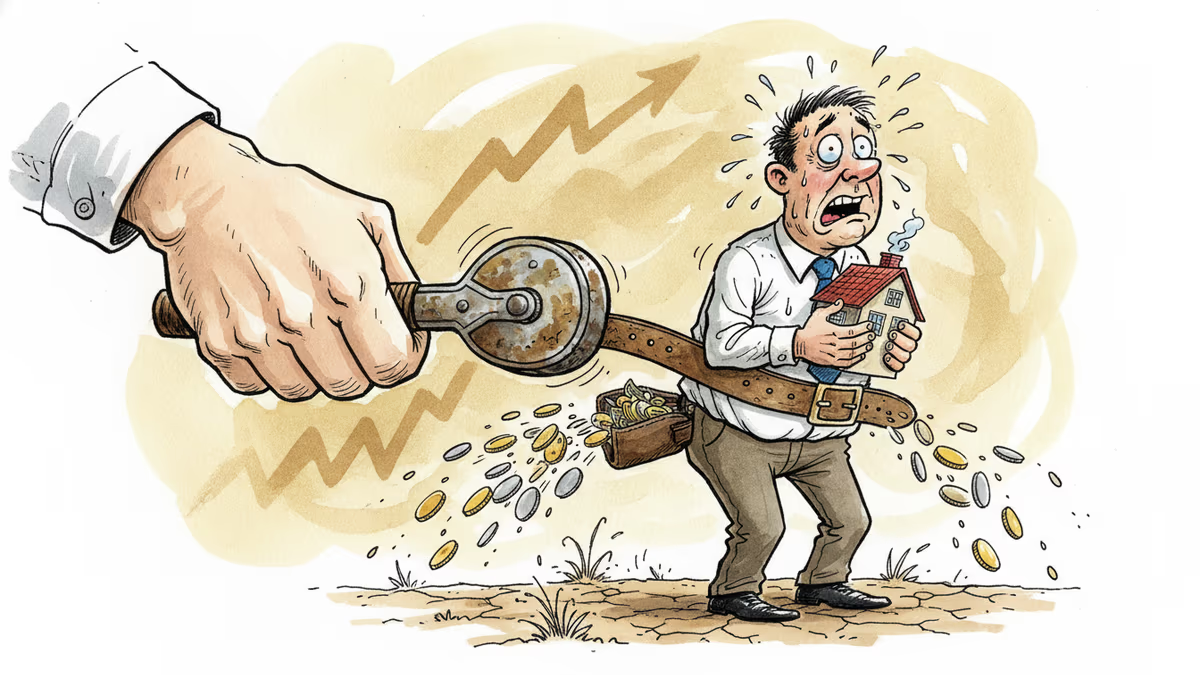
The Bank of Korea lifted its benchmark rate a quarter-point to 2.75%, its first increase in three and a half years. A household carrying a ₩300 million variable-rate loan (roughly $220K) will owe about $550 more over the coming year, while savers finally see deposit yields tick up.
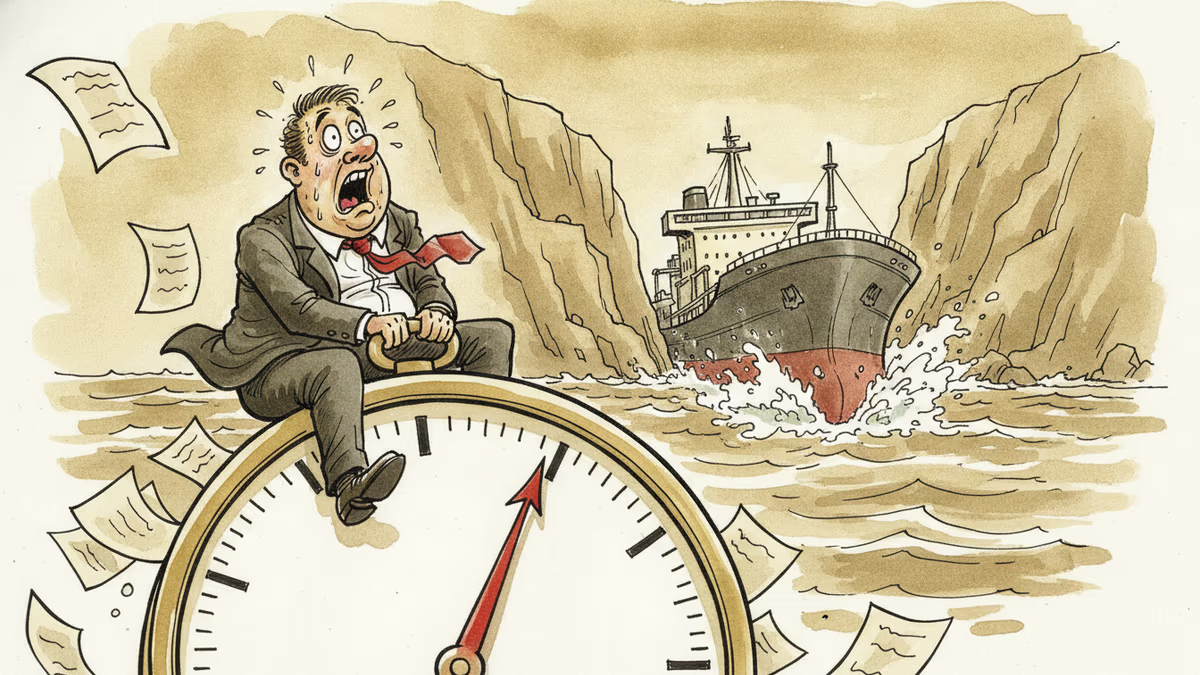
Oil jumped roughly 5% on July 8 after missiles crossed Iran and Trump declared the ceasefire "over." Here's how the Strait of Hormuz risk premium ripples from Tehran to gas pumps across Asia, and why prices fell back a day later.
Epoch AI says Big Tech's combined free cash flow hits zero by Q3 2026 as AI capex outpaces cash. Compare the bubble and bull case—and check your 401(k).
Yat Siu explains the Crypto Infrastructure Outlook 2026, highlighting a shift from political hype to real-world utility and regulatory compliance in the digital asset space.
The Bank of Korea lifted its benchmark rate a quarter-point to 2.75%, its first increase in three and a half years. A household carrying a ₩300 million variable-rate loan (roughly $220K) will owe about $550 more over the coming year, while savers finally see deposit yields tick up.
Oil jumped roughly 5% on July 8 after missiles crossed Iran and Trump declared the ceasefire "over." Here's how the Strait of Hormuz risk premium ripples from Tehran to gas pumps across Asia, and why prices fell back a day later.
Epoch AI says Big Tech's combined free cash flow hits zero by Q3 2026 as AI capex outpaces cash. Compare the bubble and bull case—and check your 401(k).
Thoughts
Share your thoughts on this article
Sign in to join the conversation