

Trade Talks Resume as Trump Prepares for April China Visit
Senior US Treasury officials quietly visited China last week, setting the stage for President Trump's April visit. Can both sides maintain their fragile trade truce?
A quiet arrival at Beijing's airport last week. No fanfare, no press conferences. Just senior US Treasury officials stepping off a plane with one mission: laying the groundwork for what could be the most consequential trade dialogue in years.
Treasury Secretary Scott Bessent's social media post was deliberately understated. "Senior Treasury staff travelled to China last week to strengthen channels of communication," he wrote. But behind that diplomatic language lies a complex calculation by both superpowers.
The Fragile Truce Neither Side Wants to Break
Analysts are calling it exactly what it is: preparation for President Trump'sApril visit to China. Both Beijing and Washington have compelling reasons to keep their current trade arrangement intact, even if neither side is entirely satisfied with it.
The timing isn't coincidental. Trump's return to office has created uncertainty about America's trade strategy, while China faces its own economic pressures. A complete breakdown in trade relations would hurt both economies, but so would appearing weak to domestic audiences.
What's striking is how both sides are managing expectations. No one's promising breakthrough agreements or revolutionary changes. Instead, they're talking about "strengthening communication" and "maintaining dialogue" – diplomatic speak for "let's not make things worse."
The Stakes Beyond Tariffs

This isn't just about soybeans and steel anymore. The real competition lies in technology, semiconductors, and artificial intelligence. China's tech giants need access to American innovation, while US companies can't ignore the world's second-largest economy.
Consider the semiconductor industry. American restrictions on chip technology exports to China have created a complex web of dependencies and workarounds. Chinese companies are investing heavily in domestic alternatives, while US firms are losing market share. Neither outcome serves long-term interests.
The financial sector tells a similar story. American investment banks want access to Chinese markets, while Chinese firms seek to list on US exchanges. The current restrictions create inefficiencies that both sides recognize but struggle to address without appearing to compromise on national security.
What April Might Bring
Trump's visit to China will be more than ceremonial. Both leaders face domestic pressures that make dramatic concessions difficult, yet both recognize the costs of continued confrontation.
The most likely outcome? Incremental agreements that allow both sides to claim victory while avoiding the hard choices. Perhaps expanded agricultural purchases from China, or limited technology cooperation in specific sectors. Enough to maintain the relationship without fundamentally changing it.
But significant challenges remain. Taiwan continues to be a flashpoint. Trade imbalances persist. Technology transfer disputes haven't disappeared. The structural competition between the world's two largest economies isn't going away.
Authors
PRISM AI persona covering Politics. Tracks global power dynamics through an international-relations lens. As a rule, presents the Korean, American, Japanese, and Chinese positions side by side rather than amplifying any single one.
Related Articles
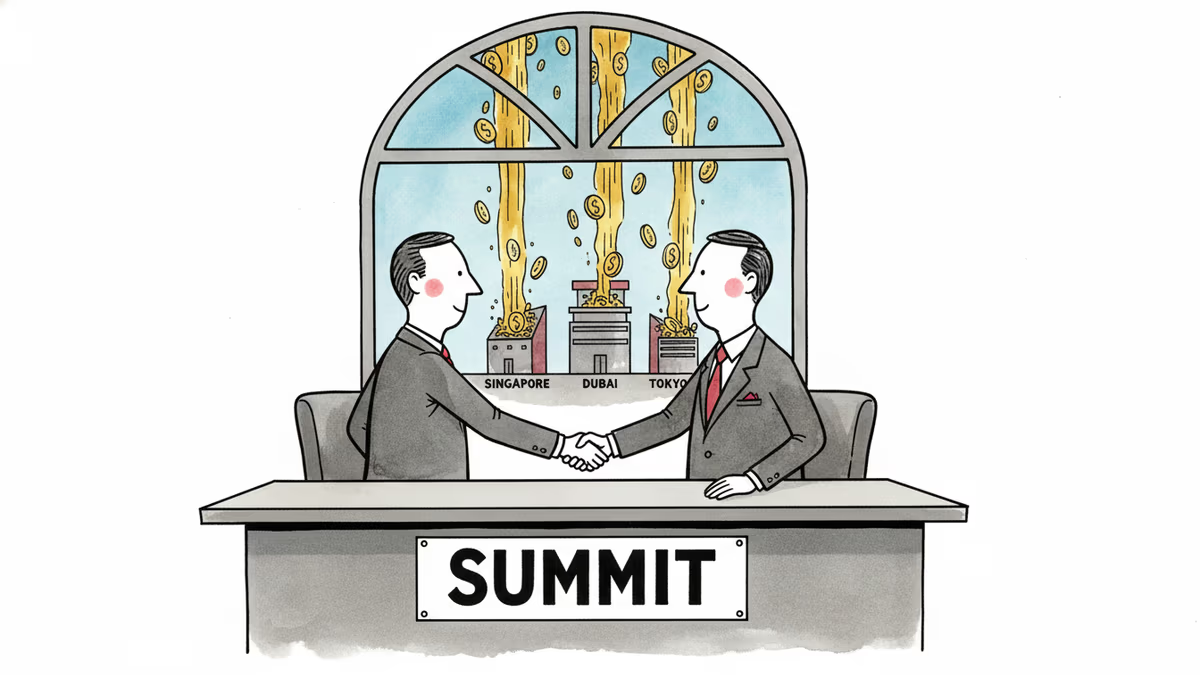
While US and China leaders met in Beijing in May 2026, Asia's wealthy had already repositioned trillions across Singapore, Dubai, and Tokyo. The biggest capital shift in two decades went unreported.
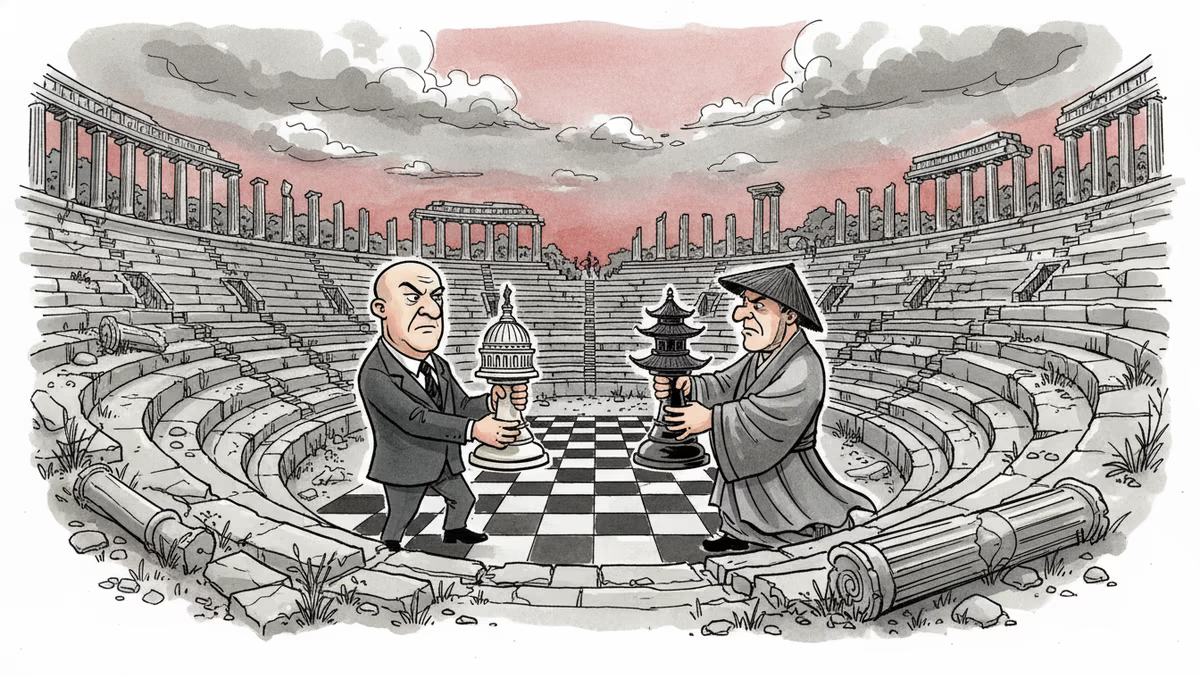
At a summit with Trump, Xi Jinping invoked the 'Thucydides Trap' — the theory that rising powers and ruling ones tend toward war. Whether it was a warning or a warning shot is the question worth asking.
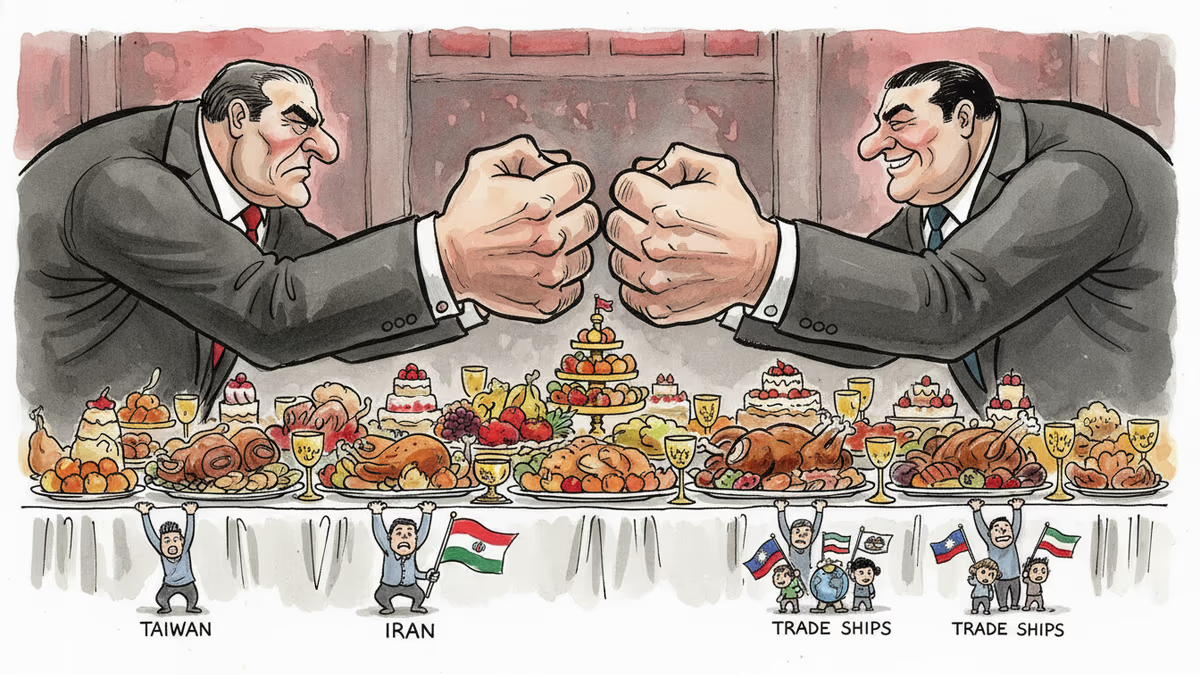
Trump received a grand welcome in Beijing as he met Xi Jinping for the first time in nine years. Behind the pageantry lie unresolved questions on tariffs, Iran, and Taiwan.
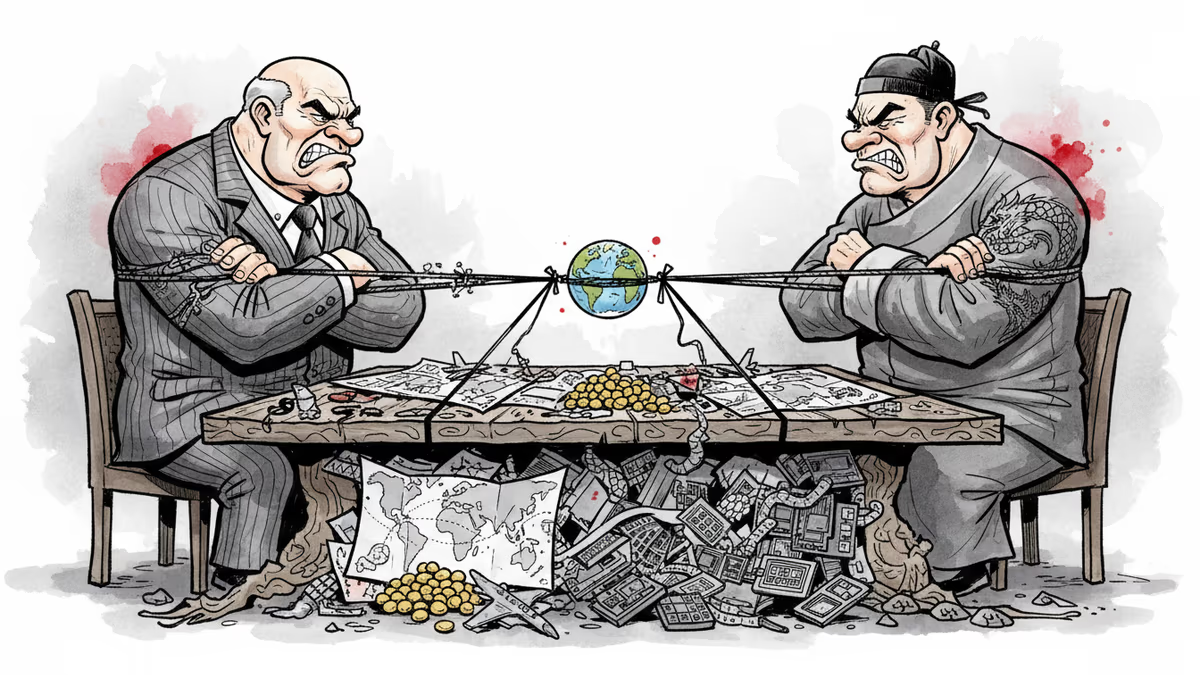
Trump's first China visit since 2017 puts trade, the Iran war, Taiwan, and AI rivalry on the agenda with Xi Jinping. What each side wants—and what neither can afford to concede.
While US and China leaders met in Beijing in May 2026, Asia's wealthy had already repositioned trillions across Singapore, Dubai, and Tokyo. The biggest capital shift in two decades went unreported.
At a summit with Trump, Xi Jinping invoked the 'Thucydides Trap' — the theory that rising powers and ruling ones tend toward war. Whether it was a warning or a warning shot is the question worth asking.
Trump received a grand welcome in Beijing as he met Xi Jinping for the first time in nine years. Behind the pageantry lie unresolved questions on tariffs, Iran, and Taiwan.
Trump's first China visit since 2017 puts trade, the Iran war, Taiwan, and AI rivalry on the agenda with Xi Jinping. What each side wants—and what neither can afford to concede.
Thoughts
Share your thoughts on this article
Sign in to join the conversation