
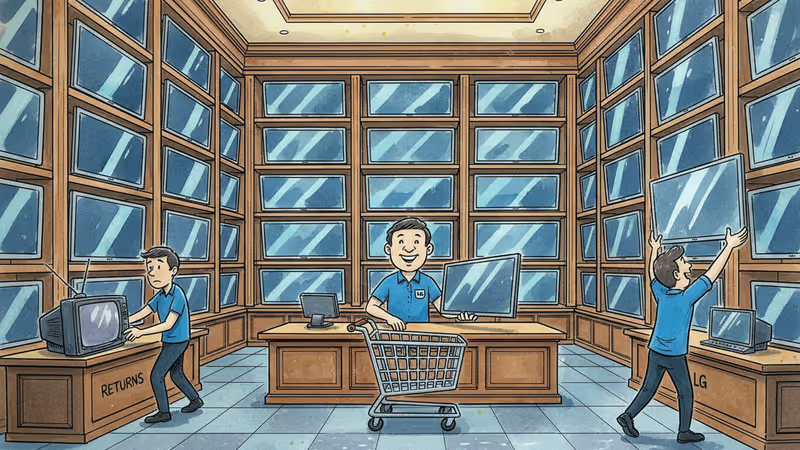
Your TV as a Service: LG's Bold Bet on the Subscription Economy
LG launches LG Flex in the UK, offering TVs, soundbars, and monitors through monthly subscriptions. This shift from ownership to access could reshape the entire consumer electronics industry.
When was the last time you actually "bought" a TV? LG Electronics just launched an experiment in the UK that might make that question irrelevant.
The company's new LG Flex service lets customers rent TVs, soundbars, monitors, and speakers through monthly subscriptions. Choose from one-, two-, or three-year terms, with longer commitments offering lower monthly payments.
Here's where it gets interesting: when your subscription ends, you can upgrade to the latest model for free, continue paying monthly for your current device, or return it entirely. There's a £50 fee for the "full removal service" if you choose to return your TV, covering dismounting and packaging.
From Ownership to Access: A Fundamental Shift
This isn't just a new payment plan—it's LG's answer to a fundamental problem plaguing the consumer electronics industry.
Traditionally, TVs were buy-once, use-for-decades purchases. But technology now evolves faster than ever. We've seen the jump from HD to 4K to 8K, from LCD to OLED to micro-LED. Consumers want to stay current, but premium TVs can cost thousands of dollars.
The math is brutal: spend $3,000 on a top-tier TV today, and it might feel outdated in three years. Spend another $3,000 for an upgrade, and you're looking at $2,000 annually just to stay current with display technology.
LG Flex flips this equation. Instead of massive upfront costs followed by technological anxiety, customers get predictable monthly payments and guaranteed upgrade paths. For LG, it transforms one-time sales into recurring revenue streams.
The Netflix-ification of Everything

This move reflects a broader trend: the subscription economy's expansion beyond software and content into physical goods. We've already seen this with cars (Volvo's Care by Volvo), furniture (Feather), and even clothing (Rent the Runway).
But home electronics represent a particularly compelling case. Unlike cars or clothes, TVs and speakers are stationary, making logistics simpler. They're also increasingly connected devices that receive software updates, blurring the line between hardware and service.
The timing makes sense too. Consumers are already paying monthly for Netflix, Disney+, Spotify, and countless other services. Adding hardware to that subscription stack feels like a natural evolution.
The Regulatory Question Mark
Yet this shift raises important questions about consumer protection and market competition. When you subscribe to a TV instead of buying it, who owns the data it collects? How portable are your viewing preferences and settings?
Regulators are already scrutinizing subscription models in other industries. The UK's Competition and Markets Authority has investigated "subscription traps" where companies make it difficult to cancel services. How will these concerns apply to physical goods?
There's also the long-term cost question. Over a three-year period, subscription payments might exceed the TV's retail price. But subscribers get upgrade rights and avoid depreciation risk—benefits that are hard to quantify.
What This Means for Competitors
Samsung, Sony, and other TV manufacturers are likely watching LG's UK experiment closely. If successful, subscription models could become the new competitive battleground.
This shift could particularly benefit companies with strong service capabilities and supply chain logistics. It might disadvantage pure hardware manufacturers who lack the infrastructure for device management and customer service.
For retailers, the implications are mixed. While subscription models might reduce foot traffic for big-ticket purchases, they could increase service touchpoints and customer lifetime value.
Authors
Related Articles
Analysis of why Amazon's top laptop search results feature products experts would never recommend, and what consumers should buy instead.
2026's OLED TV market sees Samsung's QD-OLED clash with LG's 4-stack panels, bringing premium picture quality to mainstream prices. How this tech war changes everything for consumers and the display industry.
YouTube's $60B annual revenue milestone signals major shifts in the subscription economy, challenging traditional media and creating new market dynamics.

Budget gaming laptops are finally getting good. Here's what changed in 2025 and why your next gaming rig might cost less than you think.
Analysis of why Amazon's top laptop search results feature products experts would never recommend, and what consumers should buy instead.
2026's OLED TV market sees Samsung's QD-OLED clash with LG's 4-stack panels, bringing premium picture quality to mainstream prices. How this tech war changes everything for consumers and the display industry.
YouTube's $60B annual revenue milestone signals major shifts in the subscription economy, challenging traditional media and creating new market dynamics.
Budget gaming laptops are finally getting good. Here's what changed in 2025 and why your next gaming rig might cost less than you think.
Thoughts
Share your thoughts on this article
Sign in to join the conversation