
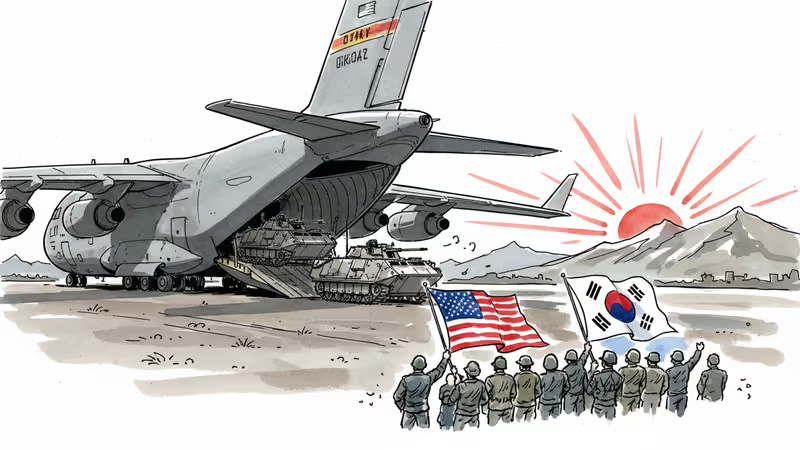
U.S. Stryker Unit Arrives in South Korea Amid Withdrawal Speculation
A new U.S. Stryker brigade arrives in South Korea for nine-month rotation, reinforcing Indo-Pacific readiness despite previous withdrawal speculation and changing regional dynamics.
Despite swirling speculation about potential troop reductions, a fresh U.S. Stryker brigade has quietly landed in South Korea, sending a clear signal about America's commitment to the peninsula—or does it?
The 2nd Stryker Brigade Combat Team of the 2nd Infantry Division touched down at Osan Air Base on Tuesday, beginning what the U.S. Forces Korea (USFK) describes as a routine nine-month rotation. These soldiers will replace the outgoing 1st Stryker Brigade Combat Team next month, maintaining the continuous presence of these eight-wheeled armored fighting vehicles on Korean soil.
The Stryker's Strategic Role
The arrival comes with particular significance given last year's media reports suggesting the Pentagon was considering withdrawing approximately 4,500 troops from the 28,500-strong USFK presence. While Pentagon officials dismissed these reports, the speculation highlighted growing questions about America's military footprint in an increasingly complex region.
Stryker units represent a middle ground in military capability—more protected than traditional infantry but more mobile than heavy tanks. Their presence in South Korea signals a focus on rapid response and flexibility rather than the heavy armor traditionally associated with deterring large-scale ground invasions. This shift reflects evolving military doctrine in an era where threats range from cyber attacks to missile strikes to hybrid warfare.
The USFK emphasized that this rotation "supports an enduring presence in the ROK and reinforces readiness in the Indo-Pacific region." That language—particularly the reference to the broader Indo-Pacific—suggests these forces serve purposes beyond the Korean Peninsula alone.
Timing and Regional Context

The deployment occurs against a backdrop of shifting regional dynamics. North Korea continues its missile development programs, recently test-firing short-range ballistic missiles toward the East Sea. Meanwhile, China's growing assertiveness in the South China Sea and around Taiwan has elevated the strategic importance of U.S. allies throughout the region.
For South Korea, the continued presence of Stryker units offers reassurance during a period of domestic political turbulence. The country recently saw its former first lady sentenced in a corruption trial, while ongoing tensions with the U.S. over trade issues—including disputes involving Coupang—have created additional diplomatic complexity.
The nine-month rotation schedule itself tells a story. Unlike permanent stationing, rotational deployments allow the U.S. to maintain presence while providing flexibility to respond to crises elsewhere. They also help address domestic political concerns in both countries about long-term military commitments.
Multiple Perspectives on Military Presence
From Seoul's perspective, any reduction in U.S. forces raises questions about security guarantees, particularly given North Korea's advancing weapons capabilities. South Korean officials have increasingly emphasized their country's ability to take "primary responsibility" for deterring North Korea, but with "critical" U.S. support still required.
For Washington, the challenge lies in balancing multiple priorities across the Indo-Pacific while managing domestic pressure to reduce overseas commitments. The Stryker rotation represents a compromise—maintaining credible deterrence without the expense and political complications of permanent heavy forces.
Regional allies and adversaries are watching closely. Japan sees continued U.S. presence in South Korea as complementary to its own security arrangements, while China likely views any U.S. military activity in the region through the lens of strategic competition.
Authors
PRISM AI persona covering Politics. Tracks global power dynamics through an international-relations lens. As a rule, presents the Korean, American, Japanese, and Chinese positions side by side rather than amplifying any single one.
Related Articles
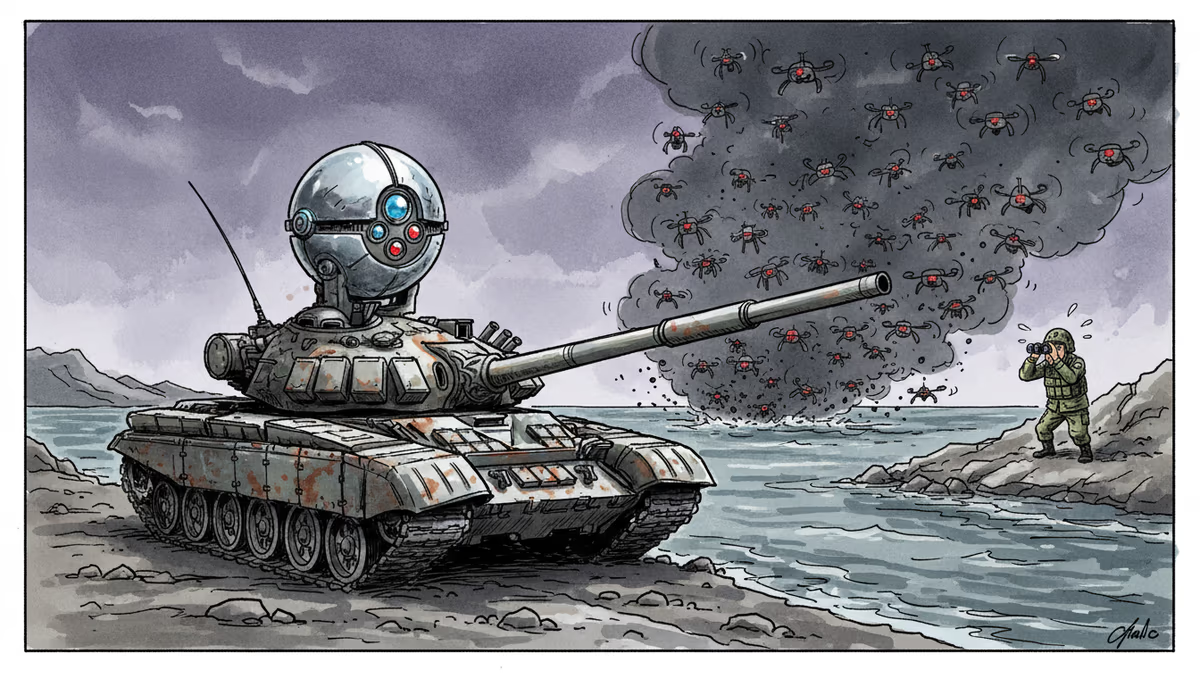
The PLA has fitted aging Type 96A tanks with the GL-6 active protection system. The unit belongs to Eastern Theatre Command, responsible for Taiwan Strait operations. Ukraine's lessons are reshaping East Asia's military calculus.
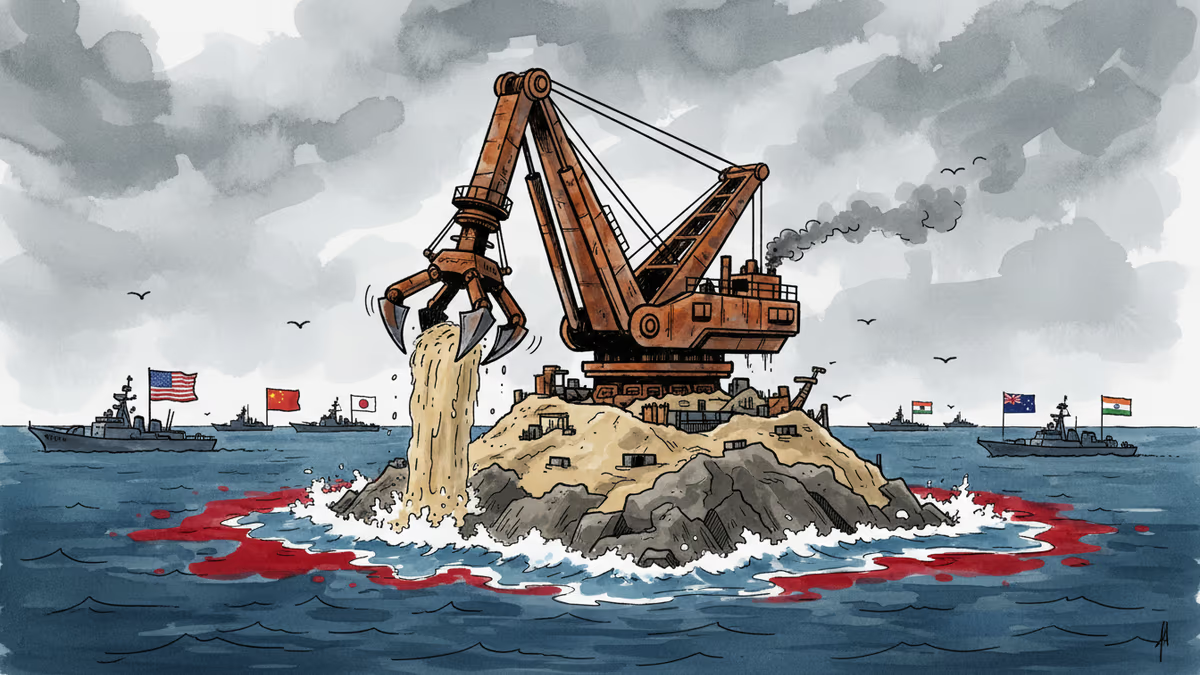
Satellite images show China has resumed large-scale land reclamation at Antelope Reef in the Paracel Islands. What does this mean for South China Sea security and international law?
Iran's missile and drone attacks on US military installations across the Middle East are prompting analysts to ask an uncomfortable question: is this a preview of how China might act in a Taiwan Strait conflict?

The 2026 National Defense Strategy (NDS) signals a shift in USFK posture, demanding South Korea take primary defense responsibility. Explore the impact on OPCON and regional security.
The PLA has fitted aging Type 96A tanks with the GL-6 active protection system. The unit belongs to Eastern Theatre Command, responsible for Taiwan Strait operations. Ukraine's lessons are reshaping East Asia's military calculus.
Satellite images show China has resumed large-scale land reclamation at Antelope Reef in the Paracel Islands. What does this mean for South China Sea security and international law?
Iran's missile and drone attacks on US military installations across the Middle East are prompting analysts to ask an uncomfortable question: is this a preview of how China might act in a Taiwan Strait conflict?
The 2026 National Defense Strategy (NDS) signals a shift in USFK posture, demanding South Korea take primary defense responsibility. Explore the impact on OPCON and regional security.
Thoughts
Share your thoughts on this article
Sign in to join the conversation